If day trading feels fast, scalping is faster still. A scalper opens and closes trades within seconds or minutes, aiming to skim a tiny profit from each and repeating it dozens or hundreds of times a day. The small wins are supposed to add up, but so do the costs and the stress. Here is what crypto scalping is, how it works, why fees and liquidity make or break it, and who it is actually for.
What scalping is
Scalping is an extremely short-term trading style. Instead of waiting for a big move, a scalper aims to capture a very small price change and get out almost immediately, then do it again and again. Individual profits are tiny — a fraction of a percent — so the approach depends on high volume and a high win rate. It is the most intense end of active trading, measured in seconds rather than hours.
How it works in crypto
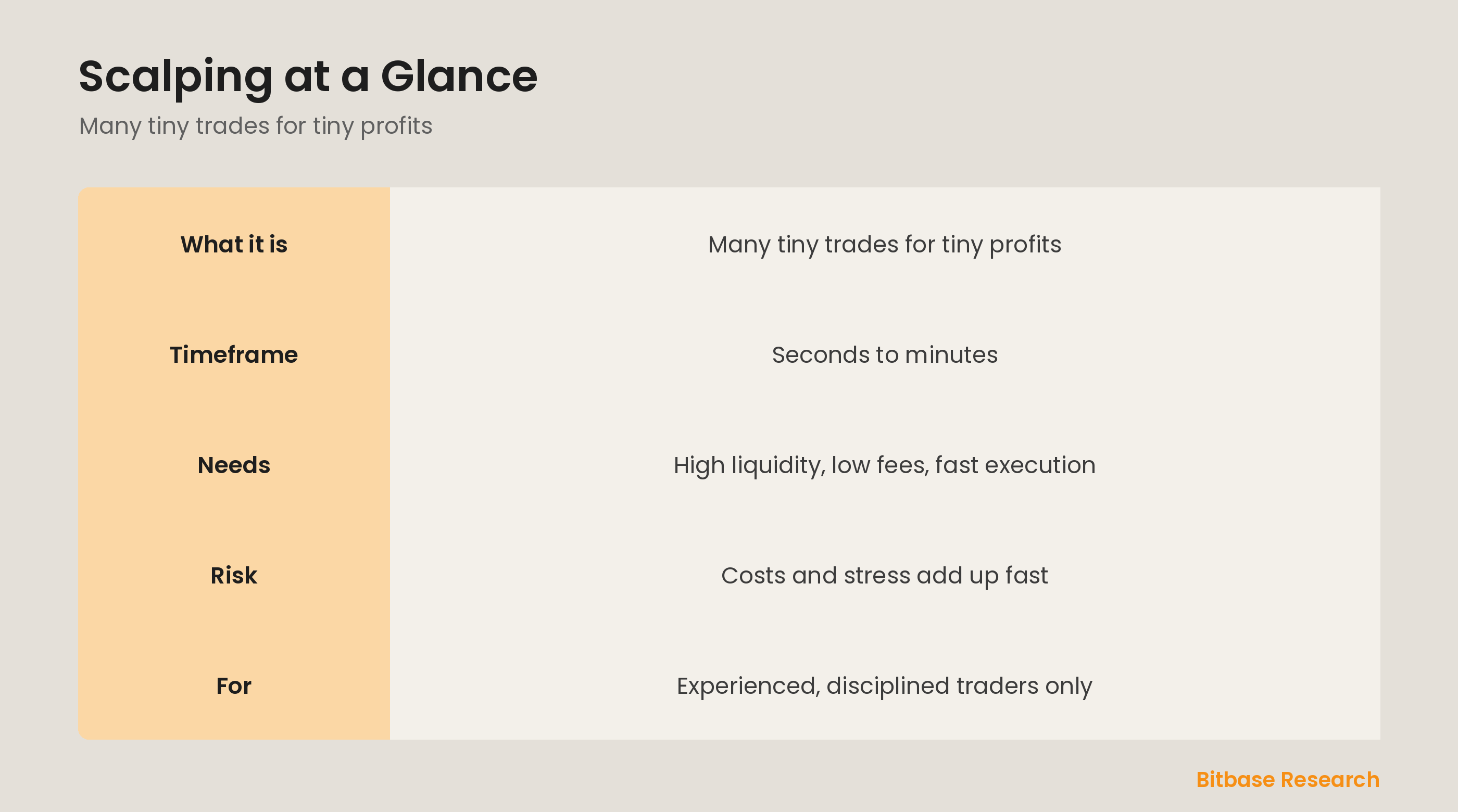
Scalpers exploit tiny movements and the gap between bid and ask, so they live and die by execution quality. They need highly liquid markets where they can enter and exit instantly without moving the price, and fast, reliable order execution. Many use leverage to make small moves worth chasing. Because everything happens so quickly, scalping is usually done on very short chart timeframes with constant attention.
The costs that decide it
This is where scalping gets brutal. When each trade aims for a tiny gain, trading fees and the spread can swallow the entire profit — and you pay them on every one of your many trades. A strategy that looks profitable before costs can be a steady loser after them. That is why scalping is only viable with very low fees and tight spreads; otherwise you are working hard to enrich the exchange.
Who it is for
Scalping is not a beginner strategy. It demands intense focus for long stretches, split-second decisions, iron discipline, and the emotional control to take dozens of small losses without tilting. A single lapse can erase many small wins, and the mental fatigue is real. For most people, slower styles like swing trading offer better odds with far less strain. Scalping suits only experienced, disciplined traders who fully understand its costs.
The bottom line
Crypto scalping means making many very short trades, seconds to minutes each, to skim tiny profits that are meant to accumulate. It relies on high liquidity, fast execution, and above all low fees, since costs can easily outweigh the tiny gains. It is intense, high-stress, and unforgiving of mistakes, making it suitable only for experienced, disciplined traders — not a place for beginners to start. To keep learning the fundamentals, follow more from Bitbase Academy.
Disclaimer: This article is educational content from Bitbase Academy, provided for information only. It does not constitute investment, trading, tax, or financial advice. Crypto assets are volatile; assess your own risk. Written as of June 2026; refer to the latest official information.
References
[1] Investopedia, "Scalping: Definition in Trading, How Strategy Is Used and Example" investopedia.com
[2] Investopedia, "Bid-Ask Spread: Definition, Meaning, and How It Works" investopedia.com
[3] Investopedia, "Liquidity: Definition, Example, and How It Works" investopedia.com