Between the frantic pace of day trading and the patience of buying and holding sits swing trading. A swing trader holds a position for days or weeks, aiming to capture one meaningful move — a swing — rather than tiny intraday wiggles or years of growth. It asks for less screen time than day trading but more than holding, and it comes with its own risks. Here is what swing trading crypto is, how it works, and what it demands.
What swing trading is
Swing trading means opening a position and holding it for several days to a few weeks, aiming to profit from a larger price move than a day trader chases. The name comes from trying to catch a single swing in the market — a run up or a bounce — from near its start to near its end. It sits in the middle of the spectrum: more active than long-term holding, far more patient than day trading.
How it works in crypto
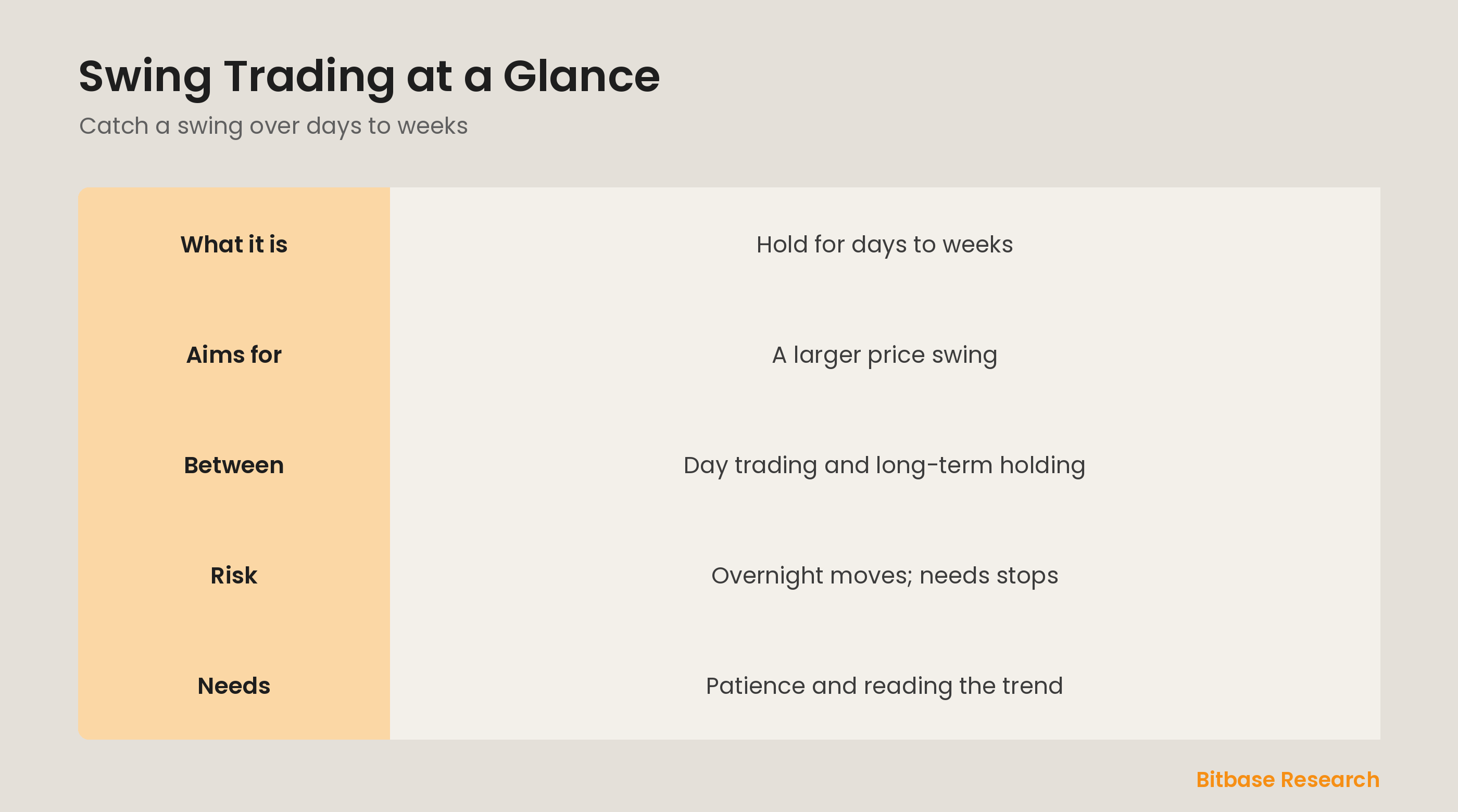
A swing trader places fewer trades than a day trader and holds them overnight, riding a trend or a reversal over time. This means far less time staring at charts; you might check positions once or twice a day rather than minute by minute. Swing traders lean on technical analysis to find good entry points and on the broader trend to decide which direction to trade, aiming to enter early in a move and exit as it matures.
The pros and the risks
Swing trading's biggest appeal is that it is less time-intensive and emotionally draining than day trading, while still aiming to capture bigger moves than intraday scalps. Its main risk is holding overnight: because crypto trades 24/7, a sharp move can happen while you sleep, so positions need stop-losses. It also demands patience — you may sit in a trade for weeks — and the discipline not to bail out at the first wobble.
What it takes
To swing trade well, you need to read the broader trend and use technical analysis to time entries near the start of a move. A written plan with clear stop-losses is essential, since overnight gaps can be sudden and large. Position sizing keeps any single swing from hurting too much, and patience lets a good trade play out. It suits people who want an active strategy without watching the market all day.
The bottom line
Swing trading crypto means holding a position for days to weeks to capture a larger price swing, sitting between day trading and long-term holding. It needs less screen time than day trading but carries overnight risk that demands stop-losses, patience, and disciplined position sizing. If you want to trade actively without living on the charts, swing trading is a middle path — as long as you respect its risks and plan every exit in advance. To keep learning the fundamentals, follow more from Bitbase Academy.
Disclaimer: This article is educational content from Bitbase Academy, provided for information only. It does not constitute investment, trading, tax, or financial advice. Crypto assets are volatile; assess your own risk. Written as of June 2026; refer to the latest official information.
References
[1] Investopedia, "Swing Trading: Definition and the Pros and Cons for Investors" investopedia.com
[2] Investopedia, "Technical Analysis: What It Is and How to Use It in Investing" investopedia.com
[3] Investopedia, "Risk Management in Finance: Definition and Common Strategies" investopedia.com