When you trade crypto with leverage, the exchange asks you to post collateral called margin to back the position. But there are two ways that collateral can be arranged, and the choice quietly decides how much of your account is on the line if the trade goes wrong. Cross margin and isolated margin are those two modes. Picking the right one is a core risk decision, so here is how each works and when to use it.
How cross margin works
In cross margin mode, your entire account balance stands behind the position. If the trade moves against you, the platform automatically draws on all your available funds — and even unrealized profit from other positions — to keep it from being liquidated. This can delay a liquidation and give a position more room to recover, but it also means a single bad trade can, in the worst case, consume your whole account.
How isolated margin works
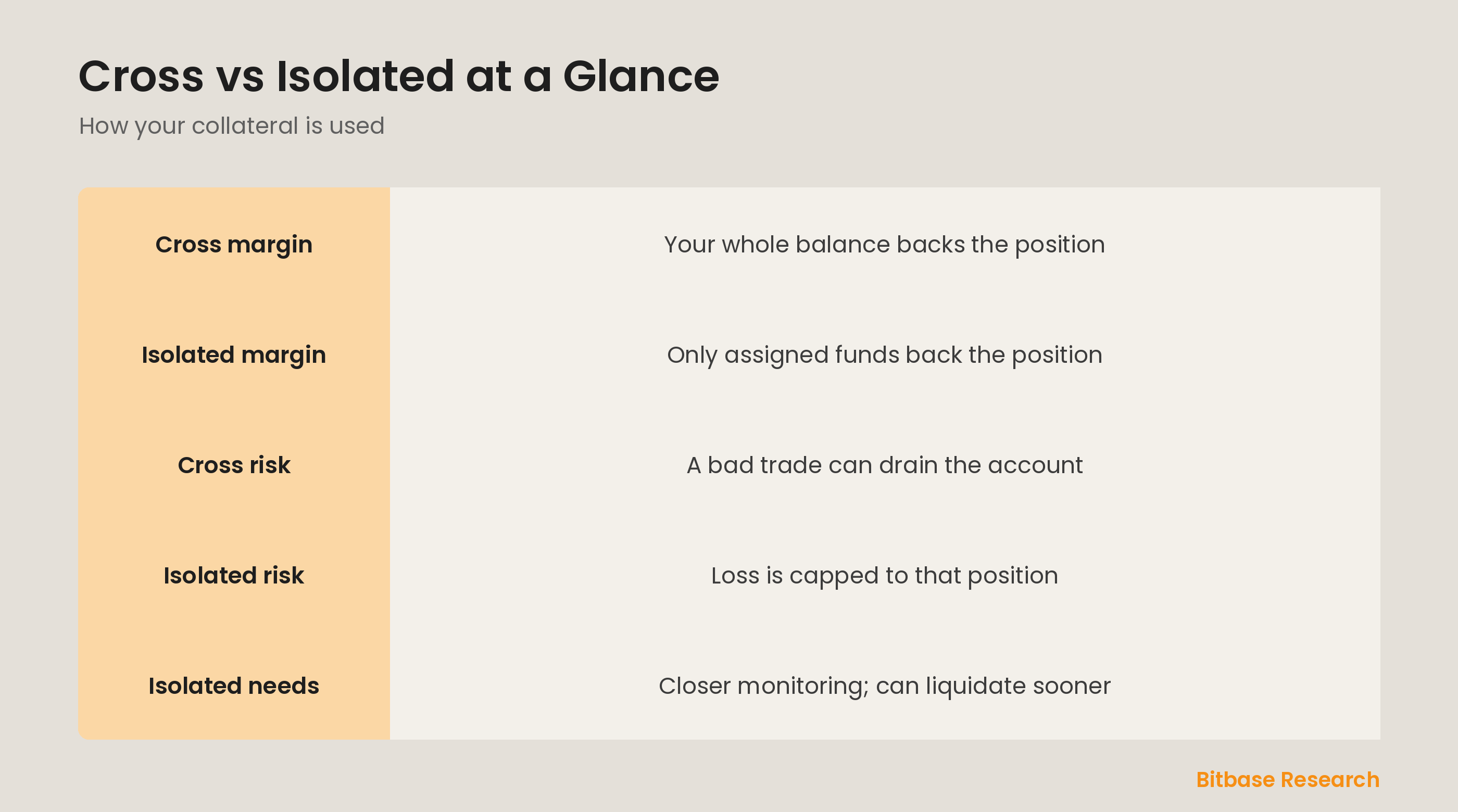
In isolated margin mode, you assign a fixed amount of collateral to one specific position, and only that amount is at risk. If the trade goes badly, the loss is capped at the margin you set aside; the rest of your balance is untouched. The trade-off is that, with less collateral backing it, the position hits its liquidation point sooner and needs closer watching if you want to keep it alive.
The core trade-off
The difference comes down to how loss is contained. Cross margin shares your whole balance across positions, which cushions a single trade but puts the entire account at stake. Isolated margin walls off each position, protecting the rest of your funds but offering that one position less staying power. One prioritizes survival of the trade; the other prioritizes protection of the account.
Which one to use
Isolated margin suits traders who want strict, predictable risk on each position — you know the most you can lose before you open it. Cross margin can suit experienced traders managing a balanced book, where profits on one side genuinely support another, but it demands far more discipline. Beginners are usually safer starting with isolated margin, because it makes the maximum loss on any single trade clear and contained.
The bottom line
Cross margin backs a position with your whole account balance, while isolated margin limits it to the funds you assign. Cross can delay liquidation but risks everything; isolated caps the damage but liquidates sooner. The right choice depends on how much of your account you are willing to expose — and for most people learning to trade, the contained risk of isolated margin is the safer default. To keep learning the fundamentals, follow more from Bitbase Academy.
Disclaimer: This article is educational content from Bitbase Academy, provided for information only. It does not constitute investment, trading, tax, or financial advice. Crypto assets are volatile; assess your own risk. Written as of June 2026; refer to the latest official information.
References
[1] Investopedia, "Margin: How It Works and Trading on Margin" investopedia.com
[2] Investopedia, "Leverage: What It Is and How It Works" investopedia.com
[3] Investopedia, "Liquidation: Definition and Process as Part of Bankruptcy" investopedia.com