
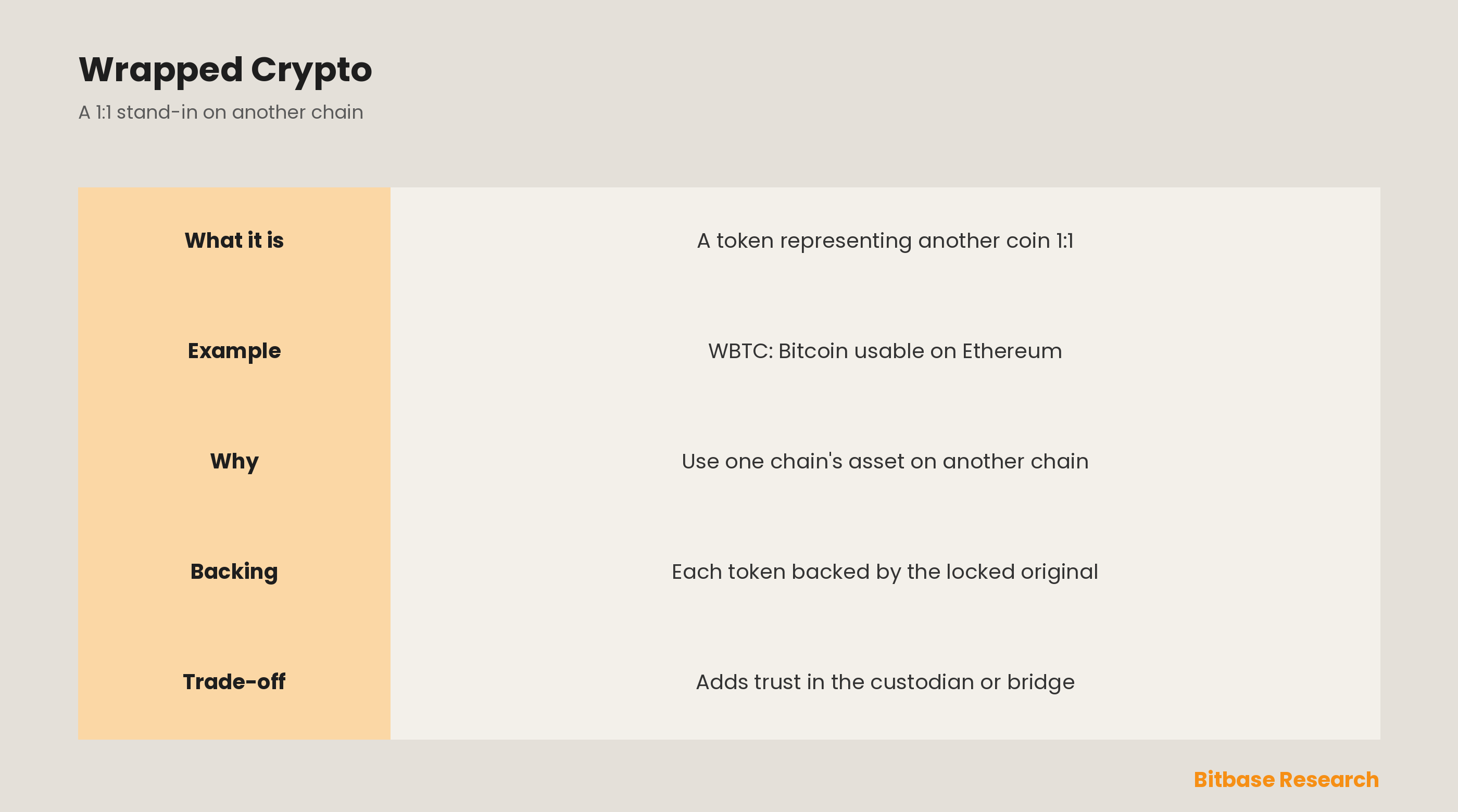
Wrapped crypto is a token that stands in for another coin at a 1:1 value on a different blockchain. The best-known example is Wrapped Bitcoin (WBTC), which lets Bitcoin be used on Ethereum. Wrapping unlocks an asset for chains and apps it couldn't otherwise reach. Here's how it works.
Why wrapping exists
Coins usually live on their own blockchain — Bitcoin on Bitcoin, and it can't natively run on Ethereum. Wrapping solves this: the original coin is locked with a custodian or contract, and an equal amount of a wrapped token is issued on the other chain, backed 1:1 by what's locked [1]. That wrapped token can then be used in that chain's apps, like DeFi, and later redeemed — "unwrapped" — for the original [2].
What to keep in mind
The bottom line
Wrapped crypto is simply a 1:1 stand-in that lets a coin from one chain be used on another. It's what makes Bitcoin usable in Ethereum's DeFi, for example, and it can be unwrapped back to the original at any time. The trade-off is added trust: you're relying on the custodian or bridge that holds the locked assets to stay solvent and secure, so it's worth knowing who backs a wrapped token before using it. To keep learning the fundamentals, follow more from Bitbase Academy.
Disclaimer: This article is educational content from Bitbase Academy, provided for information only. It does not constitute investment, trading, tax, or financial advice. Crypto assets are volatile; assess your own risk. Written as of June 2026; refer to the latest official information.
References
[1] Coinbase, "What is wrapped Bitcoin?" coinbase.com
[2] Ledger, "What is wrapped crypto?" ledger.com