
DeFi (Decentralized Finance) is an open financial system that runs on a blockchain using smart contracts, letting people lend, borrow, trade, and save without banks or other traditional institutions. This guide explains it.
How it works
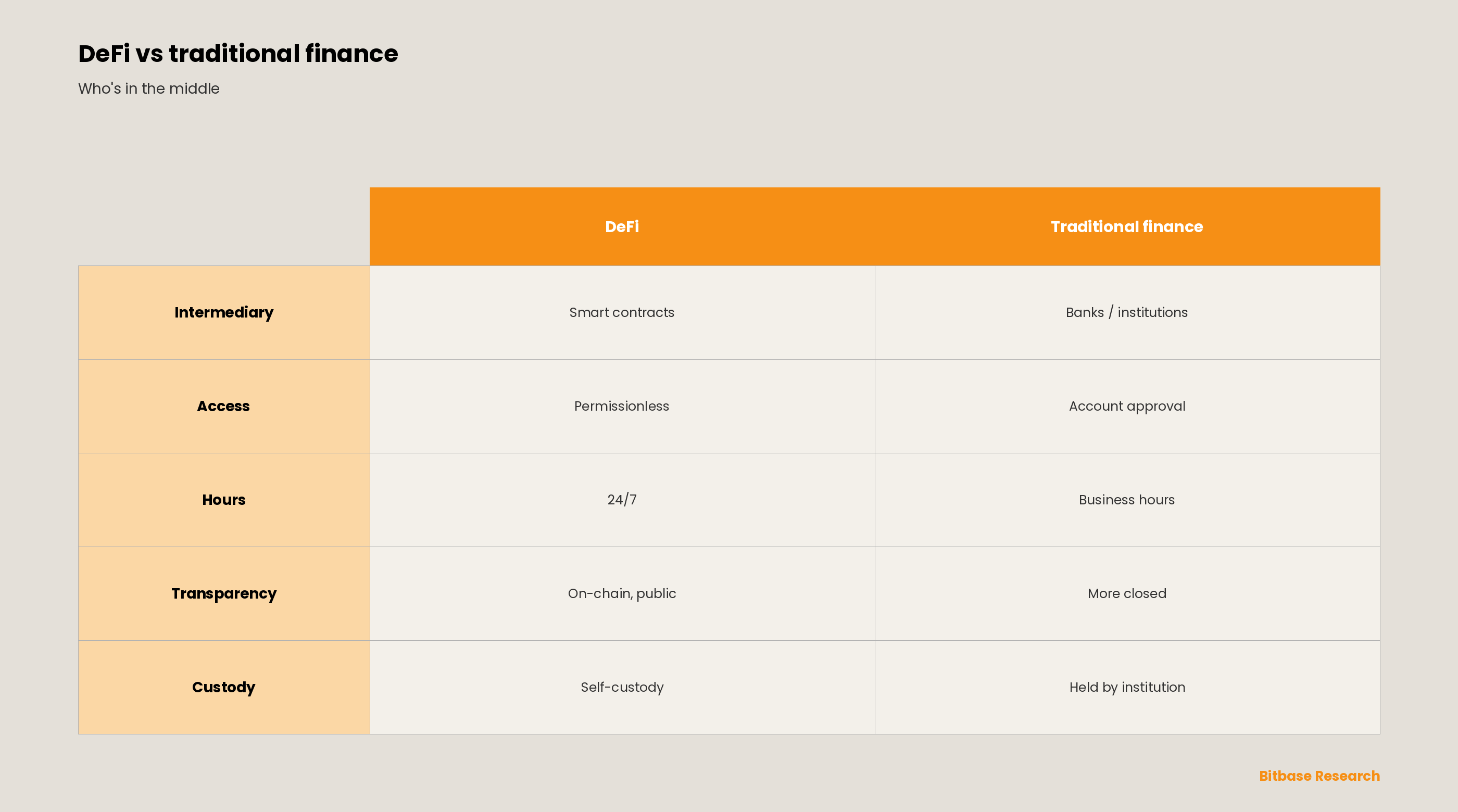
DeFi uses smart contracts — self-executing agreements on a blockchain — to carry out financial activity like lending and trading without a bank or traditional institution in the middle [1]. It is typically transparent and "permissionless": anyone with a wallet can take part from anywhere in the world.
DeFi vs traditional finance
Opportunities and risks
DeFi lets holders do complex financial operations — saving, lending, insurance — without an institution taking a cut [1]. But it carries risks too: smart contracts can have bugs, prices are volatile, and regulation is still evolving [2]. Understand the risks before taking part.
The bottom line
DeFi is an open financial system that runs on a blockchain and replaces traditional intermediaries with smart contracts. It brings openness and transparency, but also new risks. Understanding it is the first step to reading on-chain finance. To keep learning the fundamentals, follow more from Bitbase Academy.
Disclaimer: This article is educational content from Bitbase Academy, provided for information only. It does not constitute investment, trading, tax, or financial advice. Crypto assets are volatile; assess your own risk. Written as of June 2026; refer to the latest official information.
References
[1] Stripe, "Understanding Decentralized Finance (DeFi)." stripe.com
[2] Federal Reserve Bank of Boston, "Decentralized Finance (DeFi): Transformative Potential & Associated Risks." bostonfed.org