Traders are often grouped by their strategy, but an even more basic distinction is their style, defined by how long they hold a trade. From lightning-fast scalping to months-long position trading, these styles suit very different personalities, schedules, and goals. Choosing a style that fits you is more important than any single indicator. Here is how the four main trading styles differ and how to pick the one that suits you.
Scalping and day trading
Scalping is the fastest style, holding trades for seconds to minutes and aiming for many tiny profits from small price moves, often dozens or hundreds of trades a day. It demands intense focus and fast execution. Day trading is a step slower: positions are opened and closed within the same day, never held overnight, capturing intraday moves. Both are full-time, screen-intensive styles that suit people who can dedicate hours of concentrated attention to the market.
Swing and position trading
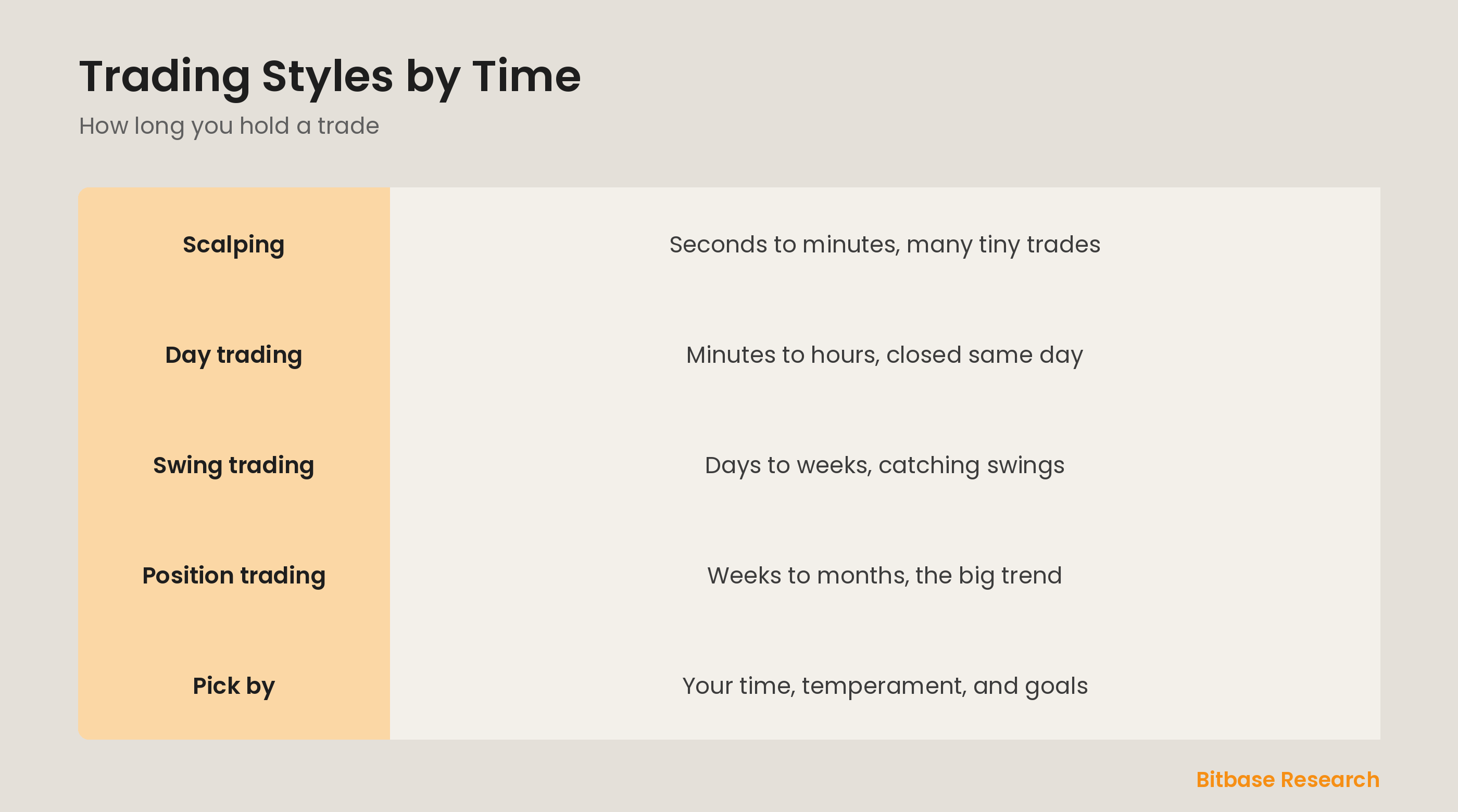
Swing trading holds positions for several days to a few weeks, aiming to capture a single swing or leg of a larger move. It does not require constant screen time, since trades develop over days, making it popular with people who trade around a job. Position trading is the longest style, holding for weeks to months to ride a major trend, closer to investing. It requires patience and the ability to sit through short-term noise without reacting.
The trade-offs between styles
Faster styles offer more opportunities but demand more time, focus, and discipline, and they rack up more fees from frequent trading. Slower styles need less screen time and fewer trades but require patience to hold through volatility and give up the quick action. There is no best style; each trades time and stress against opportunity and pace differently, and the right one depends on what you can realistically commit and tolerate.
Choosing a style that fits
The best style is the one that matches your life and temperament, not the one that sounds most exciting. Consider how much time you can watch the market, whether you can trade during the day or only around a job, how you handle stress and fast decisions, and your goals. Someone with a busy schedule and a calm temperament may thrive at swing or position trading, while scalping suits those who can focus intensely for hours. Fit matters more than speed.
The bottom line
Trading styles differ by holding time: scalping lasts seconds to minutes, day trading is closed within the day, swing trading holds for days to weeks, and position trading spans weeks to months. Faster styles offer more opportunities but demand more time, focus, and fees, while slower ones need patience but less screen time. The best style is the one that fits your available time, temperament, and goals, not the flashiest one. To keep learning the fundamentals, follow more from Bitbase Academy.
Disclaimer: This article is educational content from Bitbase Academy, provided for information only. It does not constitute investment, trading, tax, or financial advice. Crypto assets are volatile; assess your own risk. Written as of June 2026; refer to the latest official information.
References
[1] Investopedia, "Scalping: Definition in Trading, How Strategy Is Used" investopedia.com
[2] Investopedia, "Swing Trading: Definition and the Pros and Cons" investopedia.com
[3] Investopedia, "Position Trader: Definition, Strategies, Pros and Cons" investopedia.com