
Most crypto users know their seed phrase is sacred, but fewer have met its optional companion: the passphrase, sometimes called the 25th word. They sound alike and are easy to confuse, yet they do different jobs. The seed phrase backs up your wallet; the passphrase adds a hidden layer on top of it. Understanding the difference — and the sharp risk the passphrase carries — is worth getting right before you use one.
What the seed phrase is
The seed phrase is the list of 12 or 24 standardized words your wallet generates when you set it up. It is the master backup: from it, the wallet derives every private key and address, and with it you can restore the wallet on any compatible device. The words come from a fixed list, and you do not get to choose them — the wallet picks them at random to guarantee they are secure.
What a passphrase is
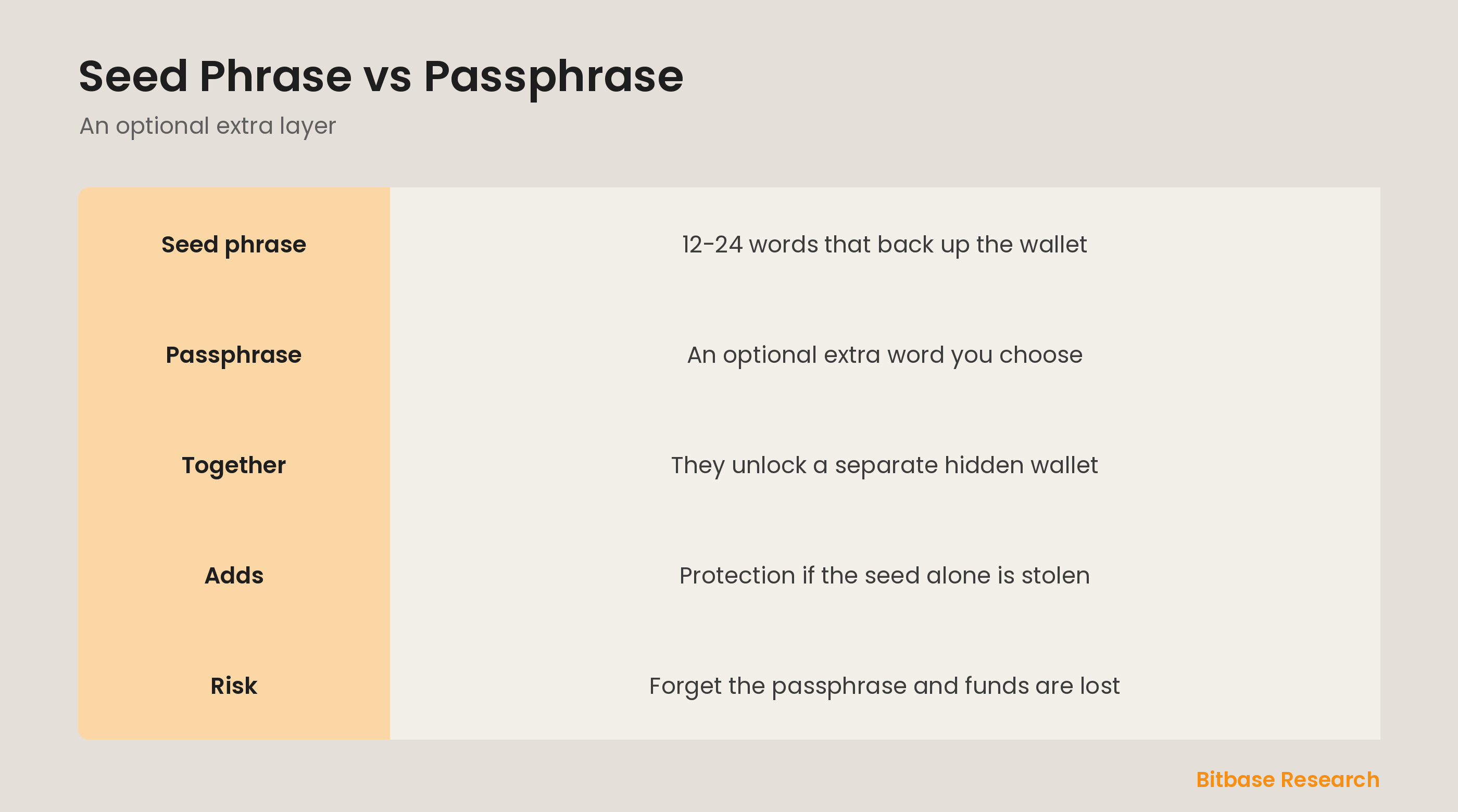
A passphrase is an extra secret you choose yourself and add on top of the seed phrase. Because you invent it, it can be any word or string you like. When you add a passphrase, the wallet combines it with the seed to derive a completely different set of keys and addresses — in effect, a separate hidden wallet. Change even one character of the passphrase and you get a different wallet entirely.
Why people use a passphrase
The passphrase exists to protect you if your seed phrase alone is discovered. A thief who finds your written seed still cannot reach the passphrase-protected wallet, because the passphrase lives only in your memory and was never written with the words. It is a defense against physical theft of your backup — a second secret that the attacker does not have and cannot guess.
The serious risk it adds
That strength is also its danger. The passphrase is not stored anywhere and cannot be recovered — if you forget it, the hidden wallet and everything in it are gone for good, even though you still have the seed phrase. There is no reset. Anyone using a passphrase must record it as carefully as the seed itself, kept separately, because a small memory slip can permanently lock away the funds.
The bottom line
The seed phrase is your wallet's word backup; the passphrase is an optional extra secret that, combined with the seed, unlocks a separate hidden wallet. The passphrase can protect you if your seed is stolen, but forgetting it destroys access with no recovery. Use one only if you will store it as carefully as the seed — and never mistake the two for the same thing. To keep learning the fundamentals, follow more from Bitbase Academy.
Disclaimer: This article is educational content from Bitbase Academy, provided for information only. It does not constitute investment, trading, tax, or financial advice. Crypto assets are volatile; assess your own risk. Written as of June 2026; refer to the latest official information.
References
[1] Bitcoin BIPs, "BIP-39: Mnemonic code for generating deterministic keys" github.com
[2] Investopedia, "Cold Wallet: What It Is, How It Works, Types, and Examples" investopedia.com
[3] Investopedia, "Private Key: What It Is, How It Works, Best Ways to Store" investopedia.com