
Fake crypto websites clone real exchanges and wallets to steal your login, your seed phrase, or your funds. They rely on you not looking closely at the address bar. A few simple habits — checking the URL, ignoring "free money" promises, and never entering your seed phrase — stop almost all of them.
How the scam works
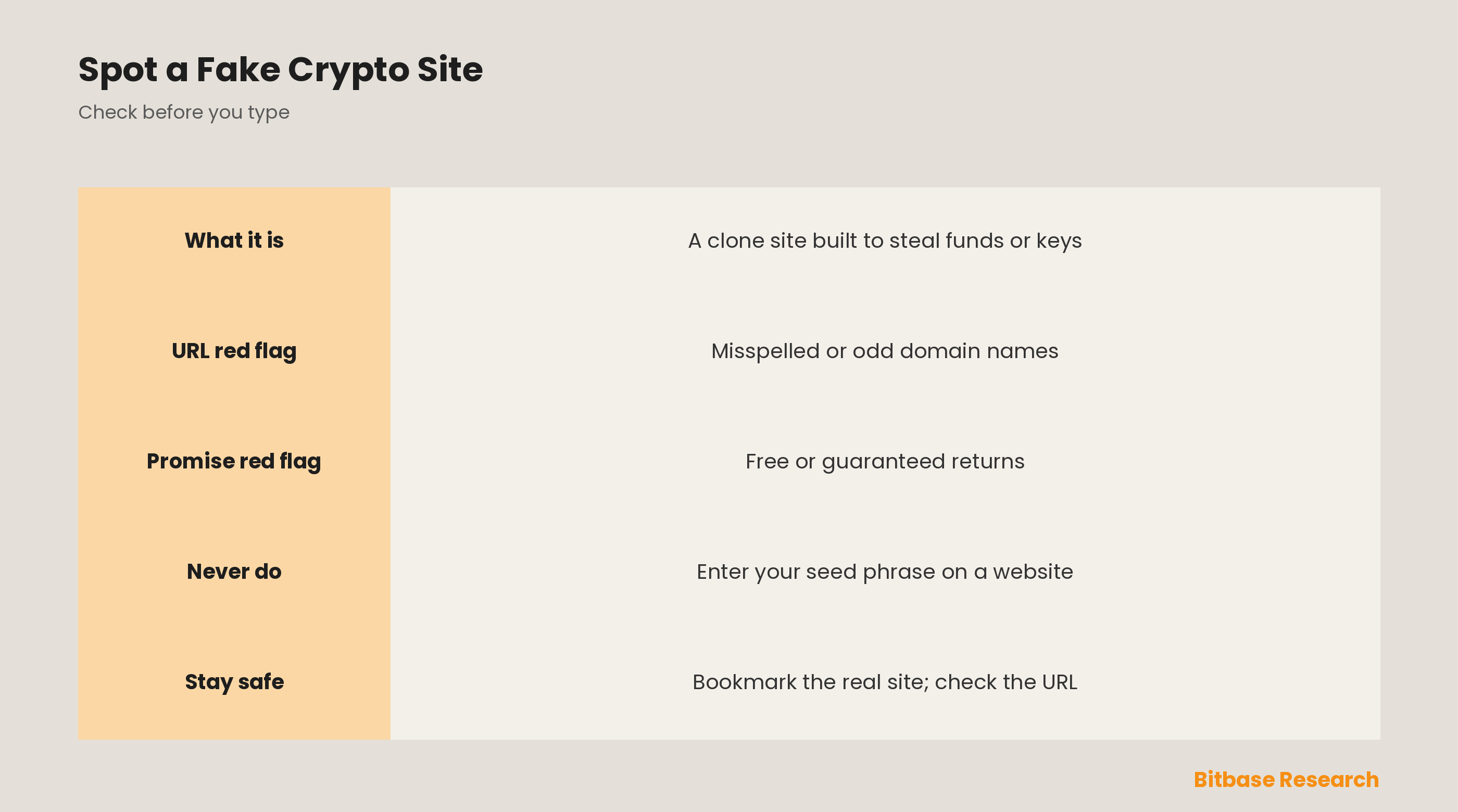
A fake site copies a real brand's look and sits on a lookalike domain, often reached through an ad, search result, or a link in a message. Once there, you might be asked to "log in" (handing over your password), connect a wallet, or enter your recovery phrase — all of which give attackers control [1]. Common red flags include a misspelled or odd URL, pressure to act fast, and promises of free or guaranteed returns [2].
Red flags and defenses
The bottom line
The single most protective habit is to check the address bar before you type anything, and to reach important sites through your own bookmark rather than an ad or message link. Remember that no legitimate exchange or wallet will ever ask for your seed phrase on a website — that request is always a scam. Be skeptical of guaranteed returns and giveaways, and when something feels rushed, slow down and verify. To keep learning the fundamentals, follow more from Bitbase Academy.
Disclaimer: This article is educational content from Bitbase Academy, provided for information only. It does not constitute investment, trading, tax, or financial advice. Crypto assets are volatile; assess your own risk. Written as of June 2026; refer to the latest official information.
References
[1] Coinbase, "Common crypto scams." coinbase.com
[2] Ledger, "How to avoid crypto phishing." ledger.com