The key difference is who holds your private keys. With a custodial wallet, a third party (like an exchange) holds them for you; with a non-custodial wallet, you hold them yourself. Each has trade-offs in control, convenience and responsibility. This guide compares them.
What a custodial wallet is
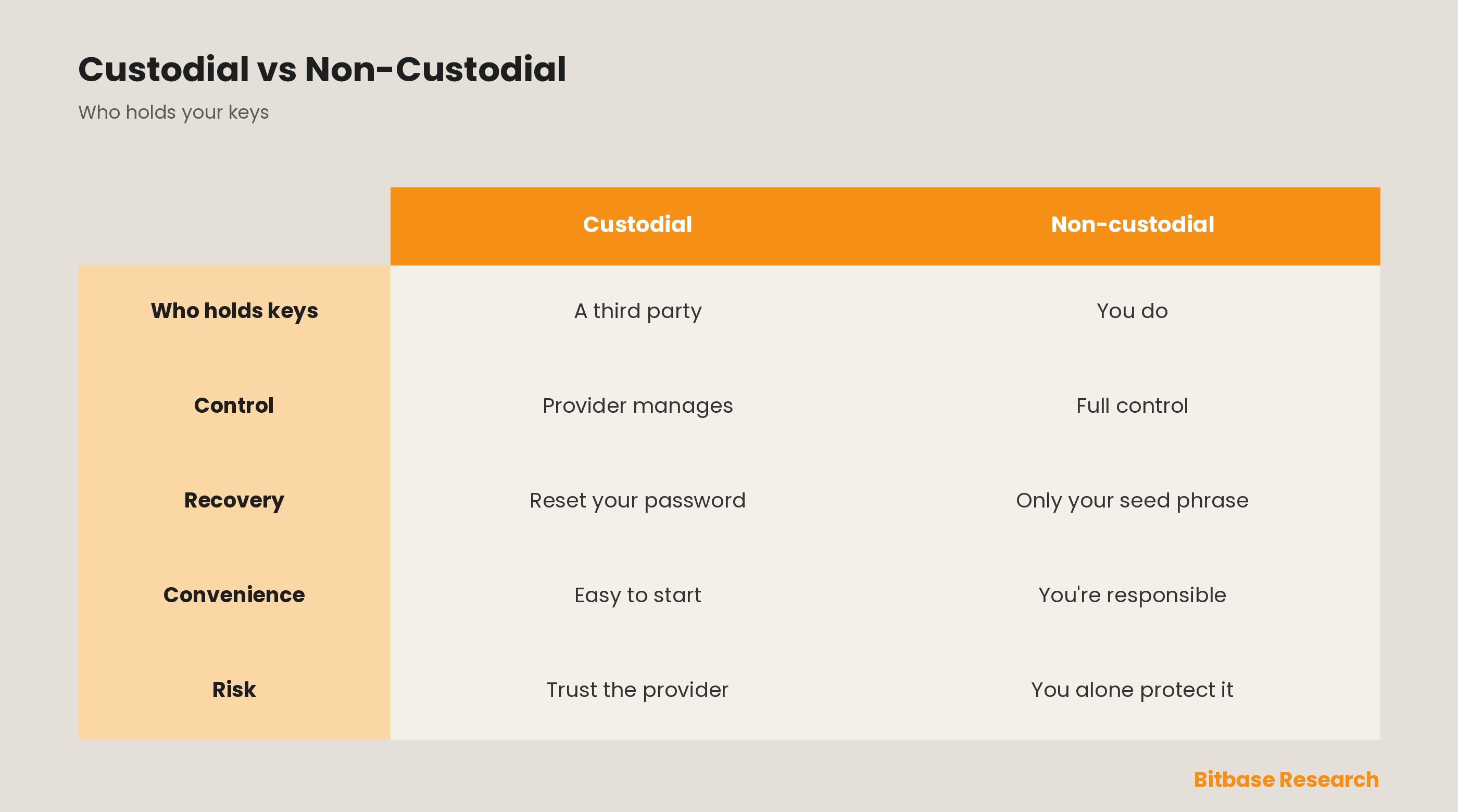
In a custodial wallet, a service such as an exchange keeps your private keys and manages security for you [1]. It's convenient — you can usually reset access if you forget your password — but you're trusting that provider with your funds, which is the idea behind the phrase "not your keys, not your coins" [2].
What a non-custodial wallet is
In a non-custodial (self-custody) wallet, you hold your own private keys, usually backed up by a seed phrase [1]. You get full control and no third party can freeze your funds — but you're fully responsible for security and backups. If you lose your seed phrase, no one can recover your crypto [2].
Side by side
The bottom line
Custodial wallets trade some control for convenience and account recovery; non-custodial wallets give you full ownership but put security squarely on you. Many people use a custodial exchange for buying and a non-custodial wallet for holding — the right mix depends on how much control and responsibility you want. To keep learning the fundamentals, follow more from Bitbase Academy.
Disclaimer: This article is educational content from Bitbase Academy, provided for information only. It does not constitute investment, trading, tax, or financial advice. Crypto assets are volatile; assess your own risk. Written as of June 2026; refer to the latest official information.
References
[1] Coinbase, "Custodial vs. non-custodial wallets." coinbase.com
[2] Ledger, "Custodial vs. Non-Custodial Wallets." ledger.com