
Day trading is one of the most talked-about and most misunderstood ways to trade crypto. The idea is simple: open and close positions within the same day, aiming to profit from short-term price moves rather than long-term growth. What sounds fast and exciting is also demanding and risky, and most people who try it lose money. Here is what crypto day trading actually is, how it works, and what it takes.
What day trading is
Day trading means buying and selling within a single day, closing every position before you stop for the day rather than holding overnight. The goal is to capture small, short-term price movements, often repeated across many trades. Where a long-term holder cares about where a coin will be in years, a day trader cares only about the next minutes or hours, and profits by being right about those small moves more often than not.
How it works in crypto
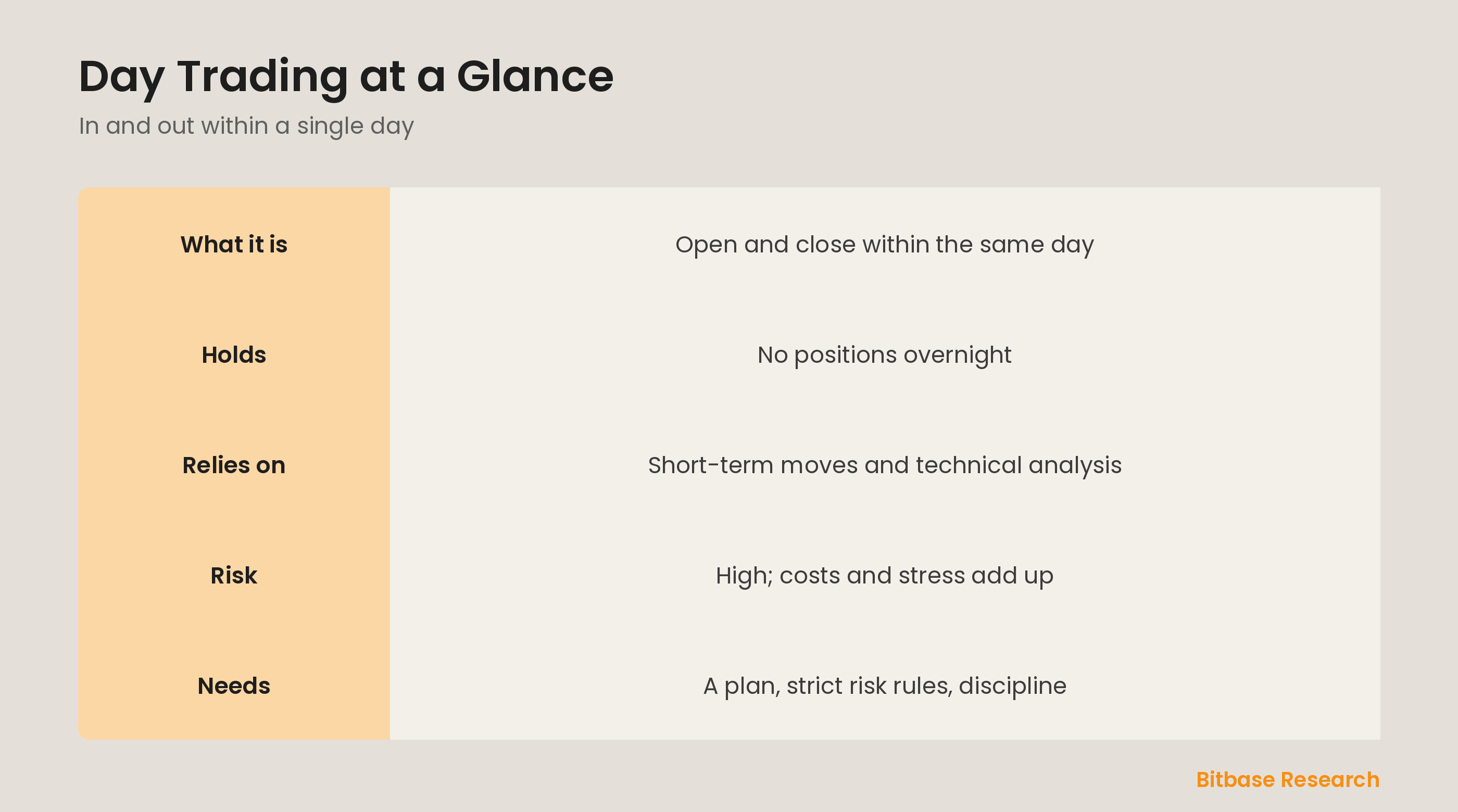
Crypto suits day trading in some ways: the market runs 24/7, and prices are volatile enough to create the short-term moves traders look for. Day traders rely heavily on technical analysis — reading charts and indicators — to time entries and exits, and they favor liquid markets so they can get in and out quickly. Some use leverage to amplify small moves, which raises both the potential gains and the risk of being wiped out.
The risks and downsides
Day trading is hard for good reason. The constant, fast decisions are mentally and emotionally draining, and a single impulsive move can undo a week of careful gains. Trading fees and the spread eat into profits on every trade, so high activity carries high costs. Volatility that creates opportunity also creates sudden losses, and studies of active traders consistently find that the majority lose money over time.
What it takes to try it
If you still want to try day trading, treat it as a serious discipline, not a game. You need a written plan with clear entry and exit rules, strict risk management so no single trade can hurt you, and only capital you can genuinely afford to lose. Practice first with paper trading, keep a journal, and start small. Consistency and emotional control matter far more than any hot tip or indicator.
The bottom line
Crypto day trading means opening and closing trades within a single day to profit from short-term moves, using technical analysis and often leverage in a 24/7 market. It is fast, costly, and high-risk, and most who attempt it lose money. If you pursue it, do so with a strict plan, disciplined risk management, and money you can afford to lose — treating it as a skill to build slowly, not a shortcut to riches. To keep learning the fundamentals, follow more from Bitbase Academy.
Disclaimer: This article is educational content from Bitbase Academy, provided for information only. It does not constitute investment, trading, tax, or financial advice. Crypto assets are volatile; assess your own risk. Written as of June 2026; refer to the latest official information.
References
[1] Investopedia, "Day Trader: Definition, Techniques, Strategies, and Risks" investopedia.com
[2] Investopedia, "Technical Analysis: What It Is and How to Use It in Investing" investopedia.com
[3] Investopedia, "Risk Management in Finance: Definition and Common Strategies" investopedia.com