
A Bitcoin halving is an automatic event that cuts in half the number of new bitcoin entering circulation through mining. It happens roughly once every four years, progressively slowing the rate of new issuance. This guide explains it.
How it works
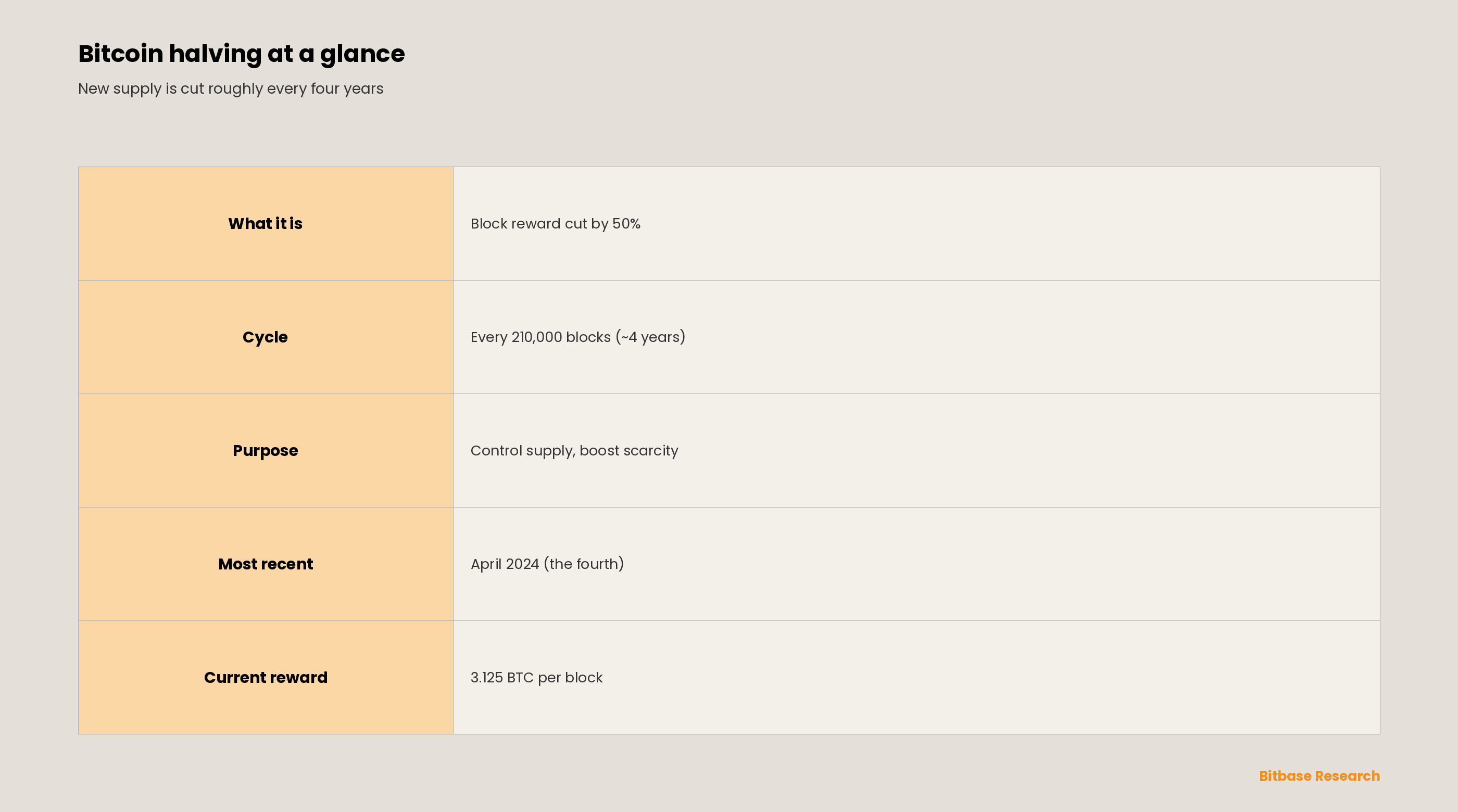
Bitcoin's "block reward" is halved every 210,000 blocks — about once every four years [1]. That means the new coins a miner earns for each block drop by 50%, steadily slowing the issuance of new bitcoin and reinforcing its scarcity [2].
Bitcoin halving at a glance
History and impact
The most recent halving took place in April 2024 — Bitcoin's fourth — cutting the block reward from 6.25 BTC to 3.125 BTC [2]. Halvings directly shape the pace of new supply and are long seen as central to Bitcoin's "scarcity" design, though they do not directly set the price.
The bottom line
Bitcoin halving is the mechanism that cuts the block reward in half about every four years, controlling supply and reinforcing scarcity. Understanding it helps you see Bitcoin's issuance logic. To keep learning the fundamentals, follow more from Bitbase Academy.
Disclaimer: This article is educational content from Bitbase Academy, provided for information only. It does not constitute investment, trading, tax, or financial advice. Written as of June 2026; refer to the latest official information.
References
[1] Coinbase, "What is a Bitcoin halving?" coinbase.com
[2] Kraken, "What is a Bitcoin Halving?" kraken.com