A blockchain node is a device that runs the blockchain's protocol software and helps maintain the network. Its core job is to receive data, validate it, and broadcast it to other nodes, together securing the network and keeping the ledger consistent. This guide explains it.
How it works
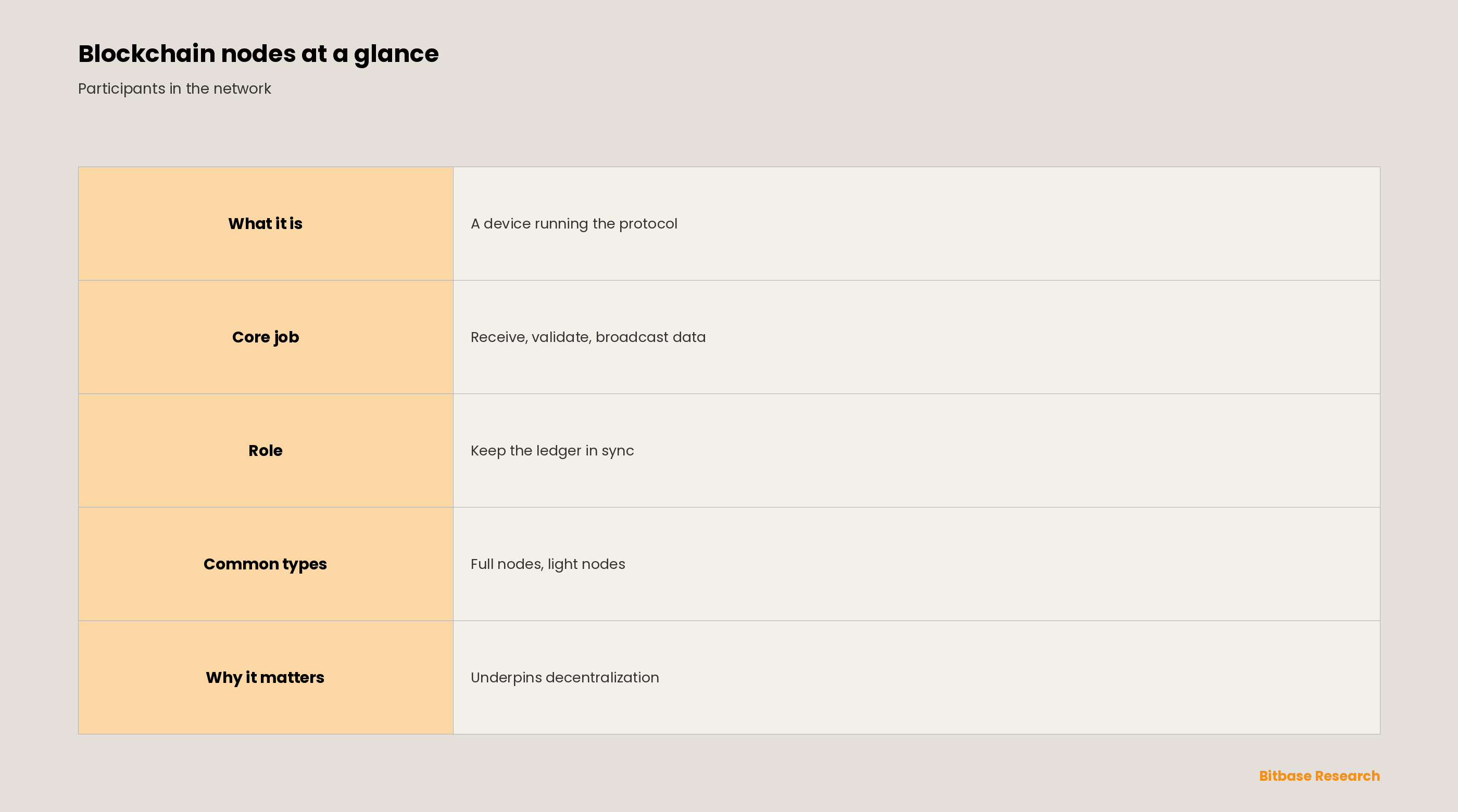
A node is a "device plus participant" pair running a decentralized network's protocol software [1]. Its work revolves around three things: receiving data, validating it, and broadcasting it to peer nodes [2]. Many nodes each store and check the ledger, letting the network agree without a central server.
Blockchain nodes at a glance
Why it matters
The more nodes there are, and the more spread out, the harder the network is to control or tamper with from any single point — the very basis of decentralization [1]. Different node types play different roles: some store the full ledger (full nodes), others keep only part of the data to run lightly.
The bottom line
A node is a network participant that runs the protocol and validates and broadcasts transactions — a cornerstone of blockchain decentralization and security. Understanding it helps you see how a network stays consistent without a center. To keep learning the fundamentals, follow more from Bitbase Academy.
Disclaimer: This article is educational content from Bitbase Academy, provided for information only. It does not constitute investment, trading, tax, or financial advice. Written as of June 2026; refer to the latest official information.
References
[1] Chainlink, "What Is a Blockchain Node? Types and Functions." chain.link
[2] MoonPay, "What Are Blockchain Nodes and How Do They Work?" moonpay.com