
Trend following is one of the oldest and most durable trading approaches, built on a simple observation: trends, once established, tend to persist. Rather than trying to predict tops and bottoms, a trend follower aims to identify a move already underway and ride it until it ends. The discipline is less about being right often and more about how you handle winners and losers. Here is how trend following works and where it struggles.
The core idea
Trend following does not try to forecast where price will go; it waits for a trend to establish itself, then joins it in the same direction. The underlying belief is that a market moving strongly one way is more likely to keep going than to suddenly reverse, so the odds favor trading with the existing momentum. A trend follower is content to miss the exact bottom and top, entering after a trend is confirmed and exiting after it clearly ends.
Cut losses, let winners run
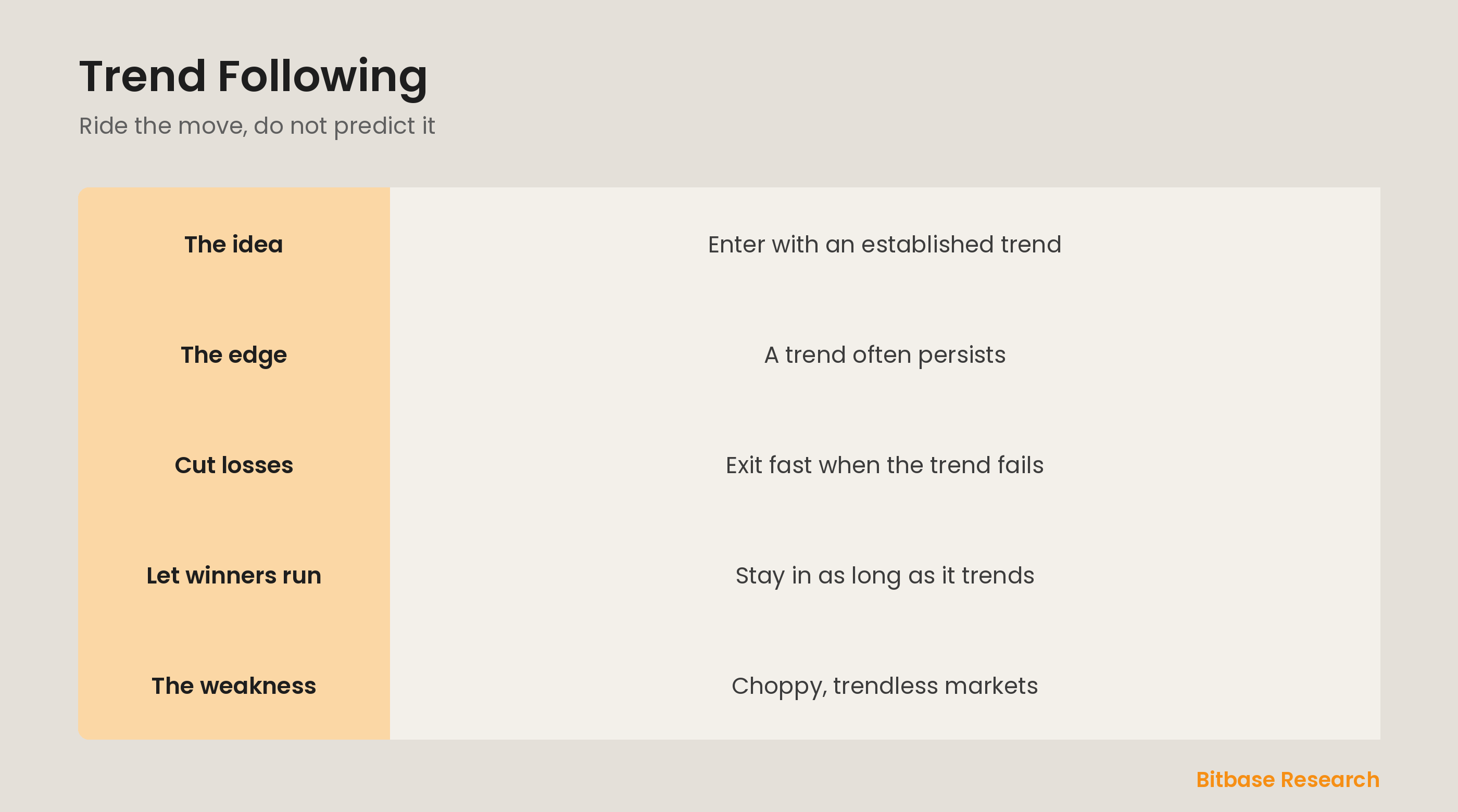
The heart of trend following is a rule about managing trades: cut losses short and let winners run. Because many trades will fail as trends fizzle, a trend follower exits losing trades quickly and cheaply. But when a real trend takes hold, they stay in it as long as it continues, allowing a few big winners to more than pay for the many small losses. This asymmetry, small losses and large gains, is what makes the approach work over time.
How trend followers trade
In practice, trend followers use tools that identify direction and confirm momentum, such as moving averages, trendlines, or breakouts, to signal entries in the direction of the trend. They set a stop-loss to define the small loss they will accept if the trend fails, then hold as long as the trend holds, sometimes trailing the stop upward to lock in gains. The exact tools vary, but the logic is always to align with the trend and manage risk mechanically.
Where it struggles
Trend following has a clear weakness: it needs trends to work. In a choppy, sideways market with no sustained direction, a trend follower gets repeatedly faked out, entering on false breakouts and getting stopped for small losses again and again. These conditions can produce long, frustrating drawdowns. Trend followers accept this as the cost of the approach, knowing their profits come from the occasional strong trend, and they endure the flat periods in between.
The bottom line
Trend following aims to ride an established trend rather than predict turns, based on the idea that trends tend to persist. Its core discipline is to cut losses short and let winners run, so a few large gains outweigh many small losses. Traders use moving averages, trendlines, or breakouts to enter with the trend and manage risk with stops. Its main weakness is choppy, trendless markets, where it suffers repeated small losses waiting for the next real trend. To keep learning the fundamentals, follow more from Bitbase Academy.
Disclaimer: This article is educational content from Bitbase Academy, provided for information only. It does not constitute investment, trading, tax, or financial advice. Crypto assets are volatile; assess your own risk. Written as of June 2026; refer to the latest official information.
References
[1] Investopedia, "Trend Trading: Definition and How Strategy Aims for Profit" investopedia.com
[2] Investopedia, "Momentum: Definition, Types, and Uses in Trading" investopedia.com
[3] Investopedia, "Technical Analysis: What It Is and How to Use It" investopedia.com