
A stablecoin is designed to hold a steady value, usually pegged to $1; Bitcoin's price floats freely and can be volatile. One is built for stability, the other is a scarce asset many treat as long-term store of value. This guide compares their purposes.
Two different goals
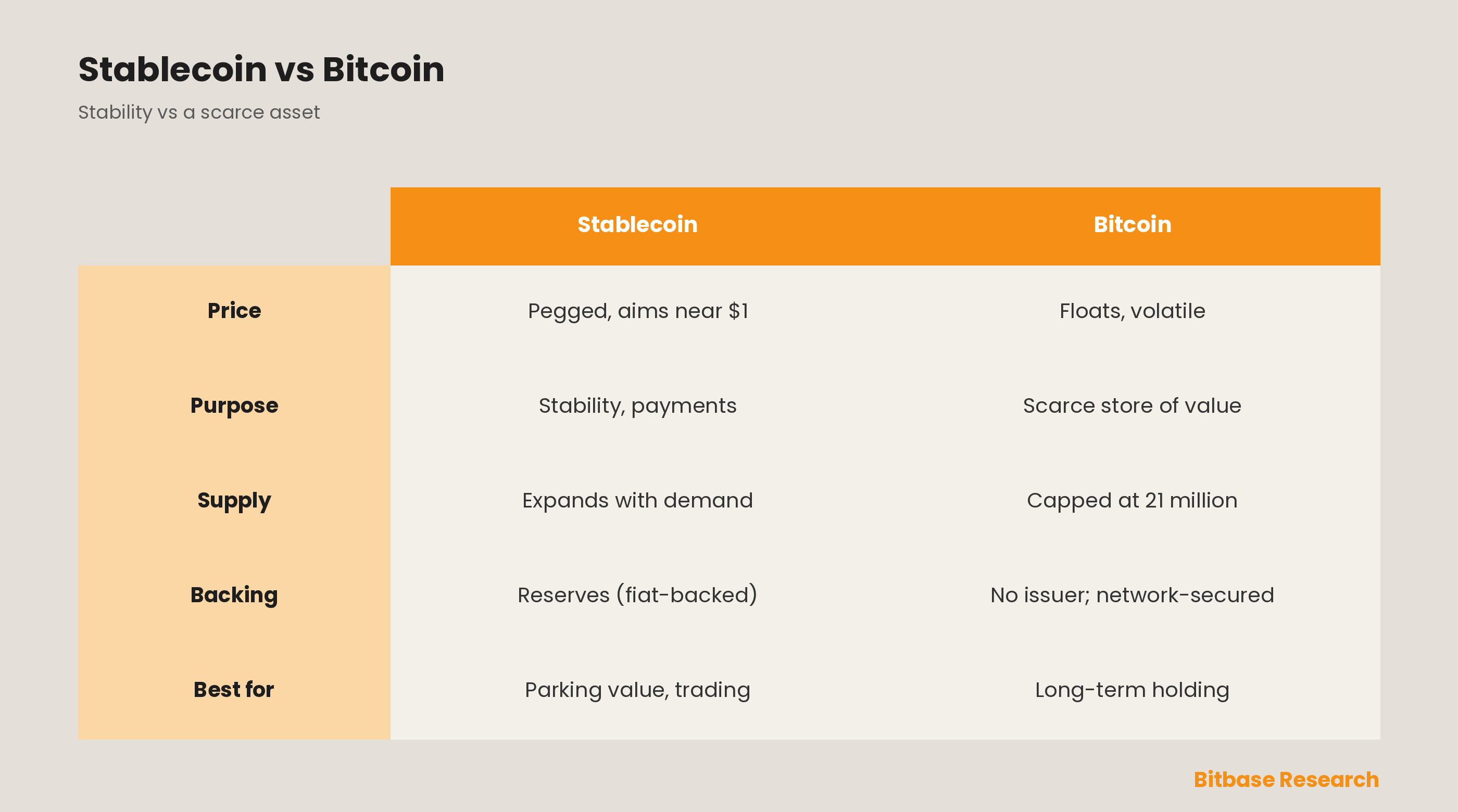
A stablecoin like USDT or USDC aims to stay worth about one dollar, backed by reserves, so it's useful for payments, saving value between trades, and moving money without price swings [1]. Bitcoin is the opposite by design: no peg, a fixed supply capped at 21 million, and a price set purely by supply and demand — which makes it volatile but also why many hold it as "digital gold" for the long term [2].
Side by side
The bottom line
They aren't really competitors — they do different jobs. A stablecoin is where you go for steadiness: parking value, paying, or sitting out volatility. Bitcoin is a scarce, market-priced asset people hold for potential long-term growth, accepting the swings that come with it. Many people use both together: stablecoins for stability and everyday movement, Bitcoin for long-term exposure. To keep learning the fundamentals, follow more from Bitbase Academy.
Disclaimer: This article is educational content from Bitbase Academy, provided for information only. It does not constitute investment, trading, tax, or financial advice. Crypto assets are volatile; assess your own risk. Written as of June 2026; refer to the latest official information.
References
[1] Coinbase, "What is a stablecoin?" coinbase.com
[2] Coinbase, "What is Bitcoin?" coinbase.com