Learning to trade with real money is an expensive way to make beginner mistakes. Paper trading offers a safer path: you place trades with simulated funds at real market prices and see how they would have worked out, with nothing at stake. It is one of the best ways to learn before risking a cent — as long as you understand what it can and cannot teach you. Here is how paper trading crypto works and how to use it well.
What paper trading is
Paper trading, sometimes called demo trading, is practicing with fake money on a platform that uses real, live prices. You get a simulated balance, place buy and sell orders as you normally would, and the platform tracks your profit or loss as if the trades were real. Nothing you gain or lose is actual money, so you can experiment freely while the market behaves exactly as it does in reality.
What it is good for
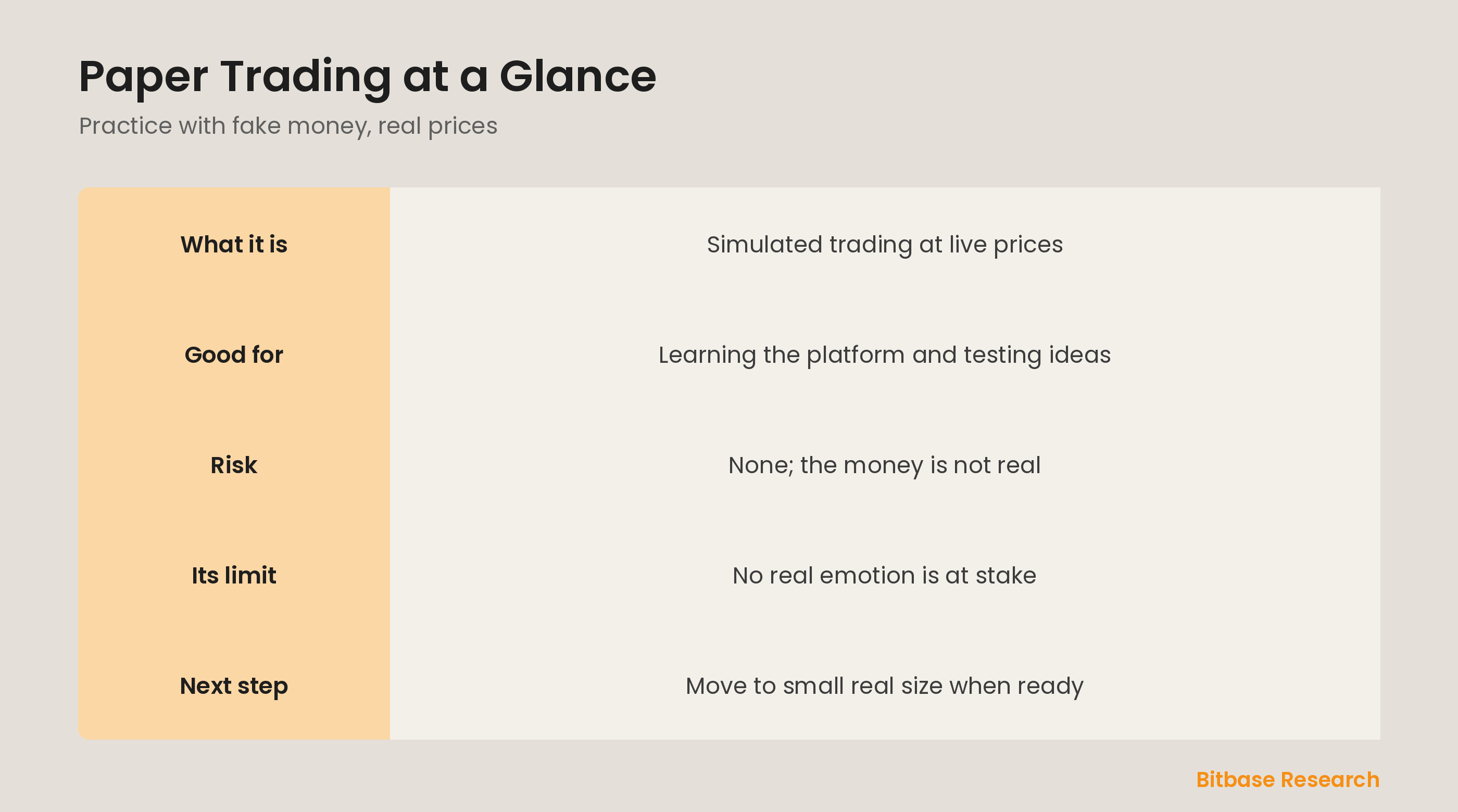
Paper trading shines as a learning tool. It lets you get comfortable with an exchange's interface — how orders, charts, and order types work — without the risk of a costly misclick. It is also the ideal place to test a new strategy or idea and see how it performs across real market conditions. Because there is no financial risk, you can make and learn from mistakes that would be painful with real funds.
Where it falls short
The biggest limitation is emotional. Trading fake money does not trigger the fear and greed that real money does, so paper trading cannot fully prepare you for the psychology of a live position. Simulated fills can also be more generous than reality, ignoring slippage or liquidity limits. And consistent paper profits can breed overconfidence that does not survive contact with real stakes.
How to use it well
Take paper trading seriously to get real value from it. Trade the size you actually plan to use, follow your rules as strictly as you would with real money, and keep a journal of your simulated trades just as you would live ones. When you are consistently disciplined and your strategy holds up, transition to real trading with small position sizes, so the jump to real emotion is gradual rather than a shock.
The bottom line
Paper trading crypto lets you practice with simulated money at real prices, making it an excellent, risk-free way to learn a platform and test strategies. Its main blind spot is emotion, since fake money cannot replicate the pressure of real stakes. Use it seriously, journal your results, and when you are ready, move to real trades in small size — treating paper trading as the rehearsal, not the performance. To keep learning the fundamentals, follow more from Bitbase Academy.
Disclaimer: This article is educational content from Bitbase Academy, provided for information only. It does not constitute investment, trading, tax, or financial advice. Crypto assets are volatile; assess your own risk. Written as of June 2026; refer to the latest official information.
References
[1] Investopedia, "Paper Trade: Definition, Meaning, How It Works, and Benefits" investopedia.com
[2] Investopedia, "Backtesting: Definition, How It Works, and Downsides" investopedia.com
[3] Investopedia, "Risk Management in Finance: Definition and Common Strategies" investopedia.com