
The difference between trading and gambling is a plan. A crypto trading plan is a written set of rules that decides, in advance, what you will trade, when you will enter and exit, and how much you will risk. Because the rules are set before emotion takes over, the plan is what keeps you disciplined when the market gets loud. Here is how to build one, part by part, and how to actually use it.
What a trading plan is
A trading plan is your personal rulebook, written down rather than kept loosely in your head. It states what you are trying to achieve, how much risk you are willing to take, and the exact conditions under which you will open and close trades. Its whole value is that it exists before you are in a position, so that heat-of-the-moment feelings meet a decision you already made calmly.
The core parts to include
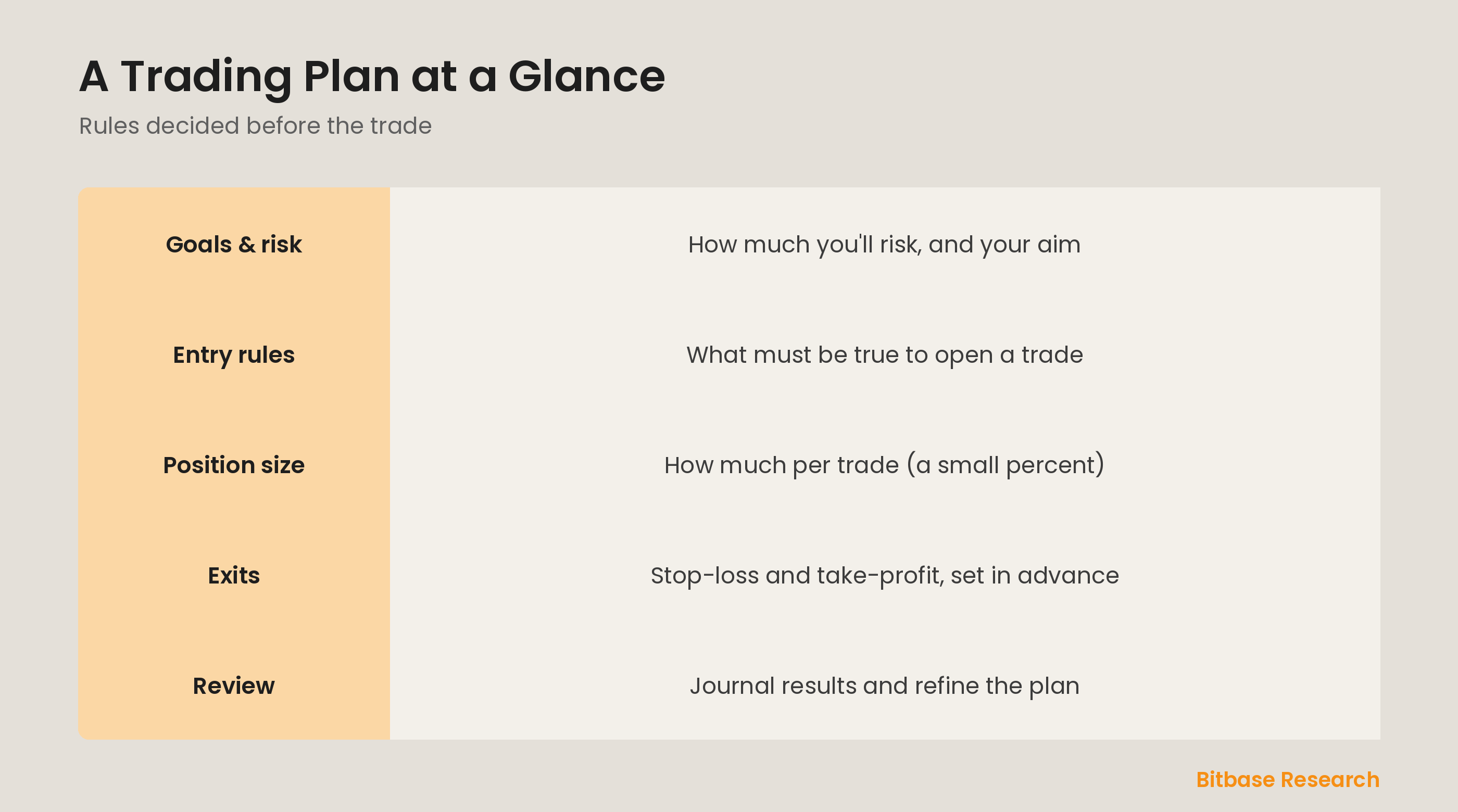
A solid plan covers a few essentials. Start with your goals and risk tolerance — what you want and how much you can afford to lose. Define which markets you will trade and the specific criteria that must be met to enter. Set your position sizing so each trade risks only a small, fixed share of your account. Finally, decide your exits in advance: a stop-loss to cap losses and a take-profit target to lock gains.
Building in risk rules
Risk management is the backbone of the plan. A common guideline is to risk only a small percentage of your capital on any single trade, so a losing streak cannot wipe you out. Define your stop-loss and profit target before entering, so your exits are decisions, not reactions. Cap your total exposure across all open positions too, so no single event can do outsized damage.
Using and refining the plan
A plan only works if you follow it consistently, even when a trade tempts you to break the rules. Do not move a stop or abandon the plan mid-position out of hope; adjust the plan itself between trades, based on evidence. Pair it with a trading journal so you can review what worked and what did not, then refine the rules over time. The plan is a living document, but you improve it deliberately, not in the heat of a trade.
The bottom line
A crypto trading plan replaces impulse with rules by deciding your goals, entry criteria, position sizing, and exits before you ever open a trade. Its core is risk management: small risk per trade and exits set in advance. Follow it consistently, review it with a journal, and refine it between trades. With a plan, your results come from a process you control, not from moment-to-moment emotion. To keep learning the fundamentals, follow more from Bitbase Academy.
Disclaimer: This article is educational content from Bitbase Academy, provided for information only. It does not constitute investment, trading, tax, or financial advice. Crypto assets are volatile; assess your own risk. Written as of June 2026; refer to the latest official information.
References
[1] Investopedia, "Trading Plan: Definition, How It Works, Rules, and Examples" investopedia.com
[2] Investopedia, "Risk Management in Finance: Definition and Common Strategies" investopedia.com
[3] Investopedia, "Behavioral Finance: Biases, Emotions and Financial Behavior" investopedia.com