
It depends on the network, how busy it is, and the fee you pay. Some transfers settle in seconds, others take several minutes to an hour. This guide explains what drives the timing and how to estimate it.
What affects the time
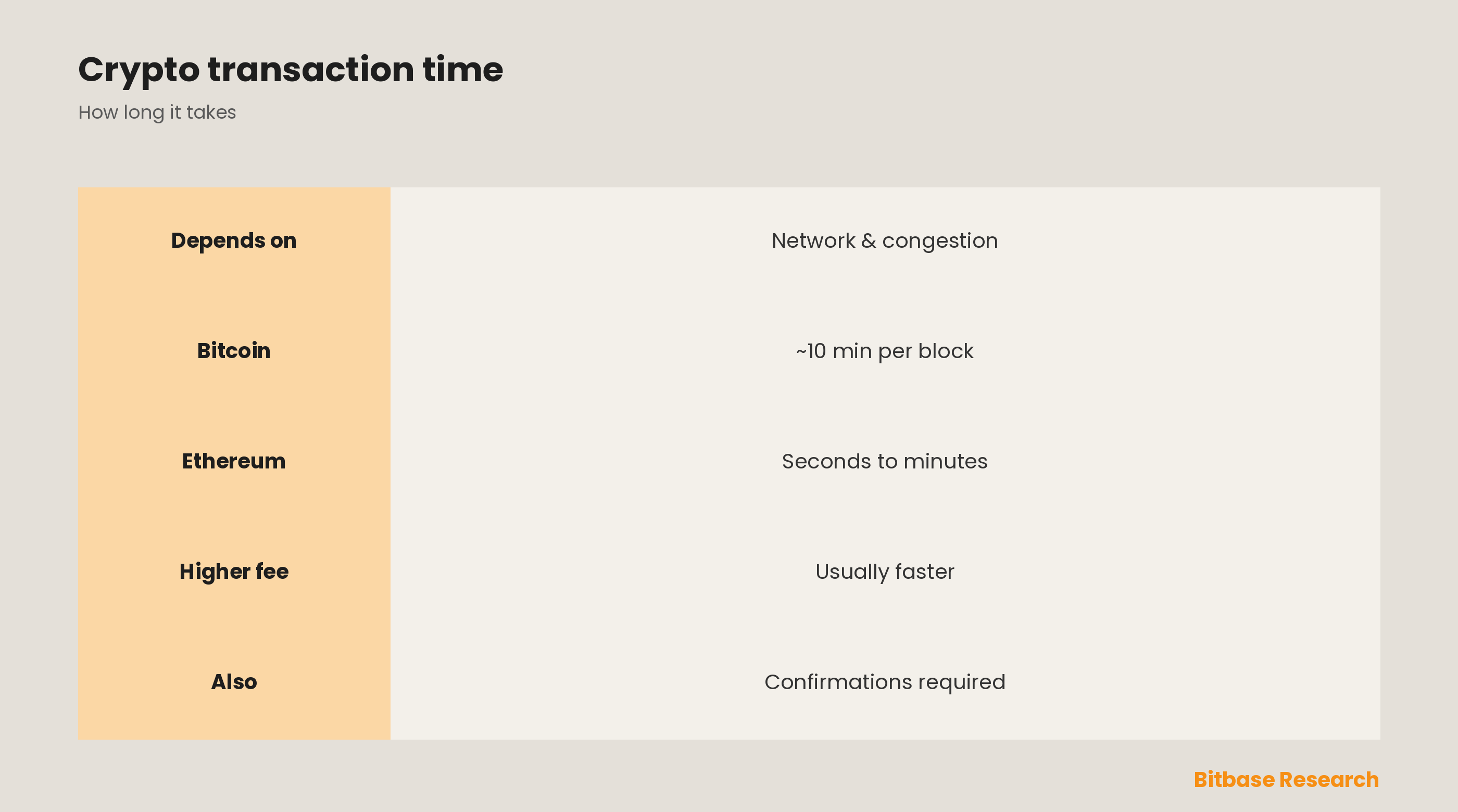
Every blockchain adds blocks at its own pace. Bitcoin targets a new block roughly every 10 minutes, so a transfer often takes from about ten minutes to an hour once you count the confirmations a recipient wants [1]. Ethereum produces blocks every few seconds, so its transfers usually settle in seconds to a couple of minutes. Congestion and the fee you pay also matter: when the network is busy, a higher fee gets you included sooner [2].
Typical timings
The bottom line
There's no single answer — timing depends on the blockchain, network congestion, the fee you pay, and how many confirmations the recipient or exchange requires. As a rough guide, Ethereum is often seconds to minutes and Bitcoin can be ten minutes to an hour. Paying an adequate fee is the simplest way to avoid delays. To keep learning the fundamentals, follow more from Bitbase Academy.
Disclaimer: This article is educational content from Bitbase Academy, provided for information only. It does not constitute investment, trading, tax, or financial advice. Crypto assets are volatile; assess your own risk. Written as of June 2026; refer to the latest official information.
References
[1] Coinbase, "What is a blockchain?" coinbase.com
[2] Investopedia, "How Long Do Bitcoin Transfers Take?" investopedia.com