
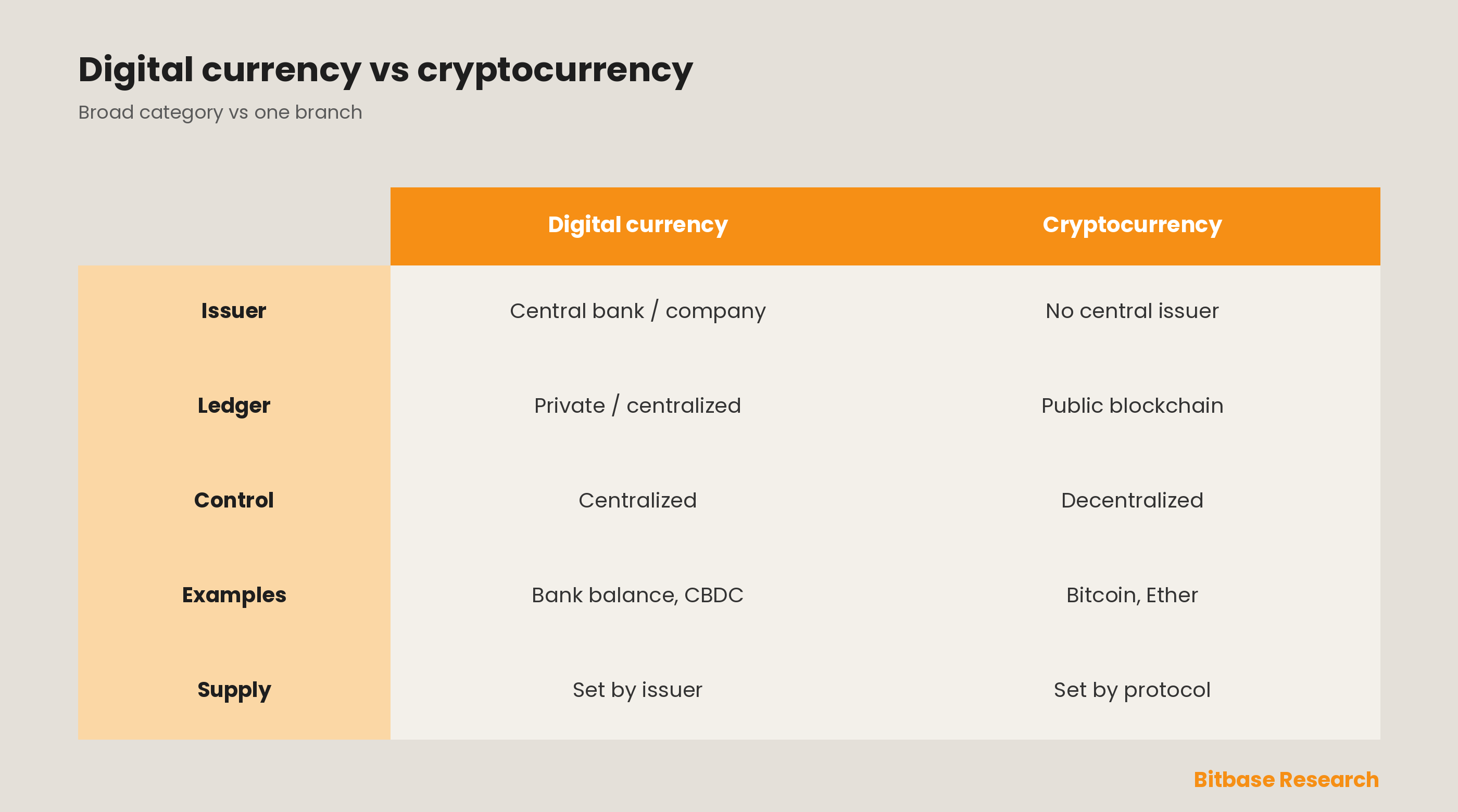
"Digital currency" is any money in electronic form — including the balance in your bank app. Cryptocurrency is a specific type of digital currency that runs on a decentralized blockchain with no central issuer. All cryptocurrency is digital currency, but not all digital currency is cryptocurrency. This guide compares them.
What digital currency is
Digital currency is any form of money that exists only electronically, with no physical coins or notes [1]. It includes the balance in your bank account, e-money in payment apps, and central bank digital currencies (CBDCs). Most digital currency is issued and controlled by a central party, such as a bank or a government.
What cryptocurrency is
Cryptocurrency is a subset of digital currency that runs on a decentralized blockchain and is secured by cryptography, with no central issuer [2]. Instead of a single company keeping the ledger, a distributed network maintains it — which is why crypto is described as decentralized and permissionless.
Side by side
The bottom line
Think of digital currency as the broad category — any money in electronic form — and cryptocurrency as one branch of it that is decentralized and blockchain-based. All crypto is digital currency; not all digital currency is crypto. To keep learning the fundamentals, follow more from Bitbase Academy.
Disclaimer: This article is educational content from Bitbase Academy, provided for information only. It does not constitute investment, trading, tax, or financial advice. Crypto assets are volatile; assess your own risk. Written as of June 2026; refer to the latest official information.
References
[1] Investopedia, "Digital Currency Types and Examples." investopedia.com
[2] Coinbase, "What is cryptocurrency?" coinbase.com