Two traders can look at the exact same chart and one profits while the other loses — not because of skill, but because of how they handled fear and greed. In crypto, where prices swing violently and run around the clock, emotion is often the deciding factor. Mastering trading psychology is less about predicting the market and more about managing yourself. Here are the traps that catch most people and the discipline that beats them.
Why psychology matters so much
Most trading losses do not come from bad analysis; they come from good plans abandoned in the heat of the moment. Crypto's extreme volatility magnifies this, turning ordinary fear and greed into powerful urges to act at the worst possible times. You can have a sound strategy and still lose consistently if emotion overrides it. That is why experienced traders treat their own mind as the primary thing to manage.
The common emotional traps
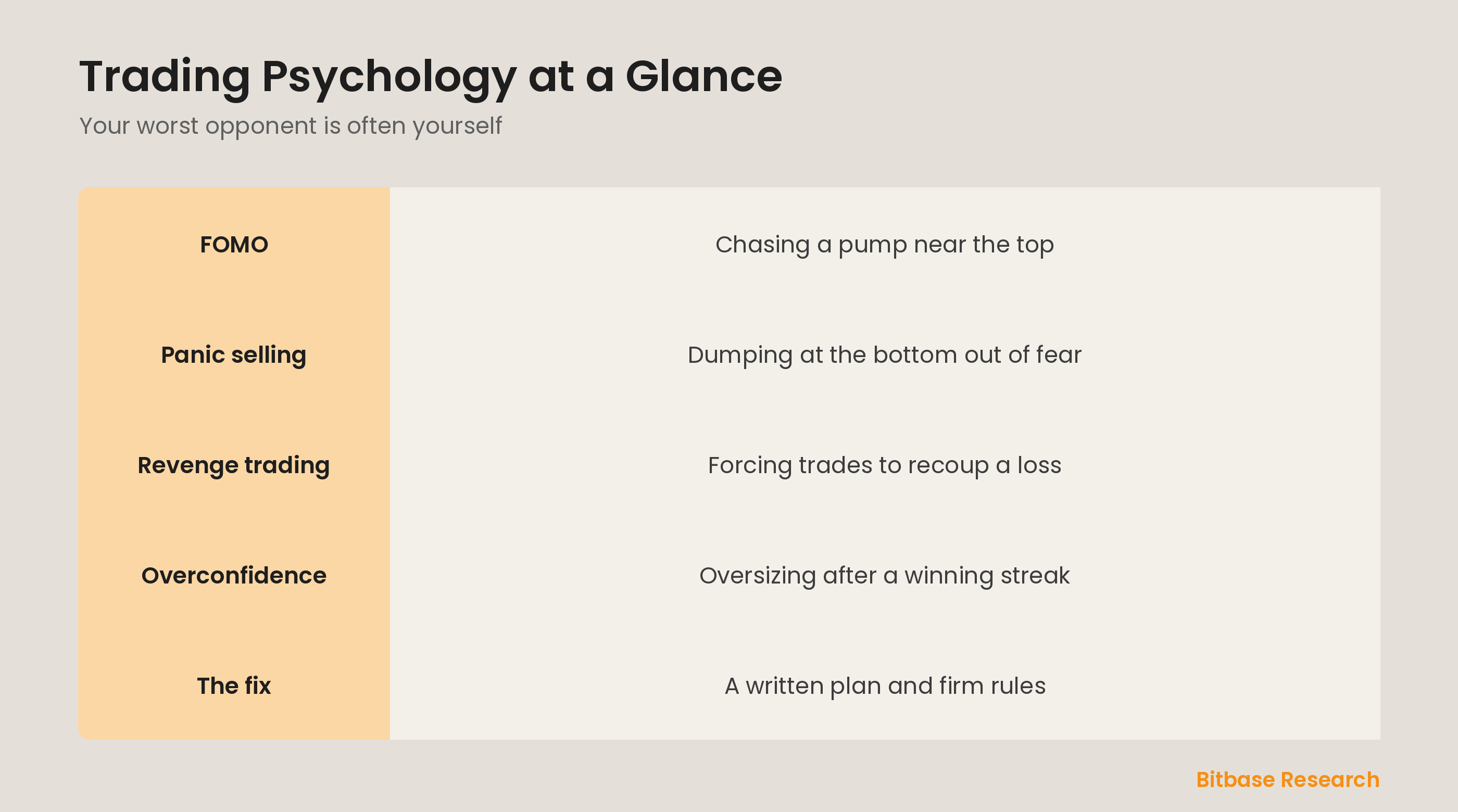
A few patterns catch nearly everyone. FOMO, the fear of missing out, pulls you into buying after a coin has already surged, right near the top. Panic selling does the reverse, dumping in fear at the bottom. Revenge trading is forcing new trades to win back a loss, and overconfidence tempts you to bet too big after a winning streak. Each one substitutes emotion for a plan.
How emotions distort decisions
Underneath these traps are predictable biases. Greed makes risks look small in a bull market; fear makes them look huge in a bear. Herd behavior pulls you toward whatever the crowd is doing, and recency bias makes the latest move feel like it will continue forever. None of these reflect the actual odds — they are your brain taking shortcuts, and in fast markets those shortcuts are expensive.
Building discipline
The antidote is structure that does not depend on how you feel. Decide your rules in advance with a written trading plan, size positions so no single trade can hurt you badly, and set your exits before you enter. Keep a journal so you can see your own patterns, take breaks after big wins or losses, and accept that losses are a normal cost of trading, not a personal failure to be avenged.
The bottom line
Crypto trading psychology often matters more than analysis, because the market's swings turn fear and greed into costly impulses. FOMO, panic selling, revenge trading, and overconfidence catch nearly everyone, and they all replace a plan with emotion. The defense is discipline: written rules, sensible position sizing, pre-set exits, and a journal. Manage yourself well, and the strategy has room to work. To keep learning the fundamentals, follow more from Bitbase Academy.
Disclaimer: This article is educational content from Bitbase Academy, provided for information only. It does not constitute investment, trading, tax, or financial advice. Crypto assets are volatile; assess your own risk. Written as of June 2026; refer to the latest official information.
References
[1] Investopedia, "Behavioral Finance: Biases, Emotions and Financial Behavior" investopedia.com
[2] Investopedia, "Fear and Greed Index: Definition and How It Predicts Market" investopedia.com
[3] Investopedia, "Risk Management in Finance: Definition and Common Strategies" investopedia.com