Most traders remember their big wins and forget everything else, which is exactly why they repeat the same mistakes. A trading journal fixes that by turning your trades into data you can actually learn from. It is one of the highest-value habits in trading, and it costs nothing but a little discipline. Here is what a crypto trading journal is, what to record in it, and how reviewing it makes you a better trader over time.
What a trading journal is
A trading journal is a running record of every trade you make, kept in a spreadsheet, an app, or even a notebook. Instead of relying on memory, which flatters your wins and buries your losses, you write down what actually happened. Over time it becomes an honest mirror of your trading — showing not just your results, but the decisions and emotions behind them.
What to log for each trade
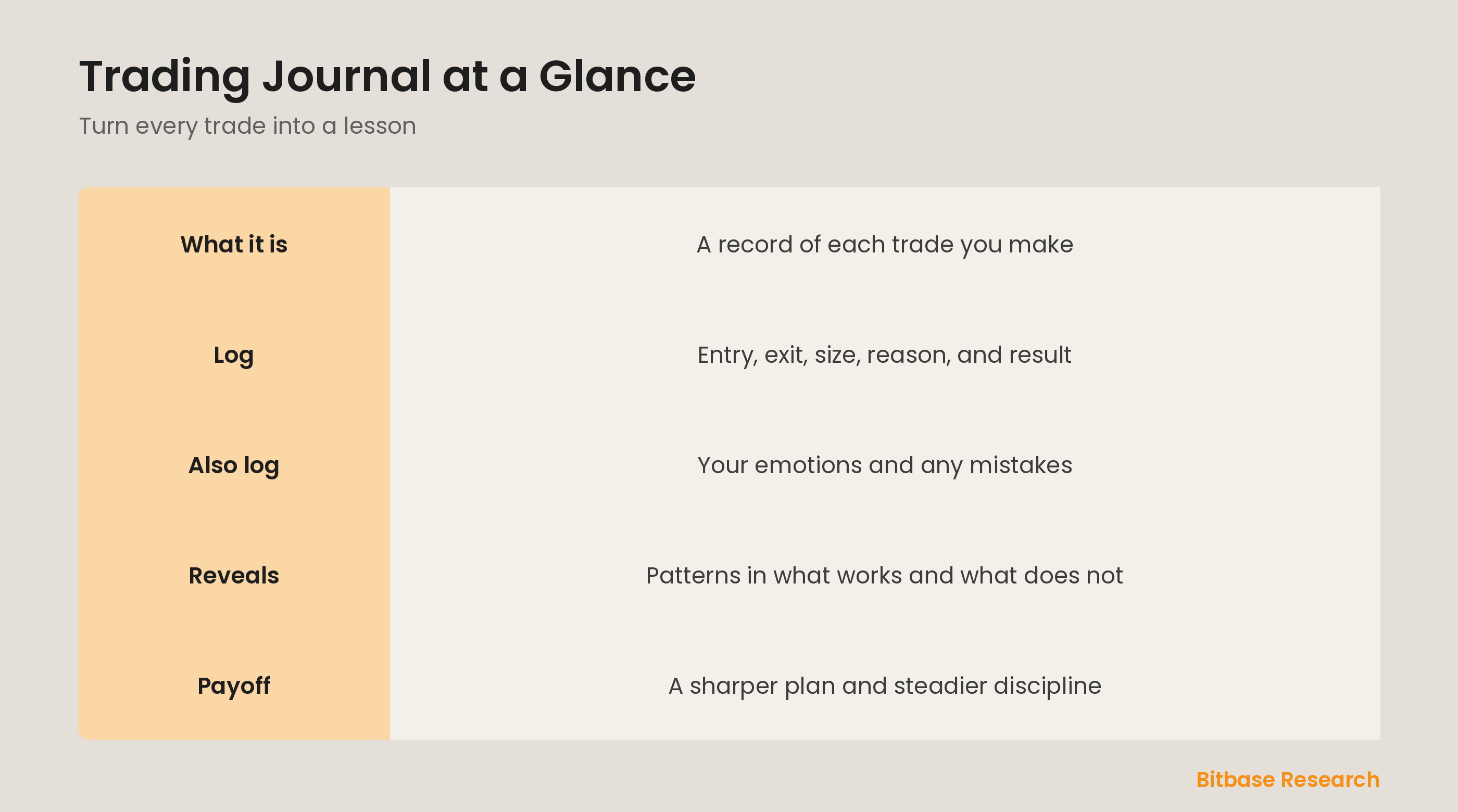
Record the basics for every position: the date, the pair, your entry and exit prices, and the size. Then add the important context — the reason or setup you traded, the result in profit or loss, any mistake you made, and how you felt while deciding. That last part matters, because emotions like FOMO or fear often leave fingerprints on your worst trades that only a journal will reveal.
Why it helps so much
A journal turns scattered trades into visible patterns. It shows which setups actually make money and which quietly lose it, so you can do more of what works. It enforces discipline, because knowing you will record a trade makes you think twice before breaking your rules. And it separates skill from luck by showing your results over many trades, not just the memorable few.
How to use it well
The value comes from reviewing, not just recording. Set a regular time to read back through your entries and look for what repeats — a losing setup you keep trying, an emotion that precedes your worst trades, a rule you keep breaking. Tag your winners and losers by type so the patterns stand out. Then feed what you learn back into your trading plan, so each review makes the next trades a little sharper.
The bottom line
A crypto trading journal records every trade — entry, exit, size, reason, result, and the emotions behind it — so your experience becomes something you can study. Reviewing it reveals which setups work, enforces discipline, and separates skill from luck. Kept honestly and read regularly, it turns each trade into a lesson and steadily sharpens both your plan and your self-control. To keep learning the fundamentals, follow more from Bitbase Academy.
Disclaimer: This article is educational content from Bitbase Academy, provided for information only. It does not constitute investment, trading, tax, or financial advice. Crypto assets are volatile; assess your own risk. Written as of June 2026; refer to the latest official information.
References
[1] Investopedia, "Trading Plan: Definition, How It Works, Rules, and Examples" investopedia.com
[2] Investopedia, "Behavioral Finance: Biases, Emotions and Financial Behavior" investopedia.com
[3] Investopedia, "Risk Management in Finance: Definition and Common Strategies" investopedia.com