
On-ramp and off-ramp are two of the most useful words to know in crypto, and once you understand one, the other is easy. They describe the two directions money can move between the traditional financial system and the crypto world. An on-ramp gets you in; an off-ramp gets you out. Here is a clear side-by-side of what each does, how they differ, and the things they have in common.
What each one does
An on-ramp converts fiat money — the dollars or euros in your bank — into cryptocurrency. An off-ramp does the reverse, converting cryptocurrency back into fiat you can withdraw and spend. The names come from picturing crypto as a highway: the on-ramp is how you drive on, and the off-ramp is how you exit. You use an on-ramp to buy in and an off-ramp to cash out.
The direction is the difference
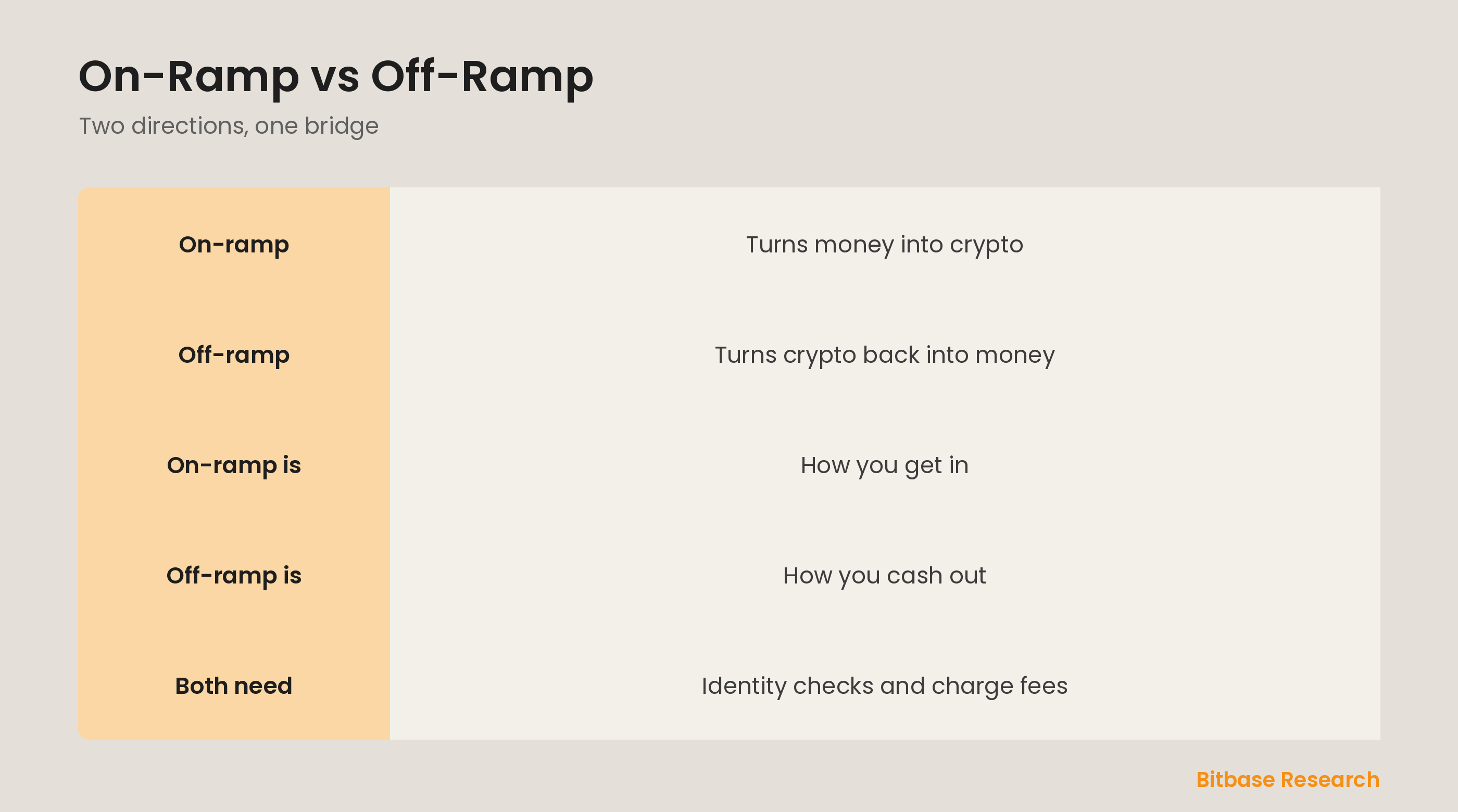
The core difference is simply which way value flows. With an on-ramp, money leaves your bank and comes back as crypto in your account. With an off-ramp, crypto leaves your account and comes back as money in your bank. Everything else about them — the platforms, the methods, the checks — is broadly similar, because they are two sides of the same bridge between fiat and crypto.
What they have in common
Because both connect crypto to the regulated financial system, they share the same requirements. Both typically need identity verification, or KYC, before you can use them. Both charge a fee and build in a spread between the buy and sell price, which is how the service earns money. And both are usually offered by the same platforms — most exchanges act as both your on-ramp and your off-ramp.
How to use them well
The practical advice is the same for both directions. Use a reputable, regulated provider, since this is where your money crosses between the two worlds. Compare methods, as bank transfers, cards, and other options differ in cost and speed. Watch the fees and the spread on every conversion, and remember that off-ramping — selling crypto for fiat — can trigger tax on any gains, so keep records.
The bottom line
In crypto, an on-ramp turns money into crypto and an off-ramp turns crypto back into money — the same bridge traveled in opposite directions. One is how you get in, the other how you cash out, and both require identity checks and charge fees plus a spread. Use reputable, regulated providers for each, compare methods to keep costs down, and keep records of your off-ramp sales for tax. To keep learning the fundamentals, follow more from Bitbase Academy.
Disclaimer: This article is educational content from Bitbase Academy, provided for information only. It does not constitute investment, trading, tax, or financial advice. Crypto assets are volatile; assess your own risk. Written as of June 2026; refer to the latest official information.
References
[1] Investopedia, "Fiat Money: What It Is, How It Works, Example, Pros and Cons" investopedia.com
[2] Investopedia, "Cryptocurrency Explained With Pros and Cons for Investment" investopedia.com
[3] Investopedia, "Know Your Client (KYC): What It Means, Compliance Requirements" investopedia.com