
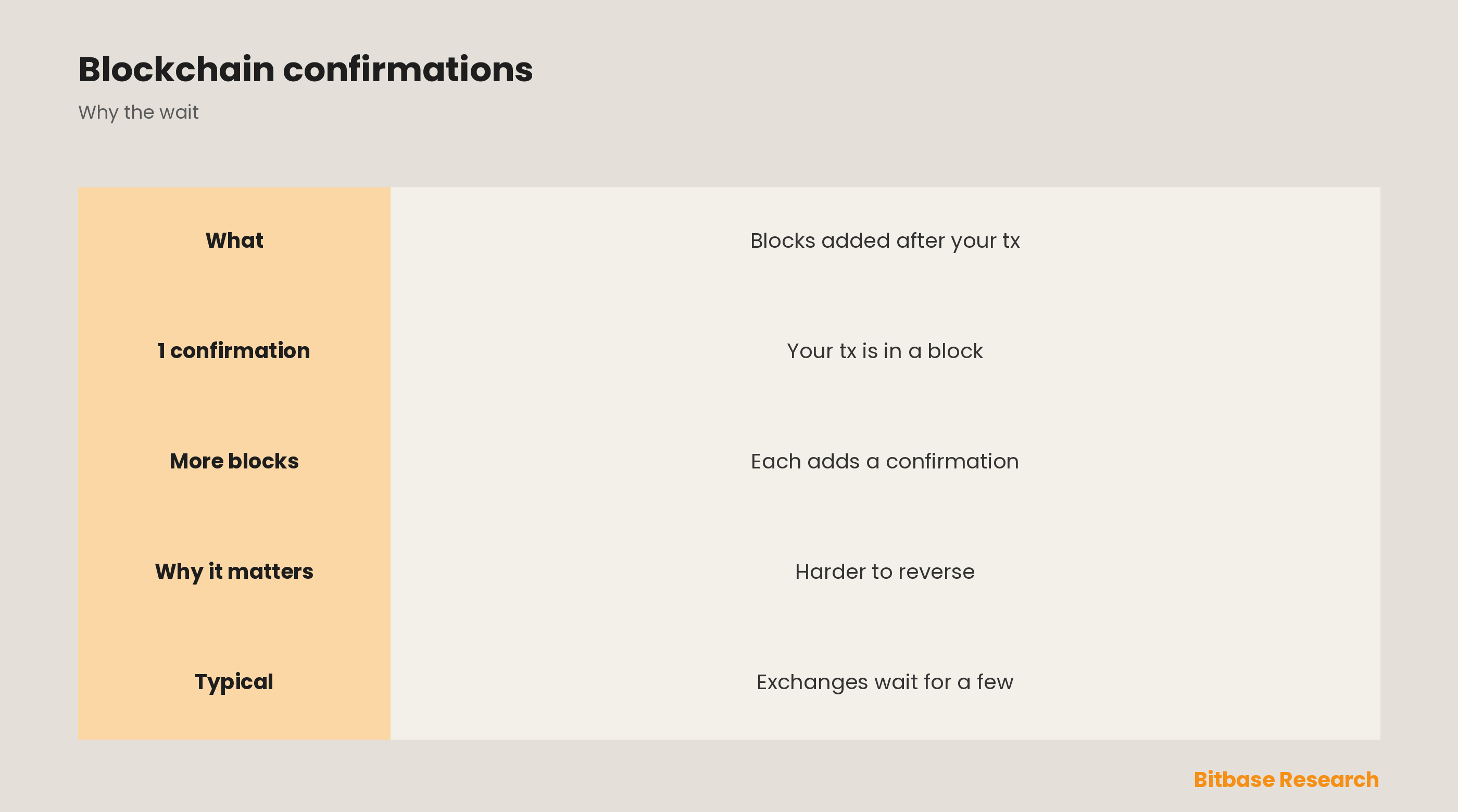
A confirmation is a block added to the chain on top of the one that contains your transaction. The more confirmations, the harder your transaction is to reverse — which is why exchanges often wait for a few before crediting your funds. This guide explains it simply.
How confirmations build up
When your transaction is first included in a block, it has one confirmation [1]. Each new block added after it counts as another confirmation. Because rewriting history means redoing all the work in those blocks, more confirmations make a transaction increasingly permanent and secure [2].
Why the wait
The bottom line
Confirmations are how a blockchain shows that a transaction is settled and unlikely to be reversed. One confirmation means it's in a block; each additional block strengthens it. Many services set a threshold — for example a few confirmations on Bitcoin — before treating a deposit as final. To keep learning the fundamentals, follow more from Bitbase Academy.
Disclaimer: This article is educational content from Bitbase Academy, provided for information only. It does not constitute investment, trading, tax, or financial advice. Crypto assets are volatile; assess your own risk. Written as of June 2026; refer to the latest official information.
References
[1] Coinbase, "What is a blockchain?" coinbase.com
[2] Investopedia, "Confirmations." investopedia.com