
Block height and block time are two of the most common blockchain numbers, and they are easy to mix up. Height is where a block sits in the chain; block time is how long, on average, between one block and the next. One is a count, the other a duration. Here is exactly what each means and how they relate.
Block height: the block's position
Block height is a block's position in the chain — the number of blocks that came before it. The very first block, the genesis block, has a height of zero, and every block after it is numbered one higher than the last. Height only ever goes up, by exactly one per block, so it doubles as a permanent index: saying a transaction was confirmed at height 800,000 pins it to an exact place in history that never changes.
Block time: the gap between blocks
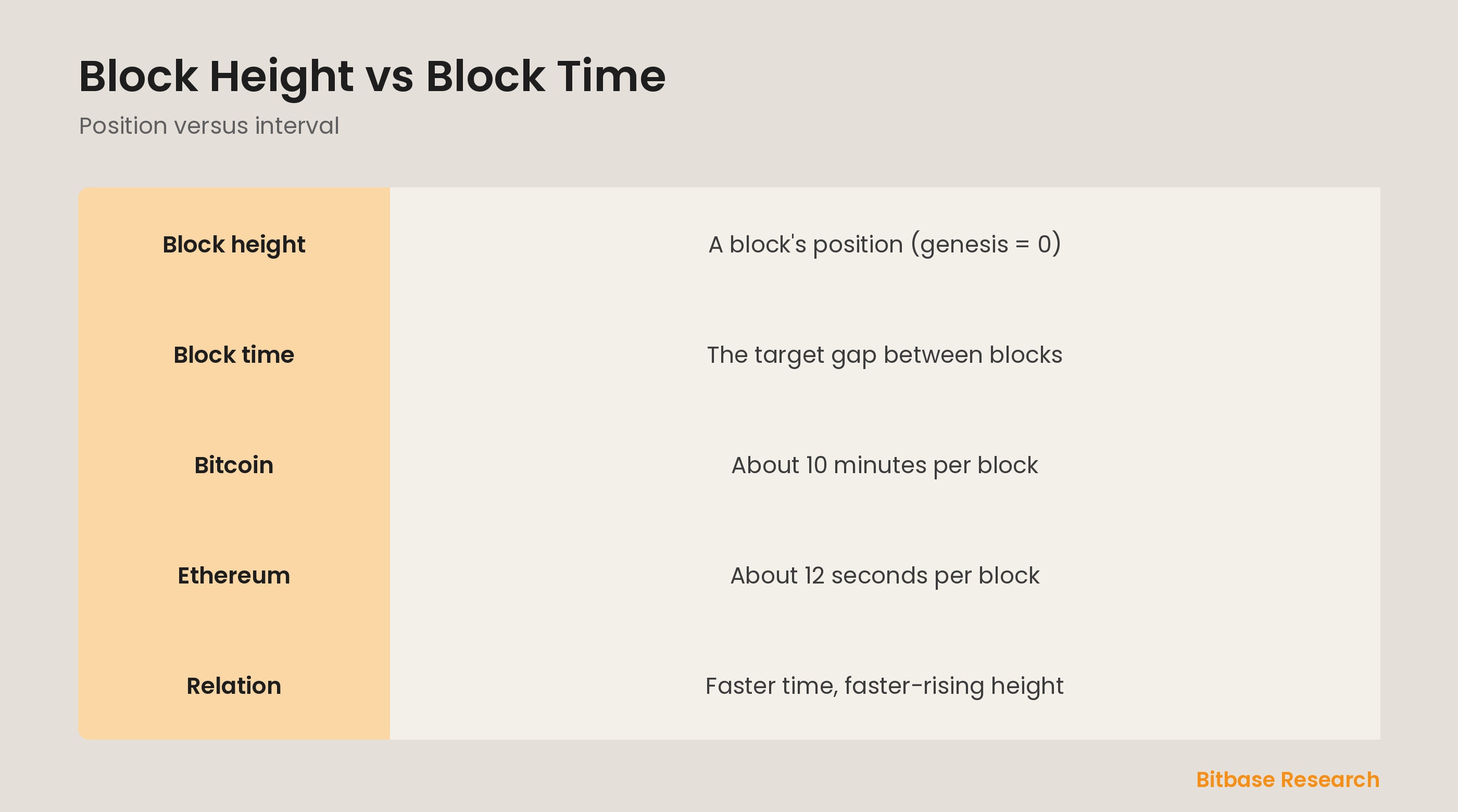
Block time is the average interval between consecutive blocks — how often the chain produces a new one. It is a target the network defends: Bitcoin aims for a new block roughly every ten minutes, while Ethereum, on proof of stake, targets about twelve seconds. Bitcoin holds its target by adjusting mining difficulty every 2,016 blocks, so the ten-minute average stays steady no matter how much mining power comes or goes.
How they relate
Height and time describe the same chain from different angles: height counts the blocks, time measures the spacing between them. Because Ethereum adds a block every dozen seconds and Bitcoin every ten minutes, Ethereum's height climbs far faster even though both chains are advancing normally. So a big height number does not mean an old chain, and a small one does not mean a young one — you have to know the block time to translate height into elapsed time.
Where you see them
Both turn up whenever you track a transaction. Confirmations are counted in blocks — “six confirmations” means six blocks have been added on top since yours — which is a height measurement. How long those confirmations take is estimated from the block time. A block explorer shows both: the height of the block your transaction landed in, and the timestamp that reflects the chain's block time. Read together, they tell you where and when.
The bottom line
Block height is a block's number in the chain, starting from zero at genesis and rising by one each block; block time is the average gap between blocks, about ten minutes on Bitcoin and twelve seconds on Ethereum. Height tells you position and counts confirmations; block time tells you pace and estimates waiting. Keep the two straight and blockchain data suddenly reads much more clearly. To keep learning the fundamentals, follow more from Bitbase Academy.
Disclaimer: This article is educational content from Bitbase Academy, provided for information only. It does not constitute investment, trading, tax, or financial advice. Crypto assets are volatile; assess your own risk. Written as of June 2026; refer to the latest official information.
References
[1] River Financial, "Block Height" river.com
[2] Investopedia, "Block Height: What It Means and How It Works" investopedia.com
[3] Ethereum.org, "Blocks" ethereum.org