A blockchain is a shared, append-only ledger maintained by many computers at once. No single party controls it, and once data is recorded it is very hard to change. This guide explains what a blockchain is, how it works, and why it matters.
What a blockchain is
A blockchain is a digital ledger — a record book — copied across many computers (called nodes) around the world. Transactions are grouped into "blocks," and each block is cryptographically linked to the one before it, forming a chain. Because everyone holds a copy and the network must agree on new entries, no single party can quietly rewrite the record.
That is what makes a blockchain different from an ordinary database: it is decentralized and shared, not controlled by one company.
How a blockchain works
- Broadcast. A new transaction is sent to the network. - Validate. Nodes group transactions into a block and confirm it using a consensus mechanism such as proof of work or proof of stake. - Link. The new block is tied to the previous one by a cryptographic hash and added to every copy of the chain. - Settle. Changing an old block would break every link after it, so confirmed records are effectively permanent.
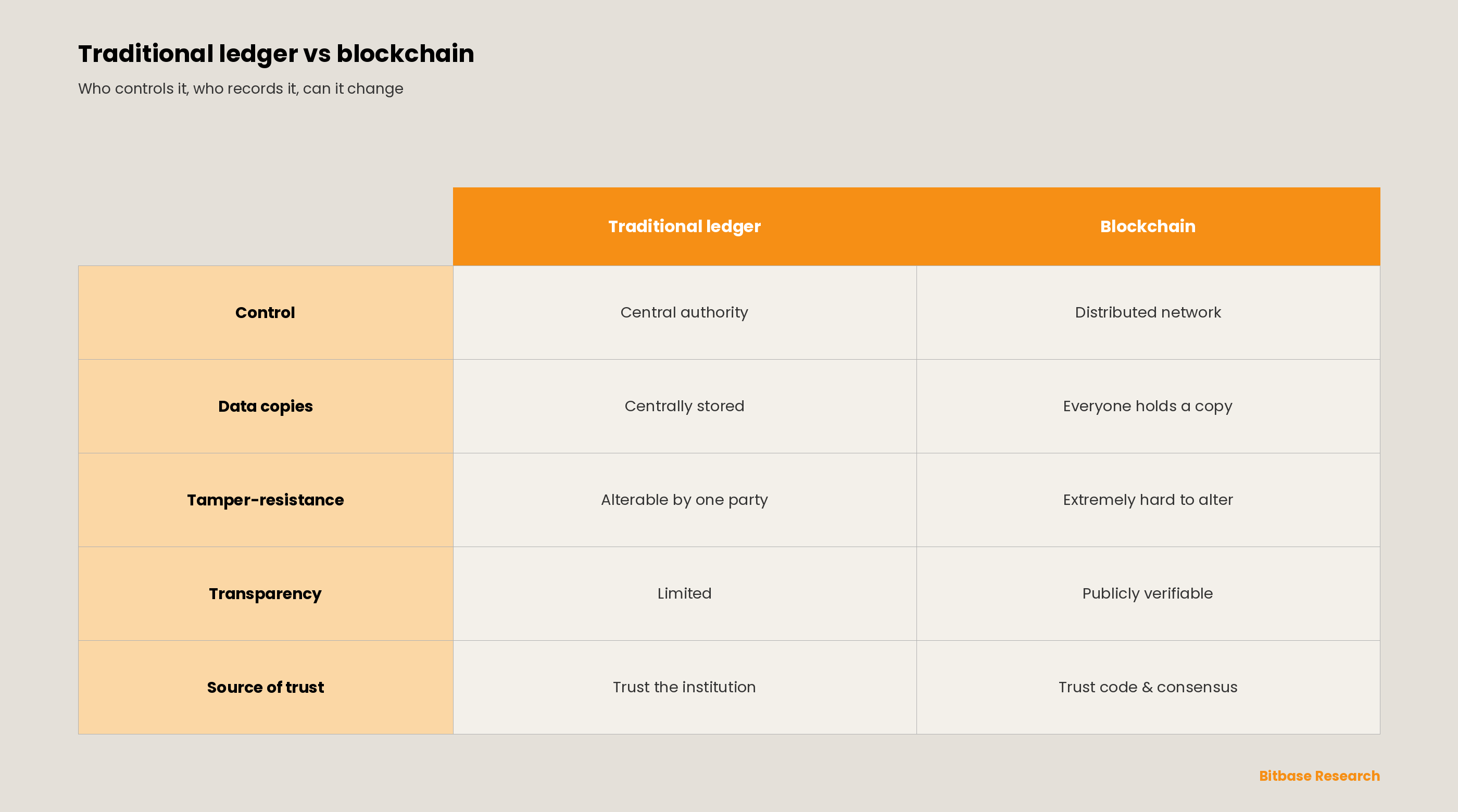
Traditional ledger vs blockchain
A blockchain replaces a single trusted record-keeper with a shared, verifiable one:
Why blockchain matters
Three properties make blockchains powerful: decentralization (no single point of control or failure), transparency (public chains can be inspected by anyone), and immutability (history is extremely hard to tamper with). Together they let people who do not know each other transact without a trusted middleman — the foundation for cryptocurrencies, stablecoins, and much of Web3.
The bottom line
A blockchain is the shared, tamper-resistant ledger beneath all of crypto. Understanding it makes everything else — coins, wallets, exchanges — easier to grasp. To keep learning the fundamentals, follow more from Bitbase Academy.
Disclaimer: This article is educational content from Bitbase Academy, provided for information only. It does not constitute investment, trading, tax, or financial advice. Written as of June 2026; details may change, so refer to the latest authoritative sources.
References
[1] Investopedia, "Blockchain." investopedia.com
[2] "Blockchain," Wikipedia. en.wikipedia.org