
Stablecoin reserves are the assets an issuer holds to back the coins it has put into circulation. They are the reason a collateralized stablecoin can promise to be worth a dollar — and their quality decides whether that promise is safe. Here is what reserves are, what good ones look like, how they are verified, and why they deserve your attention.
What reserves are
When an issuer creates a stablecoin, it is supposed to hold assets of equal value in reserve. Those reserves are the real backing behind the coins: every coin in circulation is, in effect, a claim on a share of them. If the issuer holds a dollar of reserves for every coin, the stablecoin is fully backed. The whole design rests on those reserves existing, being enough, and being redeemable when holders want out.
What good reserves look like
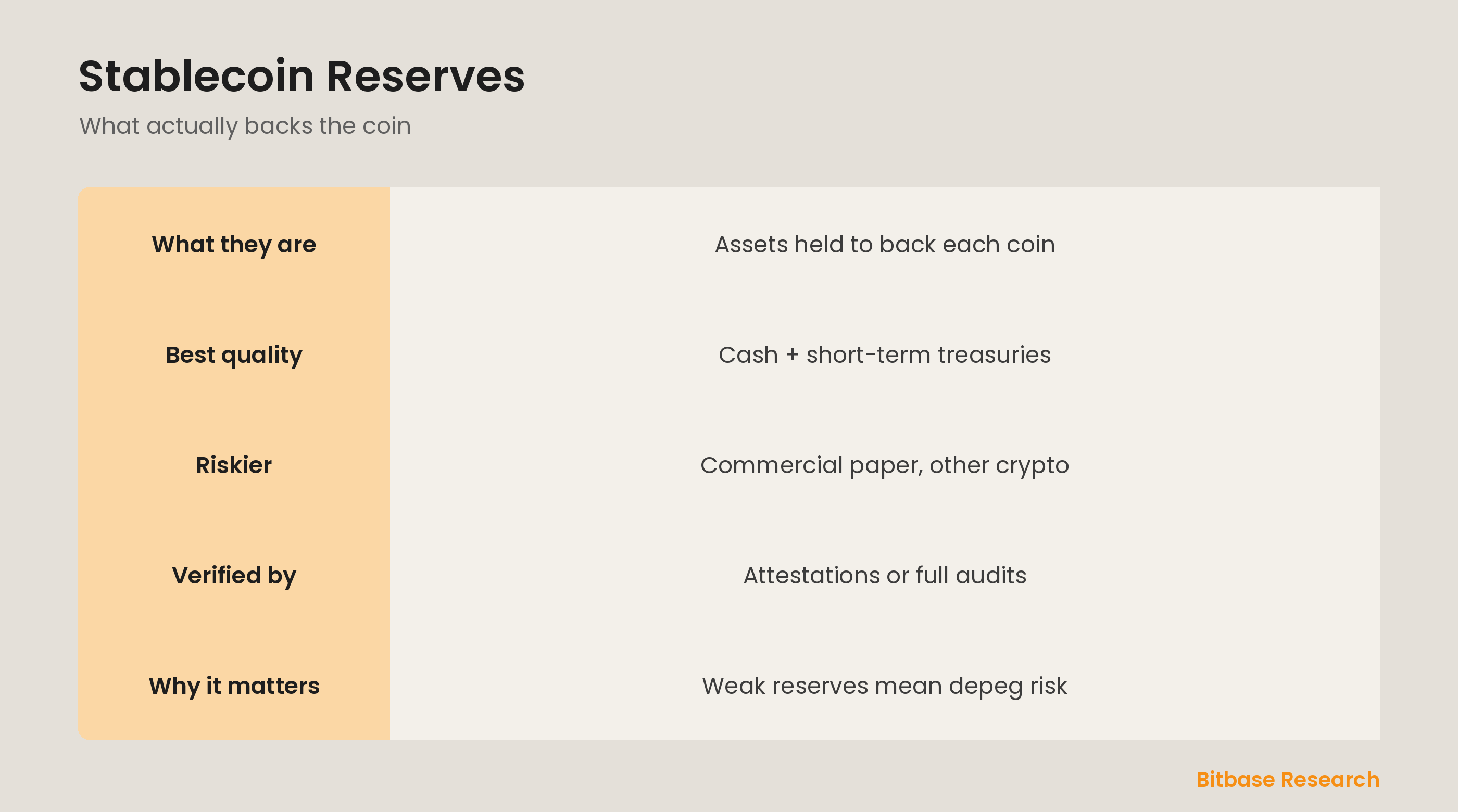
Not all reserves are equally safe. The highest-quality backing is cash and short-dated government treasuries — assets that are liquid and hold their value even in a crisis, so the issuer can always meet redemptions. Weaker reserves include commercial paper, corporate bonds, or other cryptocurrencies, which can fall in value or become hard to sell exactly when everyone wants their money. The composition of the reserves, not just their headline total, is what determines the risk.
How reserves are verified
You cannot see an issuer's bank accounts directly, so trust depends on reporting. Most large issuers publish regular attestations — a snapshot in which an accounting firm confirms the reserves existed on a given date — and some are moving toward fuller audits. What to look for is how detailed the breakdown is, how often it is published, and who signs it. Vague or infrequent disclosure is a warning sign, however large the coin.
Why it matters
Reserves are where a stablecoin's stability really lives. The 2023 USDC episode showed that even good reserves can cause trouble if part of them is stuck somewhere risky — a share of USDC's cash was at a bank that failed, and the coin briefly depegged. Coins backed by riskier assets have failed outright. Before trusting a stablecoin as a dollar, it is worth knowing what its reserves actually hold and how recently that was verified.
The bottom line
Stablecoin reserves are the assets that make a dollar-pegged coin actually worth a dollar, and their quality and transparency matter more than the brand on the coin. Favour stablecoins backed by cash and short-term treasuries with clear, frequent reporting. When the reserves are strong and visible, the peg is far more likely to hold when it is tested. To keep learning the fundamentals, follow more from Bitbase Academy.
Disclaimer: This article is educational content from Bitbase Academy, provided for information only. It does not constitute investment, trading, tax, or financial advice. Crypto assets are volatile; assess your own risk. Written as of June 2026; refer to the latest official information.
References
[1] Investopedia, "Stablecoin: Definition, How They Work, and Types" investopedia.com
[2] Federal Reserve, "Primary and Secondary Markets for Stablecoins" federalreserve.gov
[3] Corporate Finance Institute, "Stablecoin" corporatefinanceinstitute.com