A common mistake is to buy the same dollar amount of every coin, treating a calm, established asset and a wild small-cap as if they carried the same risk. They do not. Volatility-based position sizing fixes this by adjusting how much you buy according to how much the asset actually moves, so that every trade puts a similar amount of money at risk. Here is the idea, how it works, and why it steadies your results.
The core idea
Most beginners size positions by price or by a fixed amount, but that ignores risk. A coin that swings 15 percent a day is far riskier per dollar than one that moves 2 percent, so buying the same amount of each exposes you to wildly different risk. Volatility-based sizing flips the logic: instead of fixing the dollar amount, you fix the risk, and let the asset's volatility decide the position size.
How it works
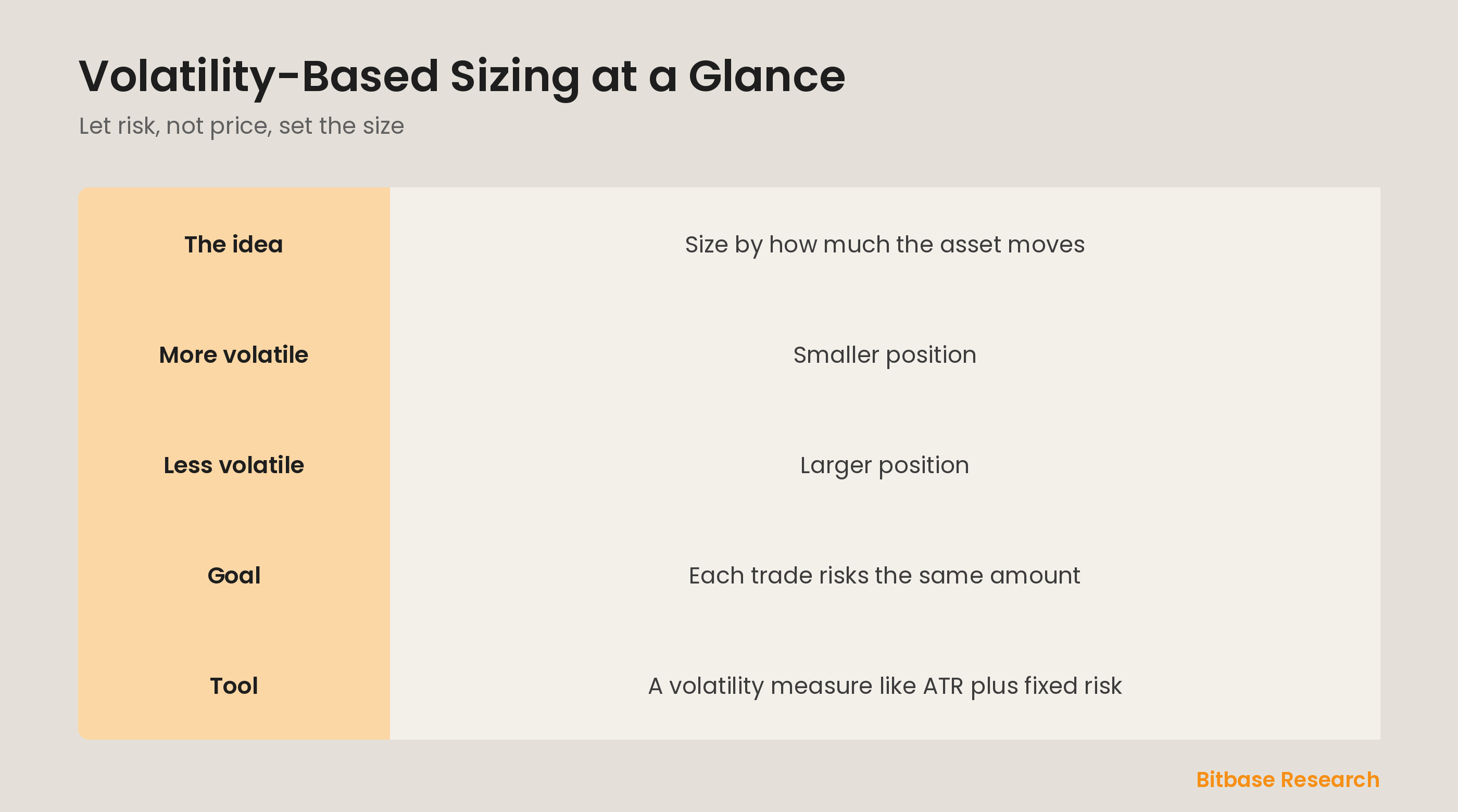
The rule is simple: the more volatile the asset, the smaller your position, and the calmer it is, the larger you can go. Traders often measure volatility with a tool like the Average True Range, which captures how much a coin typically moves. You then set a fixed amount you are willing to risk per trade and size the position so that your stop-loss distance equals that risk — a wider expected swing means fewer coins.
Why it helps
This approach equalizes risk across very different assets. Whether you trade a stable large-cap or a volatile newcomer, each position threatens roughly the same amount of your account, so no single wild coin can blow a hole in it. That consistency smooths your drawdowns, keeps any one trade from dominating your results, and makes your overall risk something you actually control rather than something the market decides for you.
Applying it in practice
Start by choosing a small, fixed risk per trade — a set percentage of your account. Measure the asset's recent volatility, then work backward to the position size that keeps the risk at that level given where your stop sits. Because crypto volatility shifts constantly, recalculate as conditions change rather than sizing once and forgetting. The math takes a little effort, but it turns position sizing from a guess into a rule.
The bottom line
Volatility-based position sizing sets your trade size by how much an asset moves, taking smaller positions in volatile coins and larger ones in calmer assets so each trade risks the same amount. Built around a volatility measure like ATR and a fixed risk per trade, it equalizes risk, steadies drawdowns, and puts you in control. Let risk, not price, decide your size, and your results grow far more consistent. To keep learning the fundamentals, follow more from Bitbase Academy.
Disclaimer: This article is educational content from Bitbase Academy, provided for information only. It does not constitute investment, trading, tax, or financial advice. Crypto assets are volatile; assess your own risk. Written as of June 2026; refer to the latest official information.
References
[1] Investopedia, "Volatility: Meaning in Finance and How It Works with Stocks" investopedia.com
[2] Investopedia, "Average True Range (ATR): Formula, What It Means, How to Use" investopedia.com
[3] Investopedia, "Risk Management in Finance: Definition and Common Strategies" investopedia.com