Web3 is an idea for the "next generation of the internet": built on blockchains and using cryptocurrencies, tokens, and NFTs to give the ownership of data and value back to users. This guide explains it.
What it is
Web3 is a vision for a new form of the internet that blends decentralization, blockchain technology, tokenomics, and privacy-enhancing ideas [1]. In a Web3 design, data ownership shifts to users — you decide how and where your information is used.
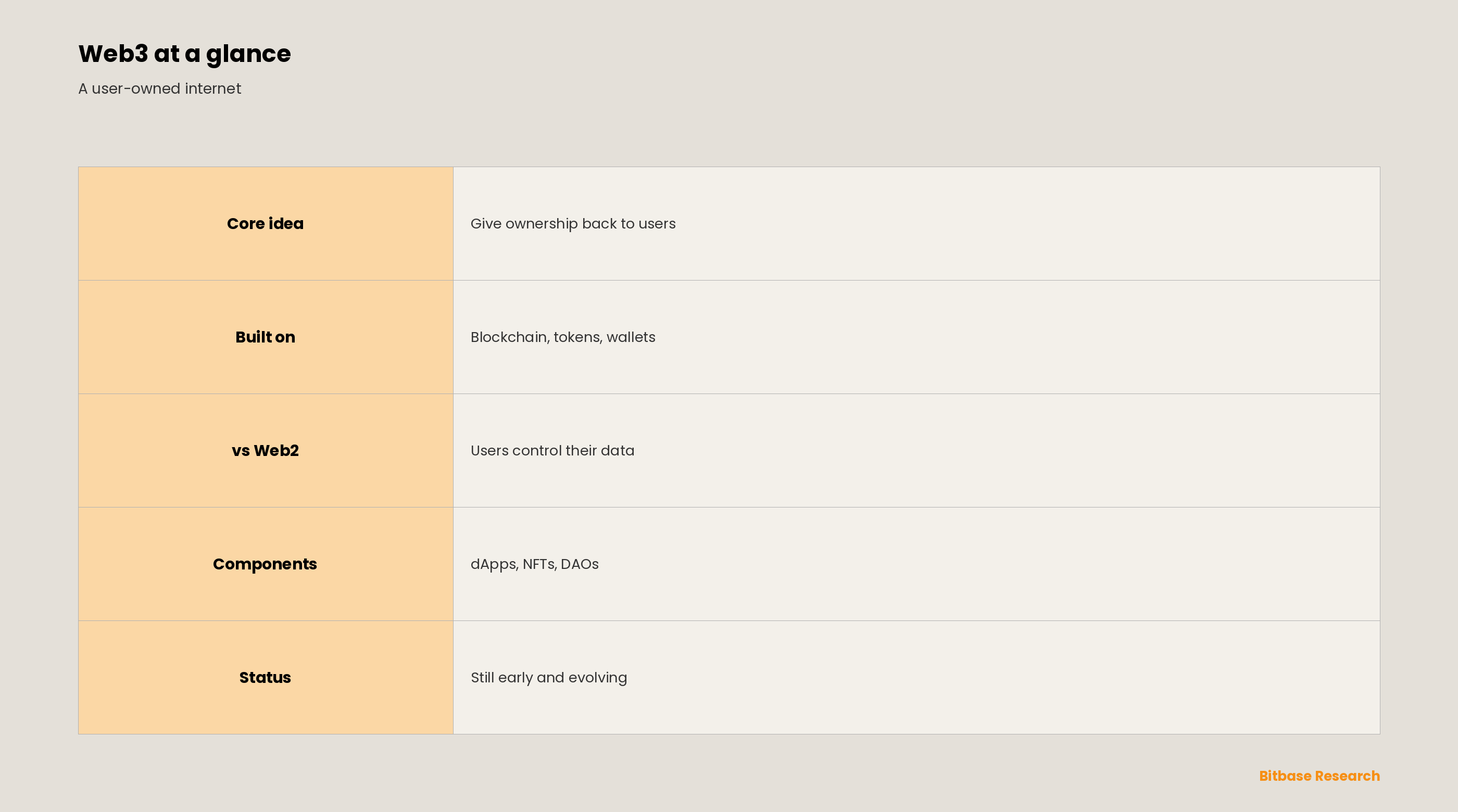
Web3 at a glance
How it differs from Web2
Most of today's internet is Web2: platforms hold your data and accounts. Web3 instead tries to use blockchains, tokens, and wallets to let users truly "own" their data, identity, and assets [2]. It is still early, with opportunity and uncertainty side by side.
The bottom line
Web3 is a blockchain-based vision of the internet that emphasizes user ownership, spanning dApps, NFTs, and DAOs. Understanding it helps you grasp crypto's long-term narrative. To keep learning the fundamentals, follow more from Bitbase Academy.
Disclaimer: This article is educational content from Bitbase Academy, provided for information only. It does not constitute investment, trading, tax, or financial advice. Written as of June 2026; refer to the latest official information.
References
[1] Ethereum.org, "What is Web3 and why is it important?" ethereum.org
[2] McKinsey, "What is Web3 technology (and why is it important)?" mckinsey.com