
Every crypto wallet has two linked keys: a public key for receiving and a private key for spending. The public key can be shared; the private key must stay secret. This guide explains the difference and why it matters.
What the two keys are
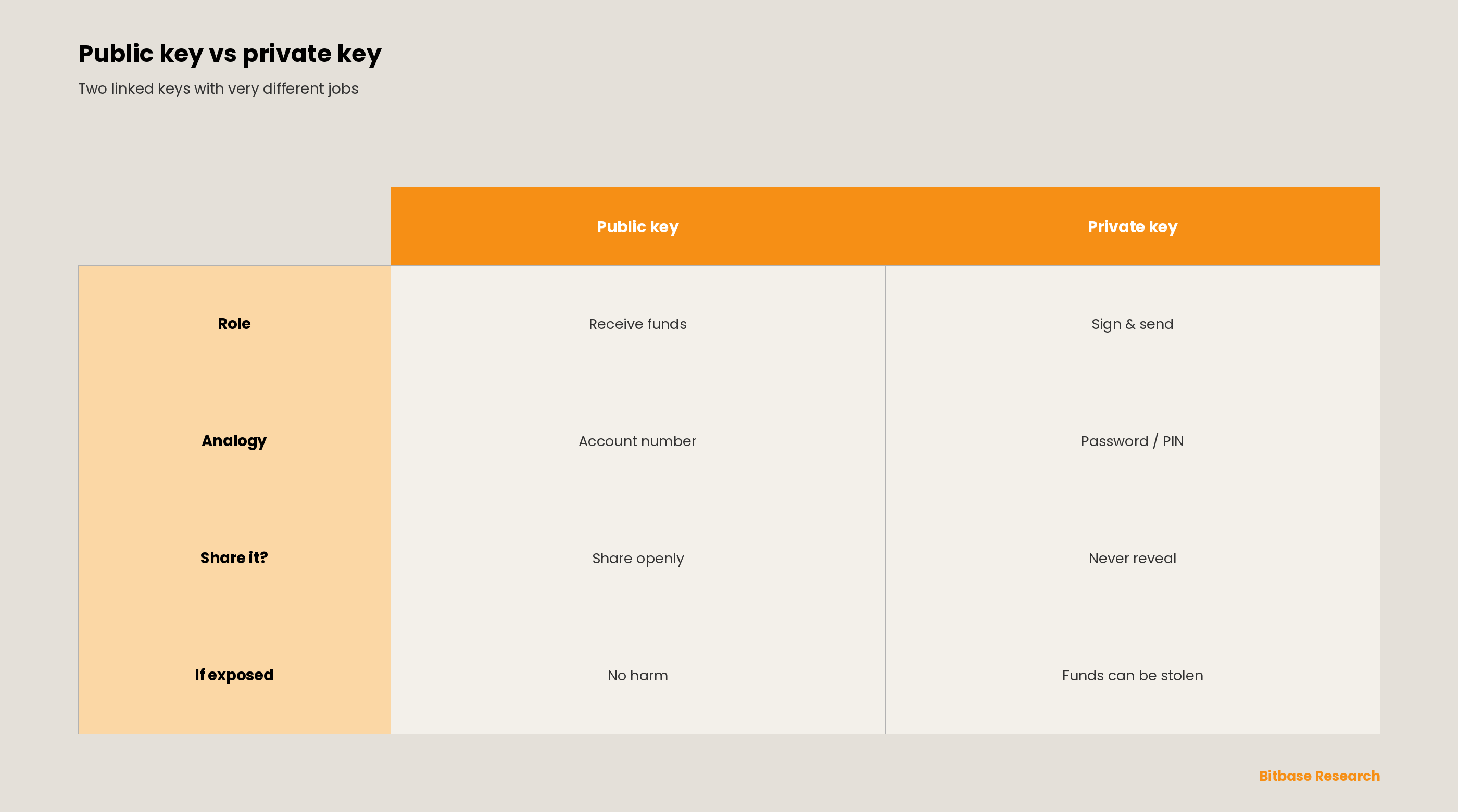
Crypto uses public-key (asymmetric) cryptography: a pair of mathematically linked keys. The public key is used to receive funds and can be shared openly — it is like a bank account number. The private key is used to sign and authorize transactions and must be kept secret — it is like the password or PIN to that account.
How they work together
The two keys are linked, but you cannot work backward: even with enormous computing power, deriving the private key from the public key is practically impossible. That one-way link is what lets you share a public address safely while keeping full control through the private key.
Public key vs private key at a glance
Why it matters
Whoever holds the private key controls the funds — this is the basis of "not your keys, not your coins." Share your public key or address freely to receive crypto, but never reveal your private key (or the seed phrase that generates it). Anyone who gets it can move your assets.
The bottom line
The public key receives; the private key controls. Keep the public one shareable and the private one secret, and you have grasped the core of crypto security. To keep learning the fundamentals, follow more from Bitbase Academy.
Disclaimer: This article is educational content from Bitbase Academy, provided for information only. It does not constitute investment, trading, tax, or financial advice. Self-custody means you bear full responsibility for safeguarding your private keys. Written as of June 2026; refer to the latest official information.
References
[1] Gemini Cryptopedia, "Public and Private Keys: What Are They?" gemini.com
[2] MoonPay, "Public Key vs Private Key." moonpay.com