Crypto's speed and finality make it a favorite target for scammers — and because on-chain transactions are irreversible, a single mistake can be costly. This guide covers the most common crypto scams, the red flags that give them away, and how to protect yourself.
Why scams target crypto
Crypto transactions are usually irreversible — once funds leave your wallet, no bank can claw them back. Wallets are also pseudonymous, which helps scammers hide. Add the lure of fast gains and constant urgency, and you have ideal conditions for fraud. Knowing the patterns is your best defense.
The most common scams
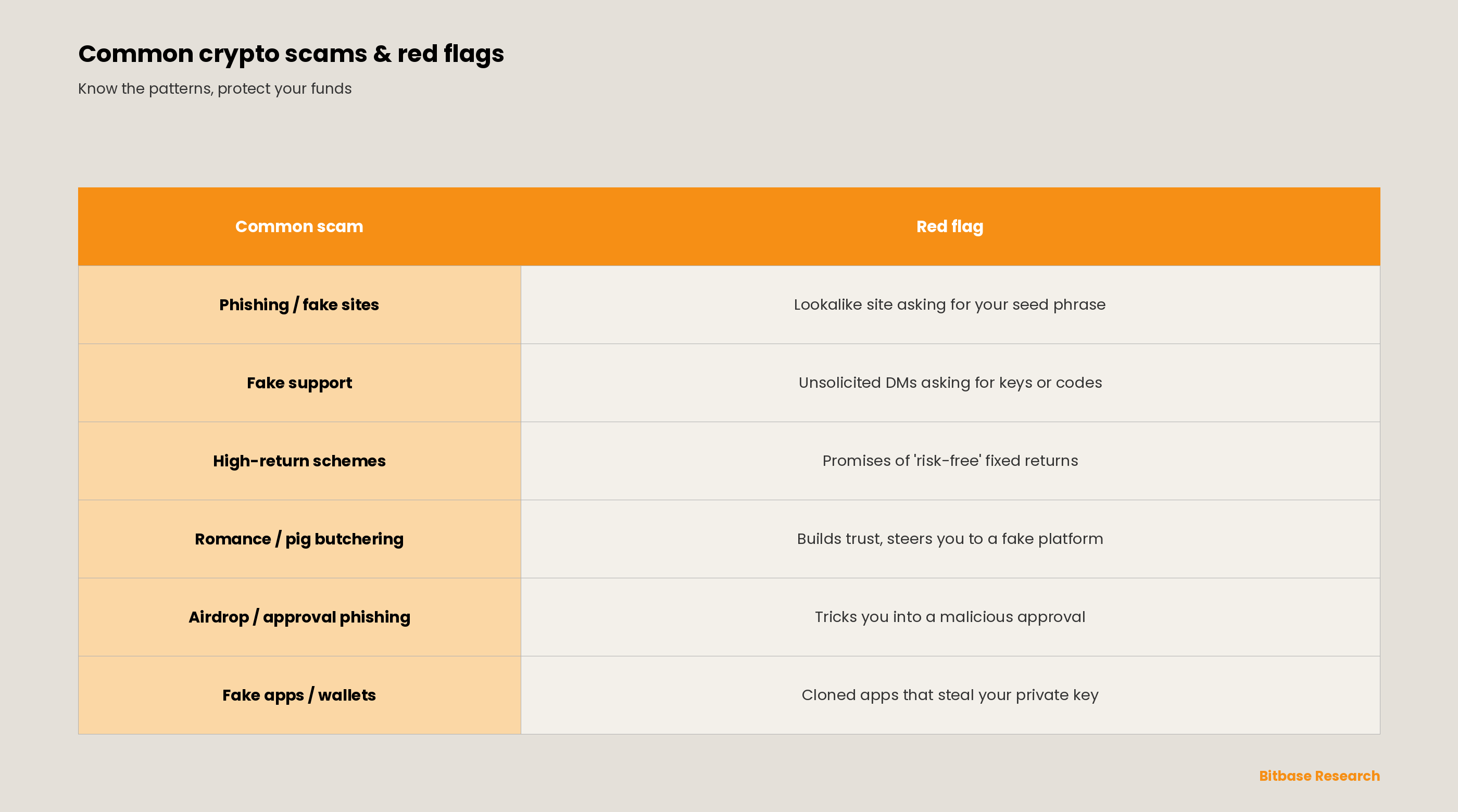
Most scams are variations on a few themes:
Red flags to watch for
- Anyone asking for your seed phrase or private key. No legitimate service ever needs it. - Promises of risk-free or unusually high returns. "Risk-free" profit is the oldest lie in finance. - Pressure and urgency. "Act now" tactics are designed to stop you thinking. - Unsolicited contact. Surprise DMs from "support," giveaways, or strangers offering to help.
How to protect yourself
- Never reveal your seed phrase and never enter it on a website. - Verify URLs and apps through official channels, and bookmark the real site. - Slow down. Treat urgency itself as a warning sign. - When in doubt, don't. If an offer seems too good to be true, it is.
The bottom line
Most crypto scams rely on two things: irreversible payments and your sense of urgency. Learn the red flags, protect your keys, and verify before you act. To keep learning the fundamentals, follow more from Bitbase Academy.
Disclaimer: This article is educational content from Bitbase Academy, provided for information only. It does not constitute investment, trading, tax, or financial advice. Written as of June 2026; scam tactics evolve constantly, so rely on the latest guidance from official and authoritative bodies. If you lose funds, report it to your local law enforcement.
References
[1] U.S. Federal Trade Commission, "What to Know About Cryptocurrency and Scams." consumer.ftc.gov
[2] U.S. FBI, "Cryptocurrency Investment Fraud." fbi.gov