
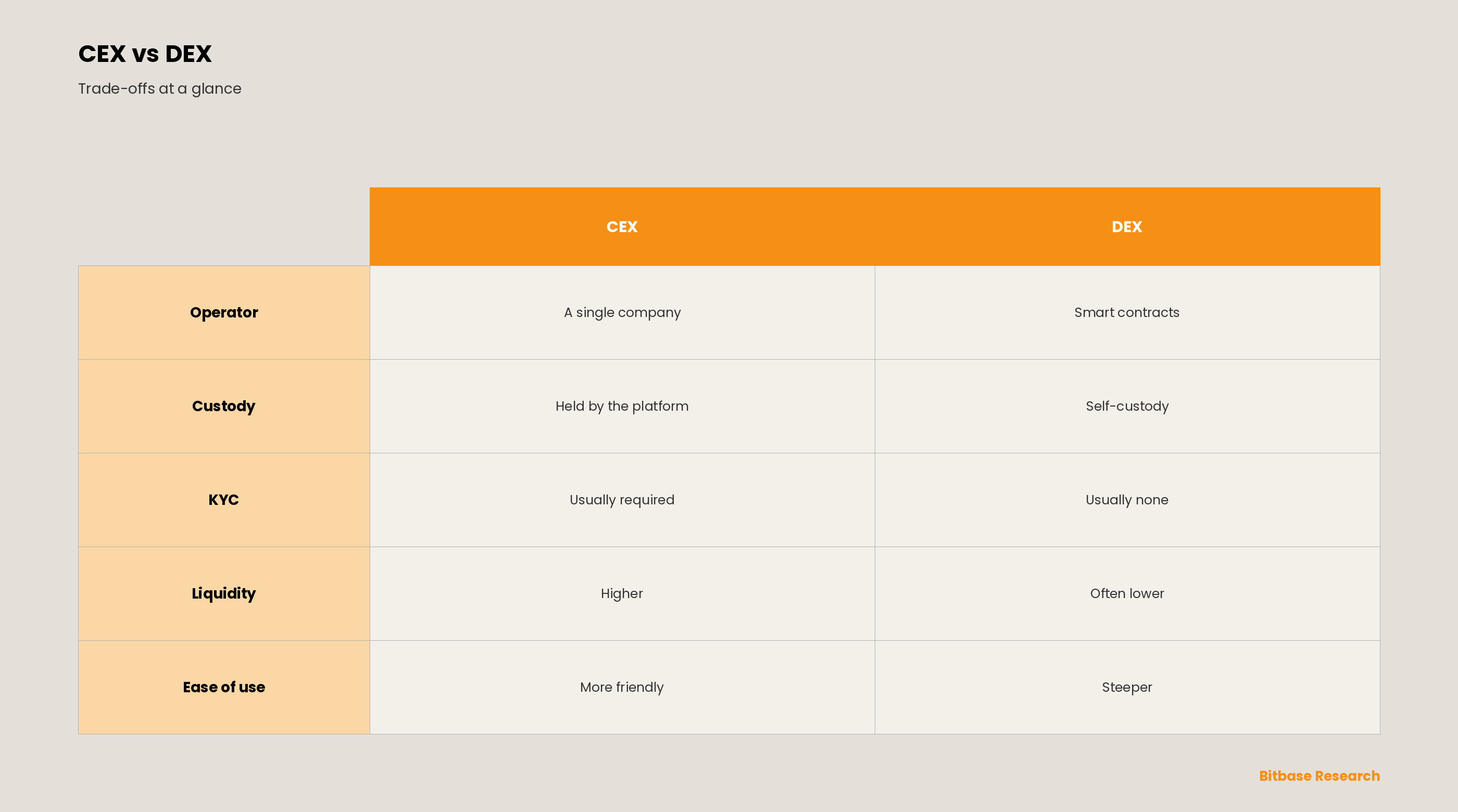
A centralized exchange (CEX) is run by a single company that holds your assets; a decentralized exchange (DEX) runs on smart contracts, with users self-custodying. The two trade off on custody, KYC, liquidity, and ease of use. This guide compares them.
Centralized exchange (CEX)
A CEX is owned and run by a for-profit company that matches trades and settles disputes [1]. It must comply with local law, so it usually requires KYC verification, and governments can impose restrictions when legally obliged. The upside is high liquidity and a friendly experience; the cost is entrusting your assets to the platform.
Decentralized exchange (DEX)
A DEX does not hold user funds or private keys, so you keep full control of your assets; trades happen straight from your own wallet with no need to deposit to the exchange, and usually no KYC [2]. The cost is weaker ease of use and often lower liquidity and volume.
Side by side
The bottom line
In short: a CEX trades some custody for convenience and liquidity; a DEX trades some convenience for control and anonymity. Understanding the trade-offs helps you choose by need. To keep learning the fundamentals, follow more from Bitbase Academy.
Disclaimer: This article is educational content from Bitbase Academy, provided for information only. It does not constitute investment, trading, tax, or financial advice. Written as of June 2026; refer to the latest official information.
References
[1] Britannica Money, "Centralized vs. Decentralized Exchanges." britannica.com
[2] BitPay, "CEX vs DEX: The Complete Guide to Crypto Exchanges." bitpay.com