A decentralized exchange (DEX) is a crypto exchange that runs on a blockchain, usually through smart contracts. Unlike a centralized exchange that relies on an intermediary, a DEX lets users trade peer-to-peer while keeping control of their keys and assets throughout. This guide explains it.
How it works
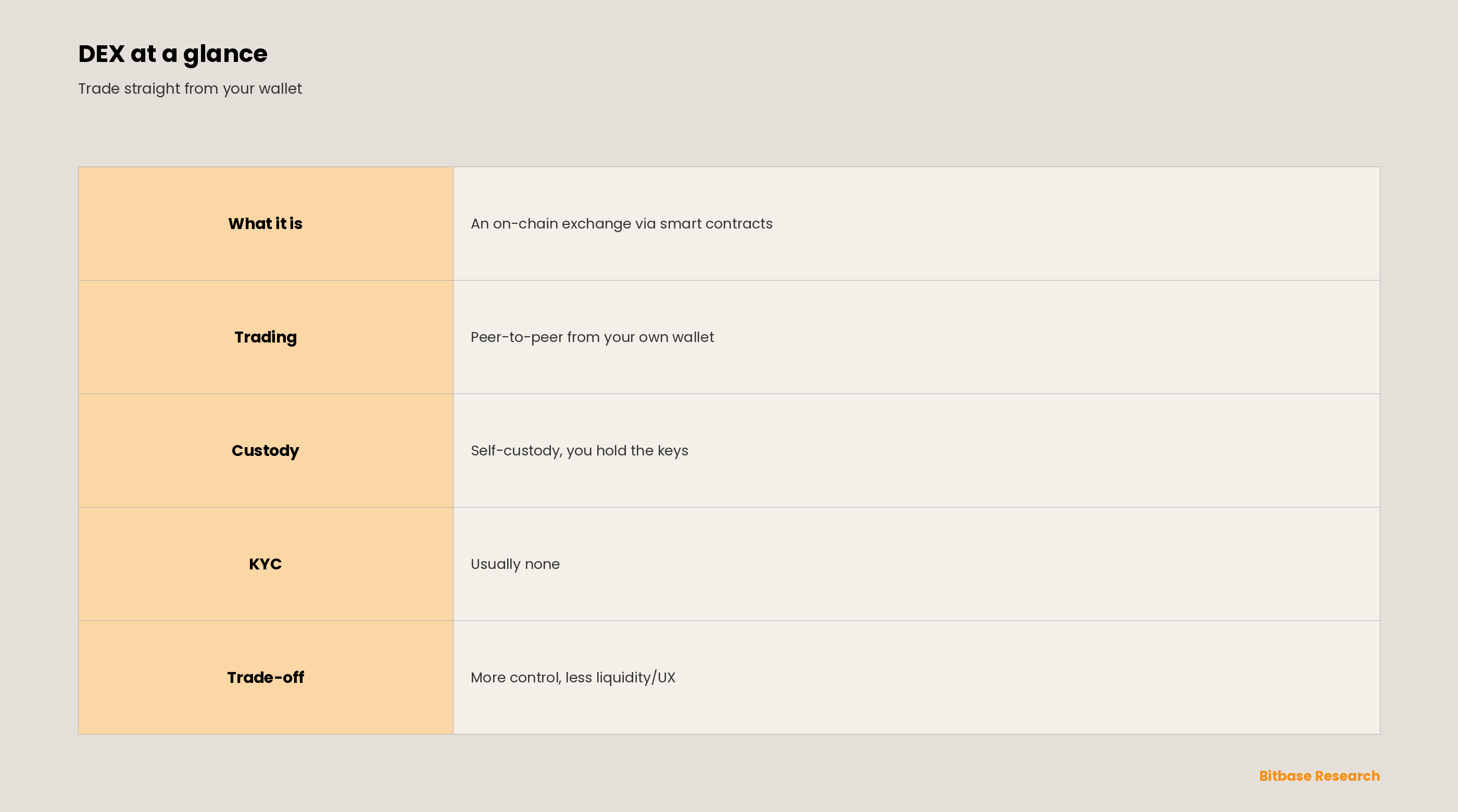
A DEX matches trades on-chain through smart contracts, with no intermediary in the middle [1]. You don't transfer funds to the exchange — trades happen straight from your own wallet, so you always hold your keys and assets [2]. Most DEXs also require no KYC verification.
DEX at a glance
The trade-off
A DEX's biggest strength is control: you self-custody your assets and can trade without identifying yourself. The cost is that it's usually less user-friendly than a centralized exchange, often with lower liquidity and volume [2]. On-chain use also means you must safeguard your keys — lose them and they can't be recovered.
The bottom line
A DEX is an on-chain exchange that lets you trade peer-to-peer straight from your wallet, trading some convenience for self-control. Understanding how it differs from a centralized exchange helps you pick the right tool. To keep learning the fundamentals, follow more from Bitbase Academy.
Disclaimer: This article is educational content from Bitbase Academy, provided for information only. It does not constitute investment, trading, tax, or financial advice. Written as of June 2026; refer to the latest official information.
References
[1] Coinbase, "What is a DEX?" coinbase.com
[2] Chainlink, "What Is a DEX (Decentralized Exchange)?" chain.link