
Yield farming is a "assets for rewards" strategy in DeFi: you supply your crypto to a DeFi protocol as liquidity and earn interest, fees, or token rewards, aiming to generate passive income. This guide explains it.
How it works
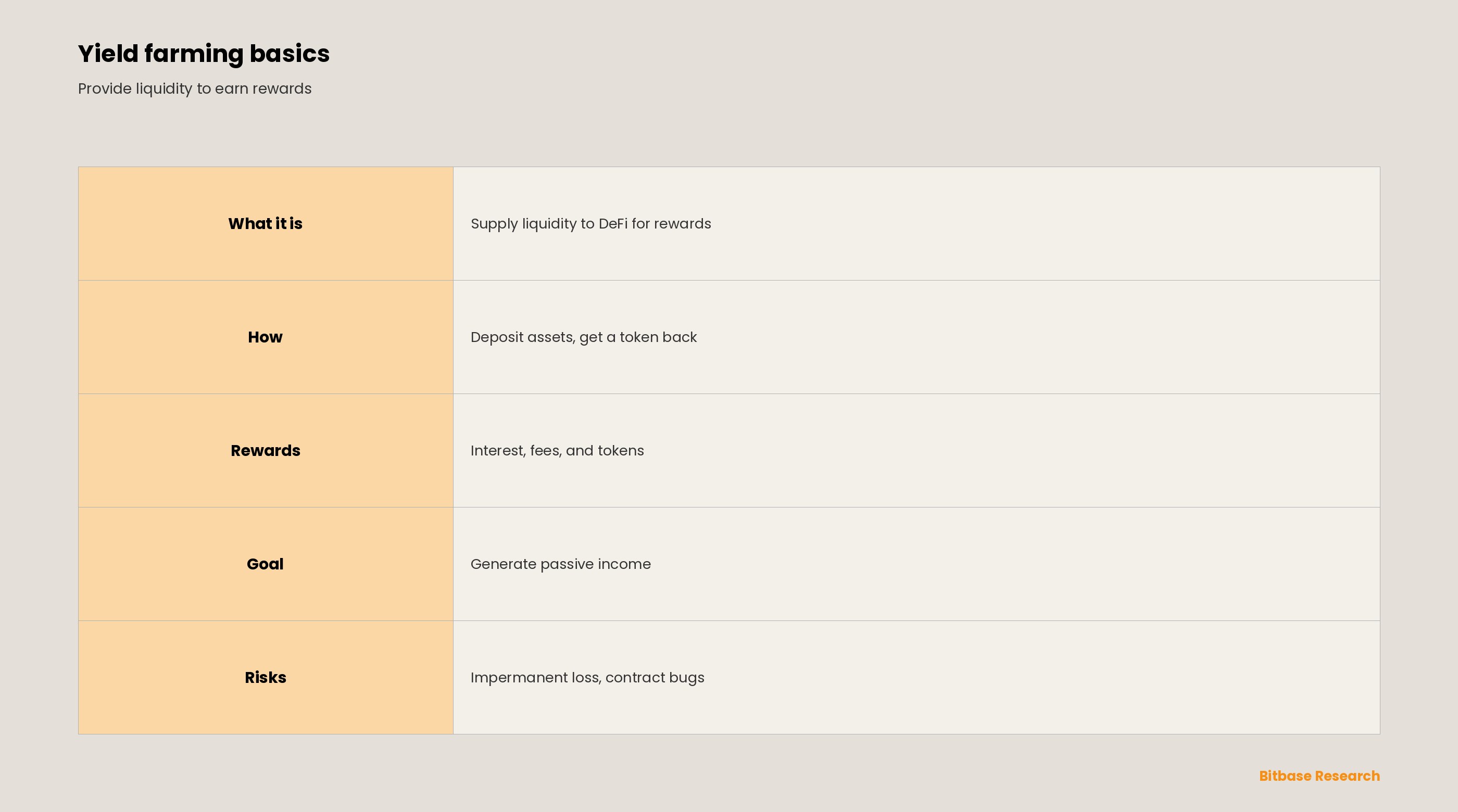
Yield farming lets users put digital assets into a DeFi protocol to provide liquidity and receive rewards [1]. A typical flow is: deposit assets into a protocol, get a token in return, then reallocate that token into the protocol for extra rewards; returns usually come from a mix of interest, rewards, and fees [2].
Yield farming basics
Rewards and risks
Yield farming can offer high returns, but the risks are just as real: price moves can cause "impermanent loss," and smart contracts may have flaws [1]. Higher returns usually mean more risk — understand the mechanics and risks before taking part.
The bottom line
Yield farming is a strategy for earning rewards by providing liquidity to DeFi protocols, where rewards and risks go together. Understanding impermanent loss and contract risk is the basis for careful participation. To keep learning the fundamentals, follow more from Bitbase Academy.
Disclaimer: This article is educational content from Bitbase Academy, provided for information only. It does not constitute investment, trading, tax, or financial advice. Crypto assets are volatile; assess your own risk. Written as of June 2026; refer to the latest official information.
References
[1] Coinbase, "What is yield farming and how does it work?" coinbase.com
[2] Binance Academy, "What Is Yield Farming in Decentralized Finance (DeFi)?" academy.binance.com