When you install a software or hardware wallet, it usually asks you to set a password before you can use it. This wallet passphrase locks the app on your device and is required to open it and approve transactions. People often confuse it with the seed phrase, but they do very different jobs — and mixing them up leads to real mistakes. Here is what a wallet passphrase is, what it protects, and how it differs from your recovery phrase.
What a wallet passphrase is
A wallet passphrase is a password you choose to protect your wallet on a specific device. It encrypts the wallet locally and must be entered to open the app, view balances, or approve a send. Think of it as the lock on the wallet software itself: it stops anyone with physical access to your unlocked phone or computer from spending your funds without also knowing the password.
What it does and does not protect
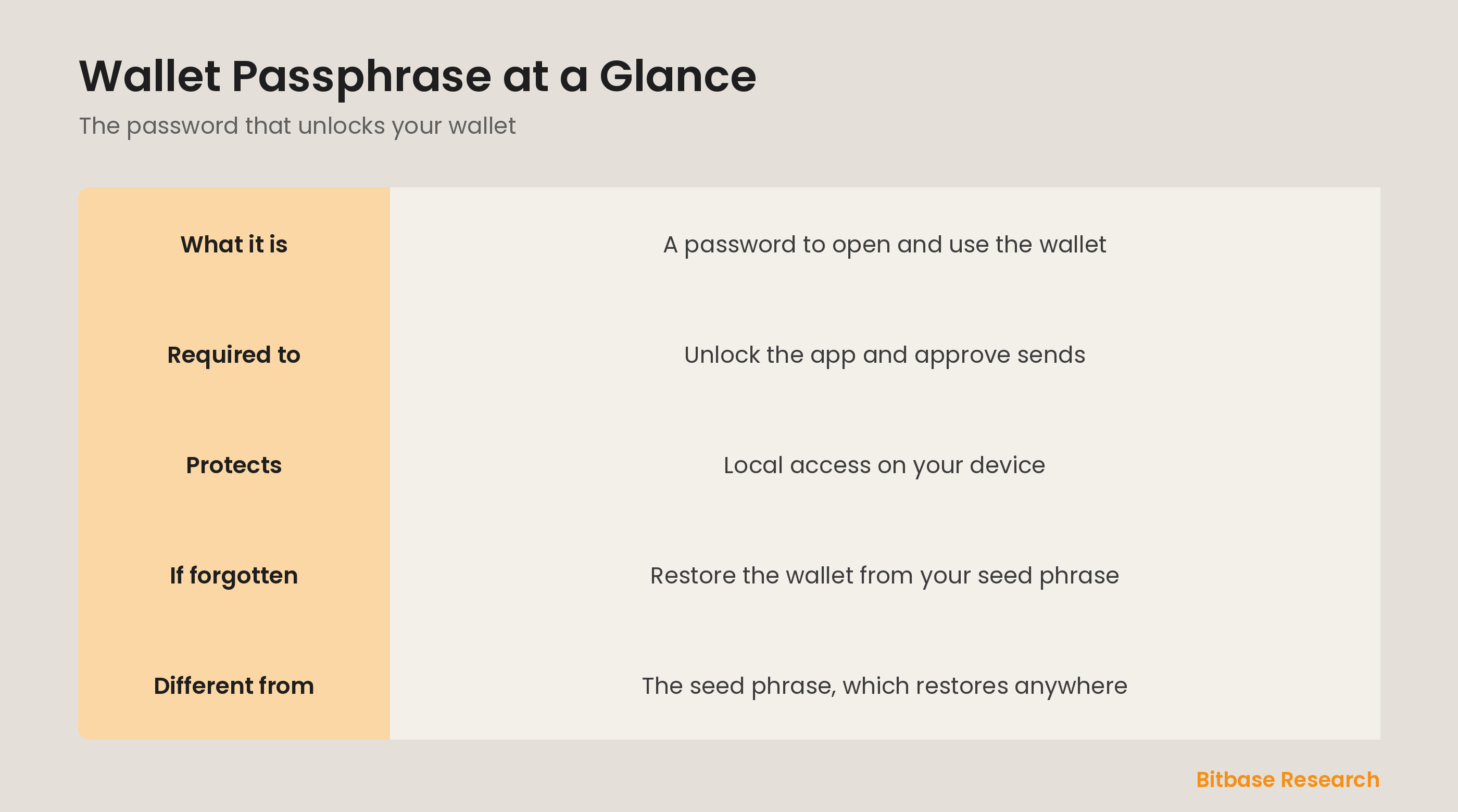
The passphrase guards local access on that one device. If someone picks up your phone, the password stops them from opening the wallet and sending crypto. What it does not do is control your funds on the network — the coins live on the blockchain, tied to your keys, not to this password. Install the wallet on a new device and the password from the old one means nothing there.
Passphrase vs seed phrase
This is the crucial distinction. The wallet passphrase protects the copy of your wallet on this device; the recovery (seed) phrase restores your wallet anywhere. Forgetting the passphrase is recoverable — you can reinstall the wallet and restore it from your seed. Losing the seed phrase is not: without it, a lost or wiped device means the funds are gone. The password is convenience and local security; the seed is ownership itself.
Choosing and using it well
Pick a strong, unique wallet passphrase, store it in a password manager rather than your memory alone, and never reuse a password you use elsewhere. Keep it entirely separate from your seed phrase, which should be offline on paper or metal. One note on terminology: some hardware wallets also offer an optional BIP-39 passphrase that creates a hidden wallet — that is a different, advanced feature, not the everyday unlock password described here.
The bottom line
A crypto wallet passphrase is the password that unlocks your wallet on a device and approves transactions, protecting local access if someone gets hold of your phone. It is not the same as your seed phrase: forget the password and you restore from the seed; lose the seed and the funds are gone. Choose a strong password, store it safely, and always keep the seed phrase backed up offline and apart. To keep learning the fundamentals, follow more from Bitbase Academy.
Disclaimer: This article is educational content from Bitbase Academy, provided for information only. It does not constitute investment, trading, tax, or financial advice. Crypto assets are volatile; assess your own risk. Written as of June 2026; refer to the latest official information.
References
[1] Investopedia, "Encryption: What It Is and How It Works" investopedia.com
[2] Investopedia, "Private Key: What It Is, How It Works, Best Ways to Store" investopedia.com
[3] Bitcoin BIPs, "BIP-39: Mnemonic code for generating deterministic keys" github.com