When a new token launches, the coins you can buy are only part of the story. A large share is often set aside for the project's treasury and its ecosystem — reserves meant to fund development, grants, and growth for years to come. These allocations can make or break a project, yet they sit quietly in a tokenomics chart most people skip. Here is what they are and why they deserve a close look.
What treasury and ecosystem allocations are
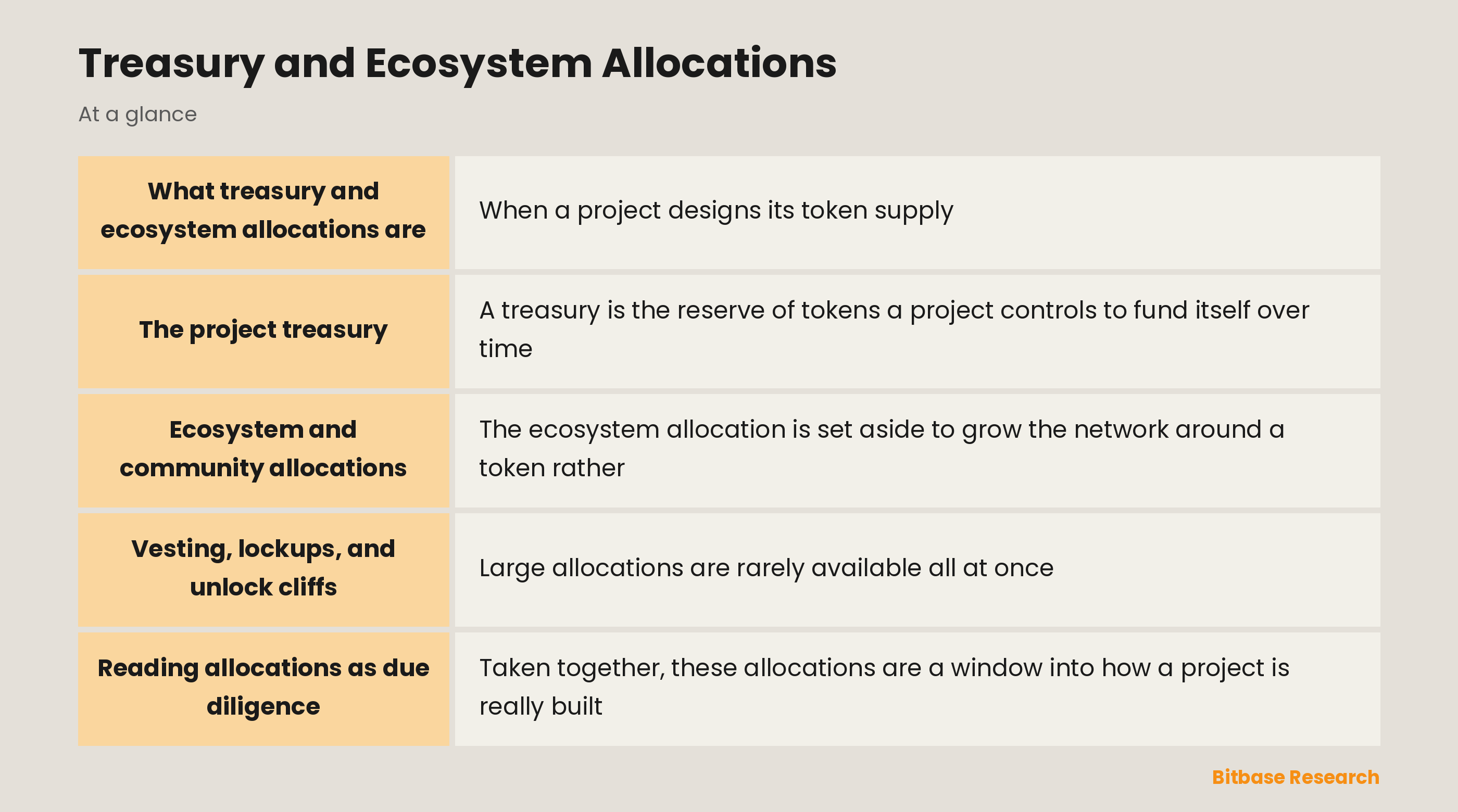
When a project designs its token supply, it splits the total into buckets: some for the team, some for early investors, some sold to the public, and often large slices reserved for the treasury and the ecosystem. The treasury is the project's own war chest of tokens, and the ecosystem allocation is a pool earmarked to grow the network — funding developers, partners, and users. Together these two buckets often represent a big fraction of the total supply, which is exactly why they matter so much to a token's long-term health.
The project treasury
A treasury is the reserve of tokens a project controls to fund itself over time. It can pay for salaries, audits, marketing, and operations, and it acts as a cushion the project can draw on when markets are weak. Increasingly, treasuries are governed by a DAO, so token holders vote on how the funds are spent rather than a small team deciding alone. A well-managed treasury gives a project runway and resilience, while a poorly managed or opaque one can drain value and erode trust quickly.
Ecosystem and community allocations
The ecosystem allocation is set aside to grow the network around a token rather than to fund the core team. It typically pays for developer grants, liquidity incentives, user rewards, and partnerships — anything that brings more people and activity to the project. The idea is to bootstrap a thriving community, since a token is only as valuable as the ecosystem using it. Done well, these funds seed real adoption; done poorly, they subsidize mercenary users who farm rewards and leave the moment the incentives dry up.
Vesting, lockups, and unlock cliffs
Large allocations are rarely available all at once. Instead they are usually subject to vesting schedules, lockups, and unlock cliffs that release tokens gradually over months or years. The purpose is to align insiders with the long term and avoid flooding the market with sudden supply. Watching an unlock schedule matters because a big cliff — where a huge tranche of team or investor tokens unlocks on one date — can create heavy selling pressure. Reading when and how allocations unlock is one of the more practical skills in evaluating a token.
Reading allocations as due diligence
Taken together, these allocations are a window into how a project is really built. A supply where insiders hold most tokens with short lockups is a very different bet from one with modest team allocations, long vesting, and a well-funded, transparently governed ecosystem. Ask who holds what, when it unlocks, and how the treasury is controlled. None of this is a guarantee of success, and this article is not investment advice — but learning to read allocation and vesting details helps you judge a project's incentives with clearer eyes.
The bottom line
Treasury and ecosystem allocations are the reserves a project sets aside to fund itself and grow its network, and they often make up a large share of a token's total supply. The treasury bankrolls operations and resilience, the ecosystem pool seeds developers and community, and vesting schedules govern how fast it all reaches the market. Understanding these buckets — who controls them, how they are governed, and when they unlock — turns a confusing tokenomics chart into a genuinely useful due-diligence tool.
Disclaimer: This article is educational content from Bitbase Academy, provided for informational purposes only. It is not investment, trading, tax, or financial advice. Written as of July 2026; always rely on the latest official information.
References
[1] Messari, "Understanding token supply and allocations" messari.io
[2] a16z crypto, "Token distribution and vesting" a16zcrypto.com