Behind every fast, cheap Layer-2 sits a piece of software called a sequencer — the part that decides the order of your transactions and gives you that near-instant confirmation. Today almost all of them are run by a single company, and fixing that is one of the biggest open problems in scaling.
What a sequencer does
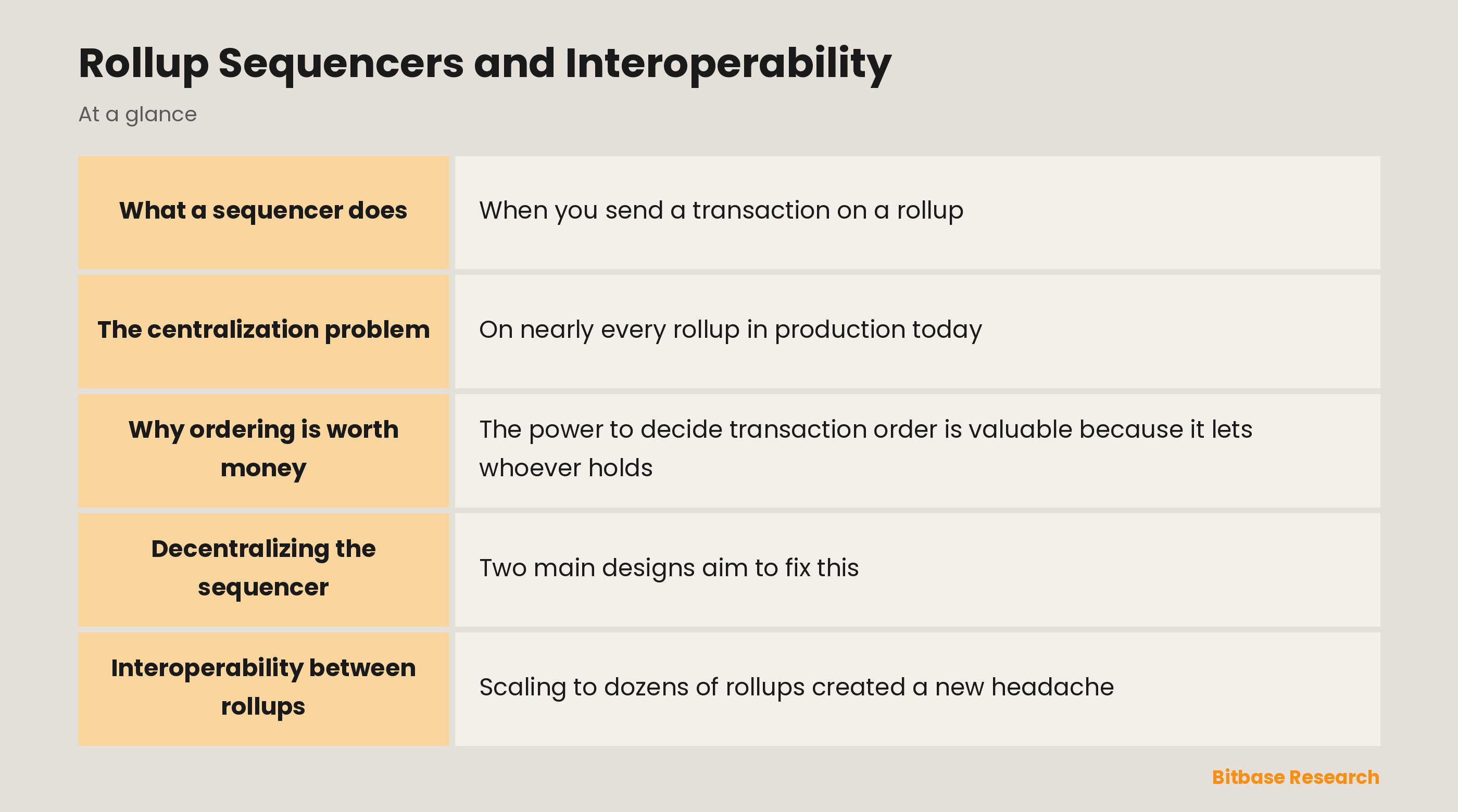
When you send a transaction on a rollup, it does not go straight to Ethereum. A sequencer receives it, decides where it sits in line, and returns a quick "soft confirmation" long before the batch is settled on Ethereum. That ordering-and-confirming role is why Layer-2s feel fast and smooth compared with the base chain.
The centralization problem
On nearly every rollup in production today, the sequencer is a single program run by a single team. That creates real risks: if it goes down, the whole chain stops accepting transactions; if it chooses to, it can censor or reorder your transactions; and it captures the value that comes from deciding order. You still cannot lose your funds — Ethereum guarantees that — but you are trusting one operator for liveness and fairness.
Why ordering is worth money
The power to decide transaction order is valuable because it lets whoever holds it extract MEV, short for maximal extractable value — for example, by jumping ahead of a big trade. With one sequencer, that value flows to the operator. Spreading the ordering power across many parties is partly about resilience and partly about deciding who should capture, or return, that value.
Decentralizing the sequencer
Two main designs aim to fix this. Shared sequencers are independent networks that order transactions for many rollups at once; Espresso became the leading example after a rival shut down in late 2025, running a proof-of-stake network that publishes fast confirmations. Based rollups take a simpler route, using Ethereum's own validators to sequence, though no major chain has shipped this in production yet.
Interoperability between rollups
Scaling to dozens of rollups created a new headache: they are islands, and moving between them means slow, sometimes risky bridges. A shared sequencer can help here too, because ordering transactions for several rollups together makes cross-rollup actions far smoother — even letting a step on one rollup depend on a step on another in the same instant. This "atomic" composability is a big reason shared sequencing is being built.
The bottom line
The sequencer is the fast-but-centralized heart of today's rollups, and decentralizing it — through shared sequencers or based designs — is where much of the roadmap now points. Production-grade decentralization is still a year or more away, so for now a low fee and instant confirmation come with one trusted operator behind the scenes. Knowing that is part of reading a Layer-2 honestly.
Disclaimer: This article is educational content from Bitbase Academy, provided for informational purposes only. It is not investment, trading, tax, or financial advice. Written as of July 2026; rely on the latest official information.
References
[1] Eco, "What Is a Sequencer?" eco.com
[2] DWF Labs, "Ethereum Based Rollups Explained" dwf-labs.com