Bitcoin has no native staking; it uses proof of work, not proof of stake. Yet new protocols now let BTC holders earn a yield while keeping their coins on the Bitcoin chain. Understanding how, and its limits, separates real BTCfi from risky imitations.
Why Bitcoin has no staking of its own
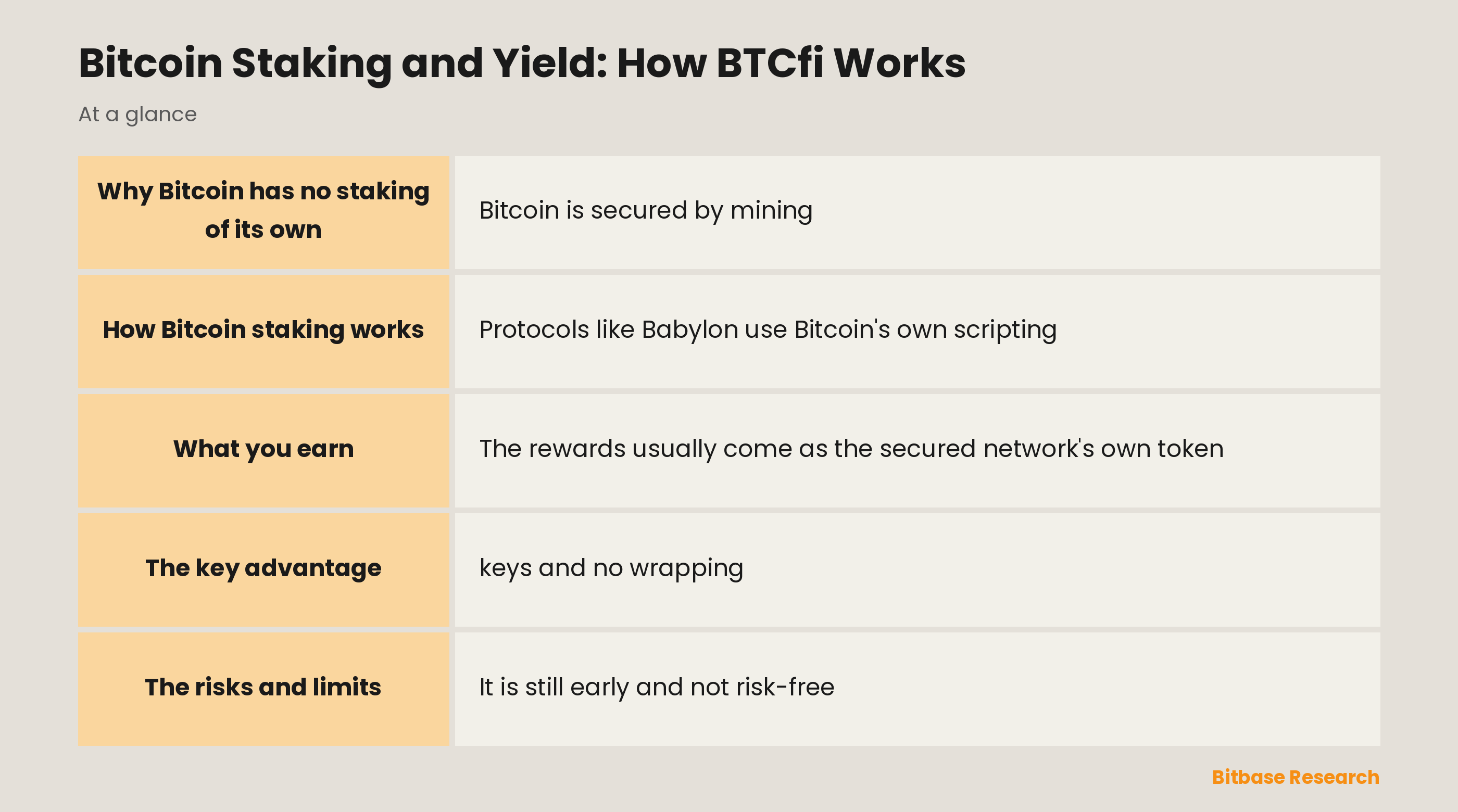
Bitcoin is secured by mining, not by staked coins, so there is no built-in way to lock BTC for rewards. For years the only way to earn on Bitcoin was to lend it or wrap it into another chain, both of which mean handing your coins to a third party. Native Bitcoin staking aims to remove that trust.
How Bitcoin staking works
Protocols like Babylon use Bitcoin's own scripting, specifically time-locks, to let you commit BTC without moving it off the Bitcoin chain. You lock your coins in a special transaction that only you control, then delegate that locked stake to help secure external proof-of-stake networks. Your BTC never leaves Bitcoin and stays under your keys the whole time.
What you earn
The rewards usually come as the secured network's own token, not as more Bitcoin. On Babylon, for example, stakers earn its token rather than BTC, with realistic yields in the low single digits. Early on, the bigger draw was often airdrop value rather than steady income, so the headline appeal and the recurring yield are not the same thing.
The key advantage: keys and no wrapping
The point of this design is self-custody. Unlike wrapped Bitcoin, where you deposit BTC with a custodian and receive a token elsewhere, native staking keeps your coins in a Bitcoin transaction you can verify on any block explorer. You are not trusting a bridge or a custodian with your principal, which removes the biggest risk that sank earlier Bitcoin yield products.
The risks and limits
It is still early and not risk-free. Your BTC is locked for an unbonding period before it is spendable again, the rewards are in a volatile new token rather than Bitcoin, and the protocols themselves are young and unproven at scale. Treat Bitcoin staking as an experimental way to earn a modest yield, not as a safe savings account.
The bottom line
Bitcoin staking finally offers a way to earn on BTC without giving up custody, a genuine step for BTCfi. But the yield is small, paid in another token, and comes with lock-ups and new-protocol risk. Weigh the reward against those limits, and never stake more Bitcoin than you are willing to lock and expose.
Disclaimer: This article is educational content from Bitbase Academy, provided for information only. It does not constitute investment, trading, tax, or financial advice. Written as of July 2026; refer to the latest official information.
References
[1] Babylon Labs, "What is Bitcoin Staking" babylonlabs.io
[2] Stacks, "How Bitcoin Staking Protocols Compare: Stacks vs CoreDAO vs Babylon" stacks.co