Staking is how blockchain networks like Ethereum validate transactions and hand out rewards. It runs on the proof-of-stake (PoS) mechanism: you lock up your tokens, help confirm transactions, and the network rewards you with new coins. This guide explains it.
How it works
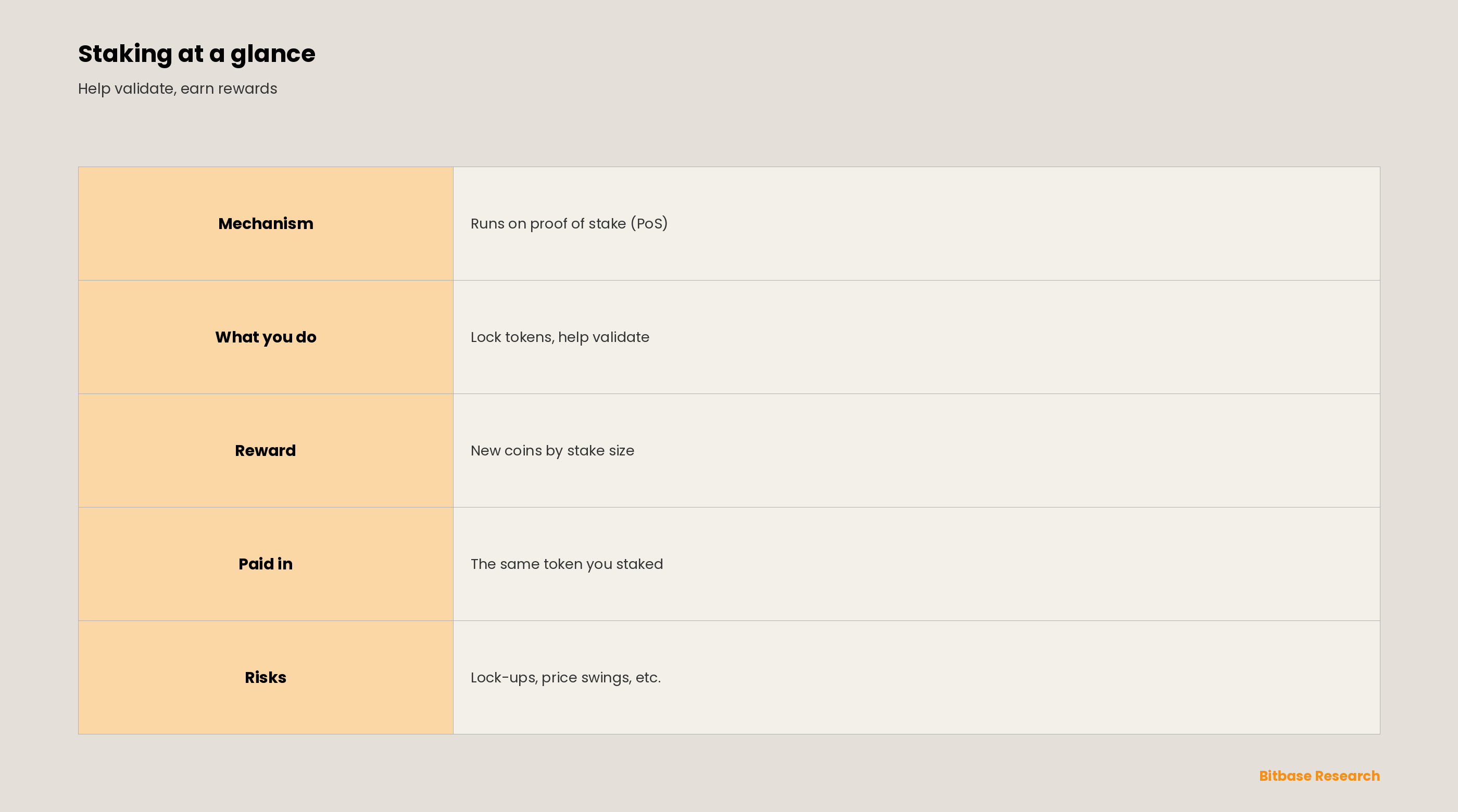
Staking relies on the proof-of-stake (PoS) consensus: the network randomly selects a validator from a pool of willing participants [1]. When you stake, your assets help confirm that transactions are added to the blockchain correctly; for each block you help validate, the network issues new crypto as a reward, usually proportional to your stake and paid in the same token [2].
Staking at a glance
What to watch out for
Staking rewards are appealing, but they carry risks: some networks impose lock-up periods during which you can't move your assets; token prices can be volatile; and under some designs a validator that misbehaves can be "slashed" [2]. Understand the rules before taking part.
The bottom line
Staking is a way to earn rewards by locking tokens to help validate a PoS network. It lets holders take part in network security, but rewards come with risks. To keep learning the fundamentals, follow more from Bitbase Academy.
Disclaimer: This article is educational content from Bitbase Academy, provided for information only. It does not constitute investment, trading, tax, or financial advice. Crypto assets are volatile; assess your own risk. Written as of June 2026; refer to the latest official information.
References
[1] Coinbase, "What is staking?" coinbase.com
[2] Fidelity, "Crypto Staking Explained." fidelity.com