
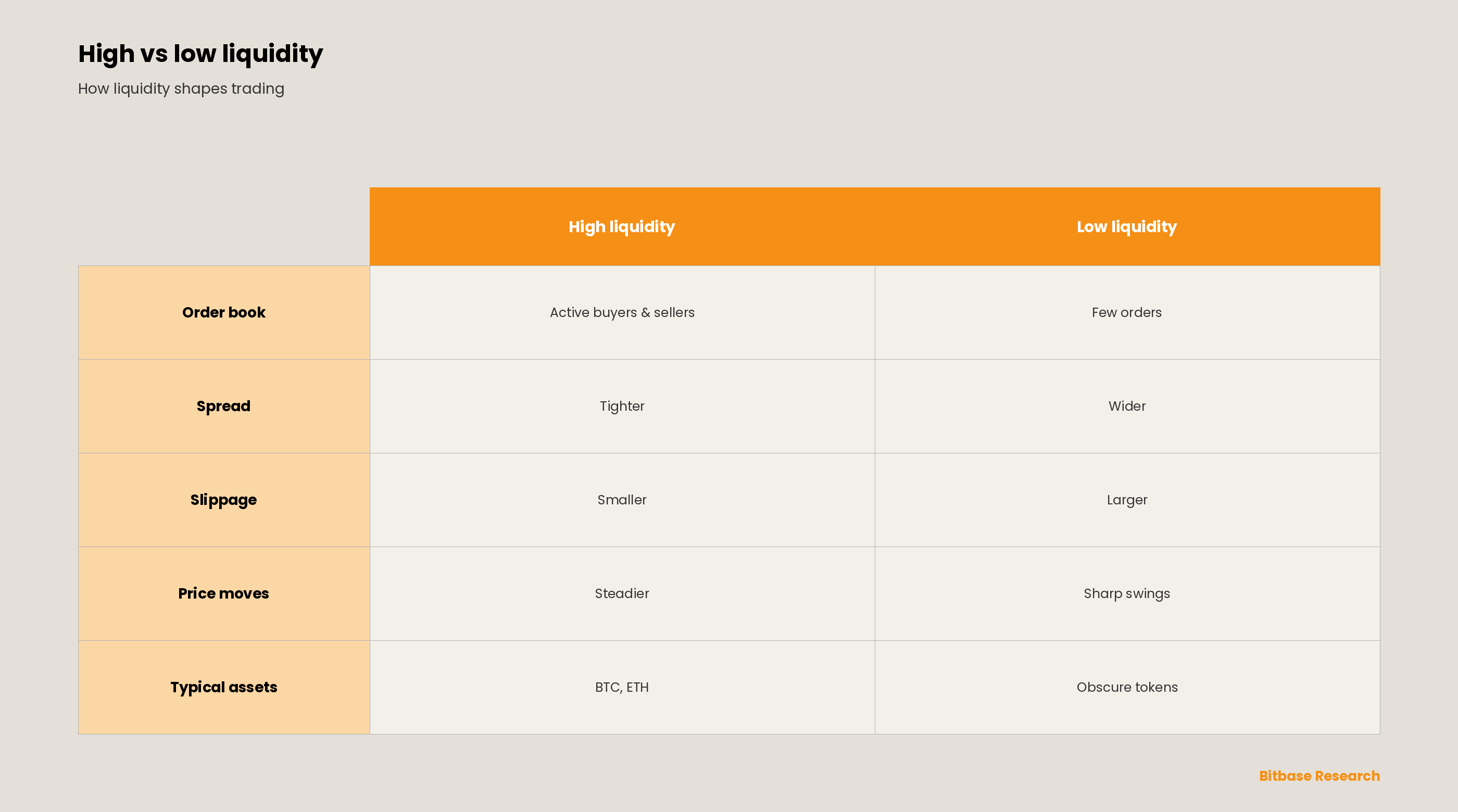
Liquidity is how easily an asset can be bought or sold without causing a significant price change. High liquidity means smooth fills and small slippage; low liquidity means even small trades can swing the price sharply. This guide explains it.
What liquidity means
In crypto, liquidity reflects whether there are active buyers and sellers, sufficient trading volume, and a market structure that supports smooth transactions [1]. When liquidity is strong, you can enter and exit positions smoothly; when it is thin, you often get higher volatility and less predictable prices.
High vs low liquidity
Where liquidity comes from
Traditional markets rely on centralized exchanges, banks, and professional market makers. Crypto markets span centralized exchanges, decentralized exchanges, and onchain protocols, providing liquidity through order books, liquidity pools, and algorithmic mechanisms [2]. Major assets like Bitcoin and Ethereum tend to be more liquid thanks to wide adoption and many listings.
The bottom line
Liquidity measures how easily an asset trades and how much that trading moves the price. It directly shapes spreads, slippage, and volatility, making it a key thing to check when assessing a market or token. To keep learning the fundamentals, follow more from Bitbase Academy.
Disclaimer: This article is educational content from Bitbase Academy, provided for information only. It does not constitute investment, trading, tax, or financial advice. Written as of June 2026; refer to the latest official information.
References
[1] Crypto.com, "Liquidity in Crypto Markets: What It Is and Why It Matters." crypto.com
[2] Injective, "What Is Liquidity? Crypto and Financial Markets Explained." injective.com