
A digital asset is anything of value that exists in digital form and can be owned or transferred — in crypto, that means coins, tokens, stablecoins, and tokenized real-world assets recorded on a blockchain. This guide explains the term and its main types.
The broad definition
Broadly, a digital asset is any electronic data with value and defined ownership — from documents and media to financial instruments. In crypto specifically, a digital asset is one whose ownership and transfer are secured by cryptography and recorded on a blockchain [1].
The main crypto types
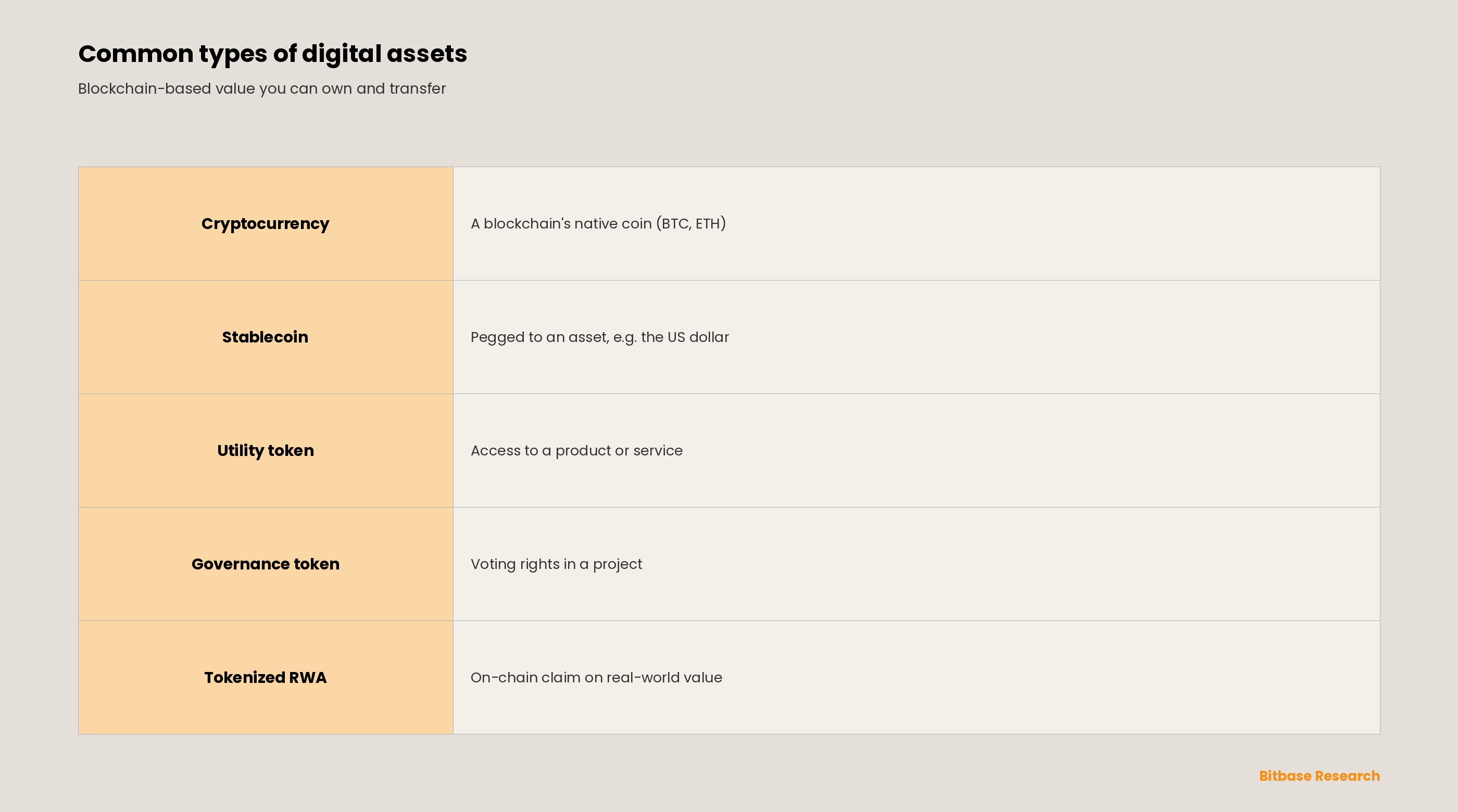
Crypto digital assets span several categories: cryptocurrencies (a blockchain's native coin, like BTC or ETH), stablecoins (pegged to an asset such as the US dollar), utility and governance tokens (access or voting within a project), and tokenized real-world assets (a blockchain representation of off-chain value) [2].
Common types of digital assets
Why the term matters
"Digital asset" is the umbrella term regulators and institutions use because it covers more than just currencies. Knowing which category a given asset falls into — coin, stablecoin, token, or tokenized asset — tells you how it works and what risks it carries.
The bottom line
A digital asset is blockchain-based value you can own and transfer; crypto is the best-known example, but the category is broader. Knowing the types is a building block for the rest of crypto. To keep learning the fundamentals, follow more from Bitbase Academy.
Disclaimer: This article is educational content from Bitbase Academy, provided for information only. It does not constitute investment, trading, tax, or financial advice. Written as of June 2026; refer to the latest official information.
References
[1] Crypto.com, "Digital Asset (Glossary)." crypto.com
[2] Morgan Stanley, "Crypto 101: An Introduction to Digital Assets." morganstanley.com