Layer 1 (L1) is a base blockchain like Bitcoin or Ethereum; Layer 2 (L2) is a faster, cheaper network built on top of it. Together they let blockchains handle more activity without sacrificing security. This guide explains the difference.
What Layer 1 is
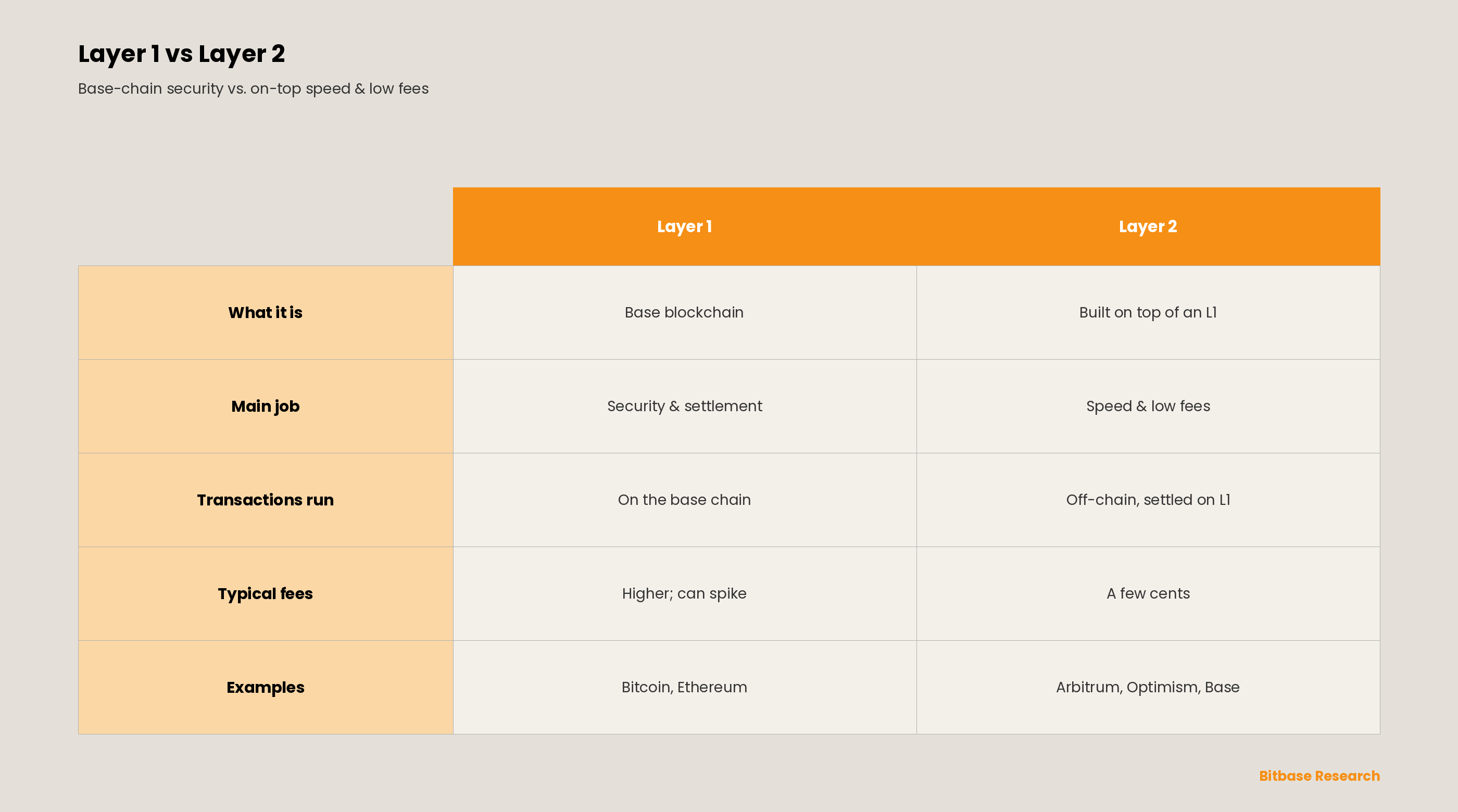
Layer 1 is the base chain itself — Bitcoin, Ethereum, and similar networks. It handles the core jobs: security, consensus, and final settlement of transactions. But base chains have limited capacity, so when they get busy, transactions slow down and fees rise — in busy periods, Layer 1 fees can spike to $20–$40 per transaction.
What Layer 2 is
Layer 2 is a network built on top of a Layer 1 to make it faster and cheaper. L2s (such as rollups) process transactions off-chain in bulk, then post the results back to the L1 for security. This relieves congestion on the base chain and can cut fees to a few cents (around $0.04–$0.09). Arbitrum, Optimism, and Base on Ethereum are examples.
Layer 1 vs Layer 2 at a glance
How they work together
Think of L1 as a busy highway and L2 as express lanes built above it: the base chain provides security and final settlement, while the L2 handles the high-volume, day-to-day activity that would otherwise clog it. You still rely on the L1's security — the L2 just makes using it cheaper and faster.
The bottom line
Layer 1 provides security and settlement; Layer 2 provides speed and low fees on top. Most everyday crypto activity is moving to L2s. Knowing the difference helps you choose networks and understand fees. To keep learning the fundamentals, follow more from Bitbase Academy.
Disclaimer: This article is educational content from Bitbase Academy, provided for information only. It does not constitute investment, trading, tax, or financial advice. Data is current as of June 2026; fees and other details change with network conditions, so refer to real-time data.
References
[1] Gemini Cryptopedia, "Blockchain Technology: Layer-1 and Layer-2 Networks." gemini.com
[2] Ethereum.org, "Layer 2." ethereum.org