
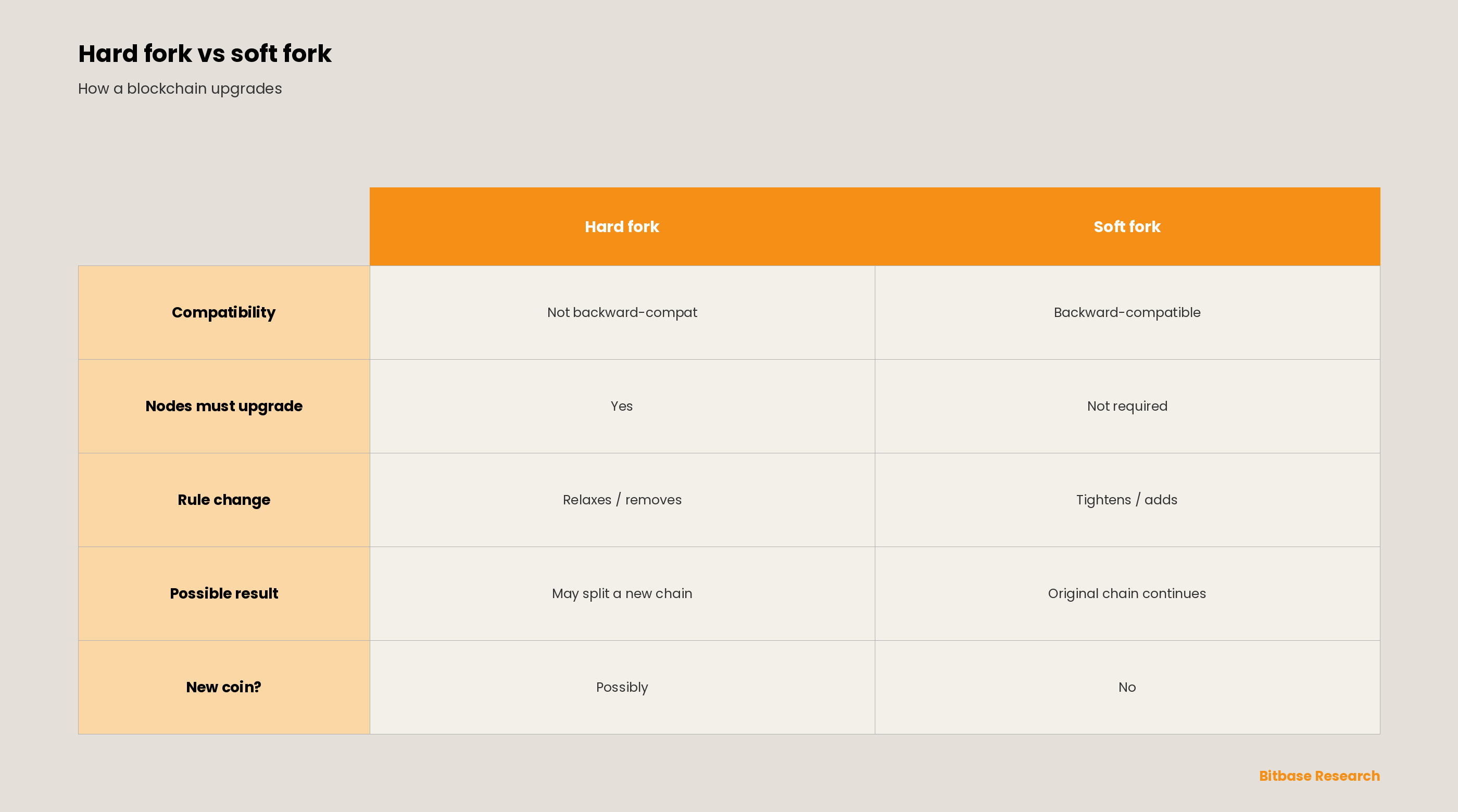
A fork is how a blockchain protocol is upgraded. A hard fork is a non-backward-compatible change; a soft fork is a backward-compatible one. The fundamental difference: a hard fork relaxes or removes rules, while a soft fork adds or tightens them. This guide explains it.
What a hard fork is
A hard fork is a non-backward-compatible protocol change that requires all nodes to upgrade to the new version [1]. If some nodes do not upgrade, the blockchain can split permanently, sometimes creating a new cryptocurrency — history has several such examples.
What a soft fork is
A soft fork aims to stay backward-compatible: even if some nodes don't adopt the new version, they can still recognize and validate transactions made under the new rules [1]. A soft fork does not create a new coin; the original chain keeps running, just with added features.
At a glance
The bottom line
Hard forks and soft forks are both ways a blockchain evolves: the former relaxes or removes rules and can split off a new chain; the latter adds or tightens rules while staying backward-compatible [2]. Understanding the difference helps you read major network upgrades. To keep learning the fundamentals, follow more from Bitbase Academy.
Disclaimer: This article is educational content from Bitbase Academy, provided for information only. It does not constitute investment, trading, tax, or financial advice. Written as of June 2026; refer to the latest official information.
References
[1] Coinbase, "What is the difference between a blockchain soft fork and a hard fork?" coinbase.com
[2] Fidelity, "What is a hard fork in crypto? Hard fork vs soft fork." fidelity.com