
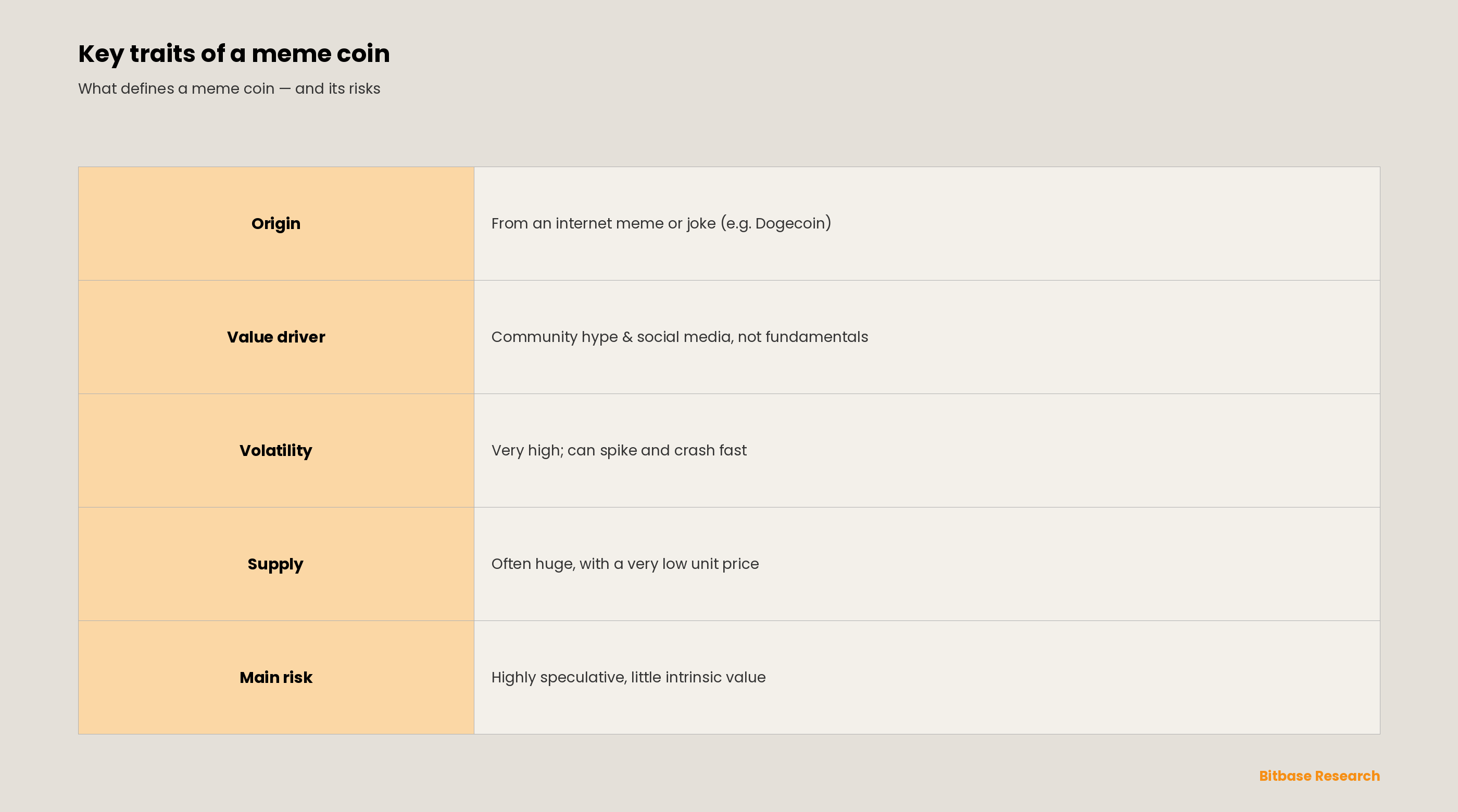
A meme coin is a cryptocurrency inspired by an internet meme or joke. Its price is driven mostly by community hype and social media rather than fundamentals, which makes meme coins highly volatile. This guide explains what they are and the risks.
Where meme coins come from
Meme coins start as jokes or references to internet culture. The best-known example is Dogecoin, created in late 2013 by two engineers as a parody of crypto speculation [1]. Despite the humorous origin, some meme coins have grown into multi-billion-dollar markets, especially after high-profile endorsements.
What drives their price
Unlike projects built around a specific use case, meme coins derive value mainly from community enthusiasm, social-media attention, and speculation [2]. That can send prices up sharply when hype builds — and down just as fast when interest fades, since there is little fundamental value underneath.
Key traits at a glance
The risks
Meme coins are among the most speculative assets in crypto. Many have enormous supplies and very low unit prices, and a large share lose most of their value once the initial hype fades. "Pump-and-dump" schemes are also common. Never put in more than you can afford to lose.
The bottom line
A meme coin is a community- and hype-driven token with little intrinsic value. Prices can move fast in both directions, so understand the risks before getting involved. To keep learning the fundamentals, follow more from Bitbase Academy.
Disclaimer: This article is educational content from Bitbase Academy, provided for information only. It does not constitute investment, trading, tax, or financial advice. Crypto assets are volatile and meme coins especially so, which can lead to a total loss of capital. Written as of June 2026; refer to the latest official information.
References
[1] Charles Schwab, "What Is a Meme Coin? Risks, Regulation, and More." schwab.com
[2] Bitpanda Academy, "Meme Coins: Definition & Characteristics." bitpanda.com