Phishing emails are one of the most common ways crypto accounts get compromised. A message that looks exactly like it came from your exchange — same logo, same tone — asks you to click a link and log in, and the page it opens quietly steals your password. An anti-phishing code is a simple, powerful defense against this. Here is what it is, how it works, and where it fits in your overall security.
What an anti-phishing code is
An anti-phishing code is a short personal phrase you set in your exchange account. Once it is set, the exchange includes that exact phrase in every genuine email it sends you — order confirmations, withdrawal notices, security alerts. Because only you and the exchange know the phrase, it acts as a signature that proves an email really came from them and not from an impostor.
How it protects you
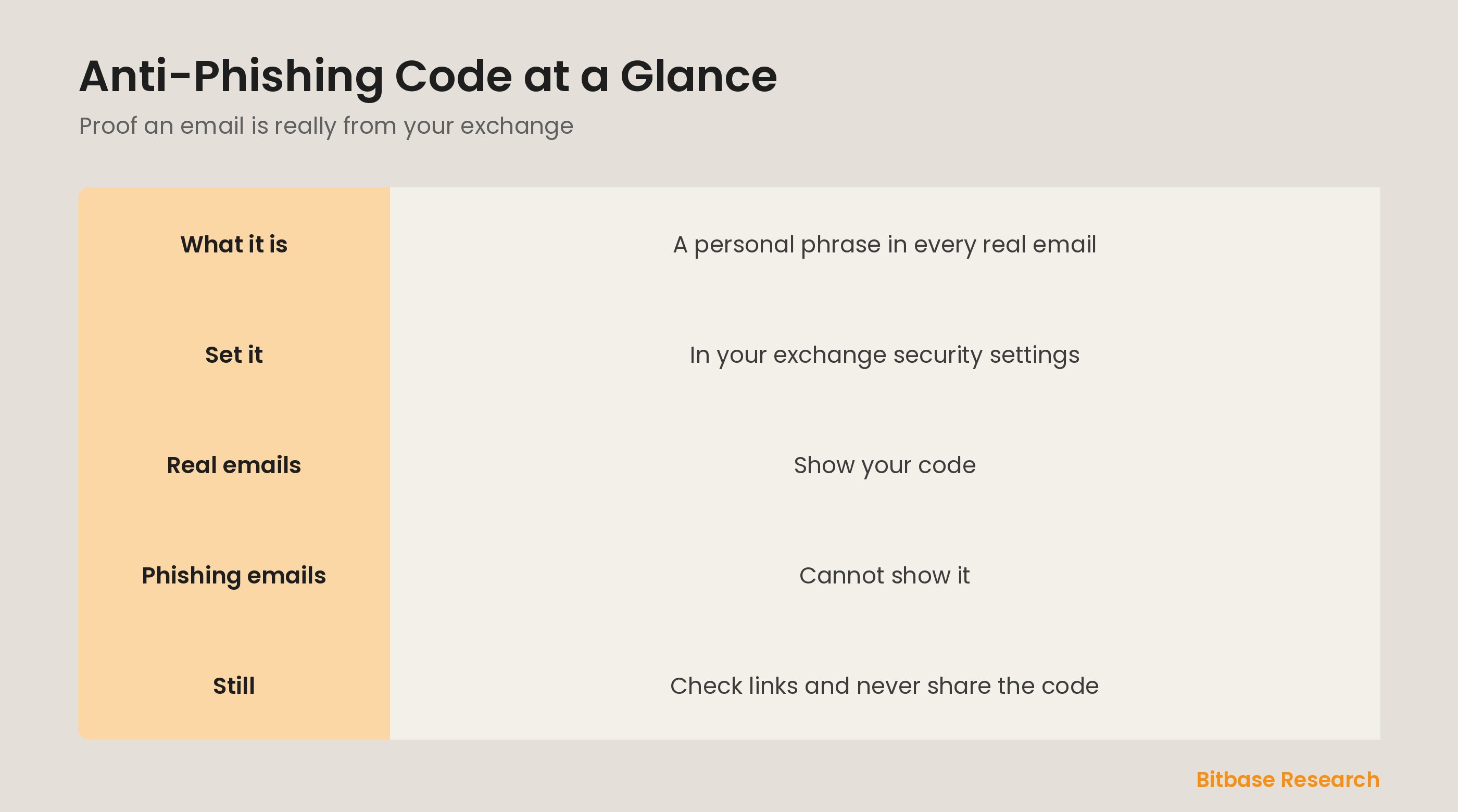
The protection is simple but effective. When a real email arrives, it displays your code, and you can trust it. When a phishing email arrives, it cannot contain your code, because the attacker has no idea what you chose. So the moment you see an exchange email without your phrase — or with the wrong one — you know instantly it is fake and can delete it without clicking anything.
How to set it and use it
You set the code in your exchange's security settings, usually near the 2FA and password options. Pick something unique to you that a stranger could not guess, and that is not a password you use elsewhere. Then build the habit of glancing for it on every email the exchange sends. If it is there, proceed; if it is missing, stop. Never tell the code to anyone, since a leaked code lets attackers forge convincing emails.
What it does not do
An anti-phishing code only helps with email from that one exchange. It does not protect against fake websites you reach some other way, malicious links inside an otherwise real-looking message, or scams over chat and phone. Treat it as one layer among several: keep using 2FA, check that web addresses are correct before logging in, and stay wary of any message that pressures you to act fast.
The bottom line
An anti-phishing code is a personal phrase your exchange places in every legitimate email, giving you an instant way to tell real messages from phishing attempts. Set one in your security settings, check for it on every email, and never share it. It will not replace your other defenses, but combined with 2FA and careful link-checking, it closes one of the most common doors attackers use. To keep learning the fundamentals, follow more from Bitbase Academy.
Disclaimer: This article is educational content from Bitbase Academy, provided for information only. It does not constitute investment, trading, tax, or financial advice. Crypto assets are volatile; assess your own risk. Written as of June 2026; refer to the latest official information.
References
[1] Investopedia, "Phishing: What It Is and How to Protect Yourself" investopedia.com
[2] Investopedia, "Two-Factor Authentication (2FA): Definition and How It Works" investopedia.com
[3] CFTC, "Customer Advisory: Understand the Risks of Virtual Currency Trading" cftc.gov