Every proof-of-stake reward is paid for real work done by a validator. Understanding what a validator actually does, and what can go wrong, helps you stake wisely, whether you run one or delegate to one.
What a validator does
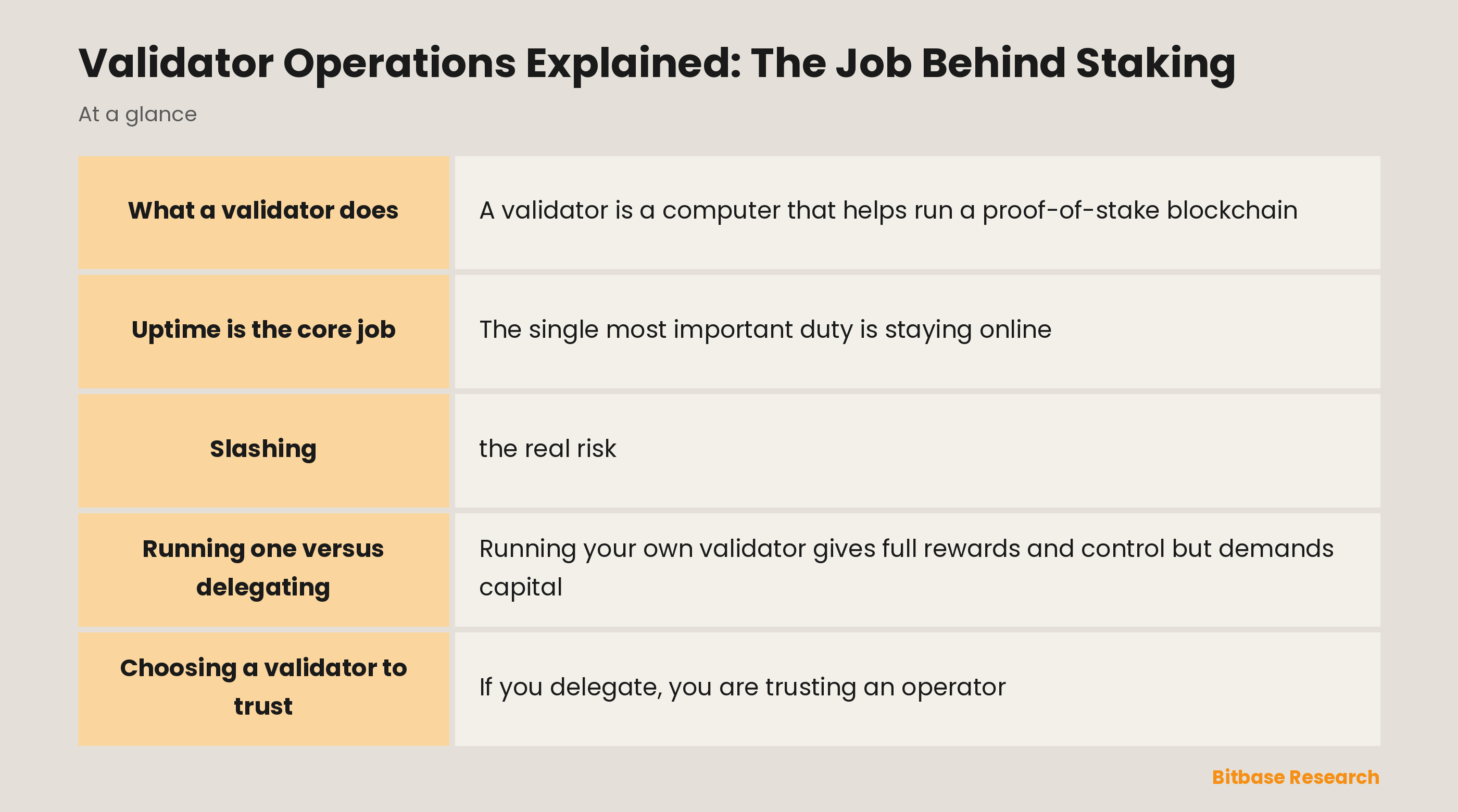
A validator is a computer that helps run a proof-of-stake blockchain. It proposes new blocks when chosen, checks and votes on blocks proposed by others, and keeps a full copy of the chain. In exchange for this constant work, and for locking up a stake as a bond, it earns the network's rewards. It is the proof-of-stake equivalent of a miner.
Uptime is the core job
The single most important duty is staying online. A validator must be available around the clock to perform its duties on schedule. Miss them, through downtime, a crashed node, or a bad connection, and it earns less and may face small penalties. Reliable operation, not clever tricks, is what makes a validator profitable.
Slashing: the real risk
Beyond missed rewards, validators face slashing: the network destroying part of their stake for serious faults, most notably signing two conflicting blocks, which can happen from misconfiguration as easily as from malice. Slashing is rare but severe, and it is why professional operators invest heavily in careful setup and redundancy.
Running one versus delegating
Running your own validator gives full rewards and control but demands capital, technical skill, and constant attention. Delegating hands the job to an existing validator and shares its rewards minus a commission, with far less effort. Most people delegate; the operational burden of running a node well is higher than it looks.
Choosing a validator to trust
If you delegate, you are trusting an operator. Judge them on uptime history, whether they have ever been slashed, commission, and how much they help the network stay decentralized. A cheap validator that goes offline or gets slashed can cost you far more than a slightly pricier one that runs flawlessly.
Disclaimer: This article is educational content from Bitbase Academy, provided for information only. It does not constitute investment, trading, tax, or financial advice. Written as of July 2026; refer to the latest official information.
References
[1] Helius, "Solana Validator Economics: A Primer" helius.dev
[2] Hivelocity, "Is Running a Solana Validator Profitable? The Economics Explained" hivelocity.net