USDT (Tether) and USDC (Circle) are the two largest dollar stablecoins, both pegged 1:1 to the US dollar. They differ most in who issues them and how their reserves are held and audited. This guide compares them.
What USDT and USDC have in common
Both are fiat-collateralized stablecoins designed to stay worth about $1, and together they make up roughly 90% of the stablecoin market. You can use either for trading, transfers, and payments across many blockchains.
USDT (Tether)
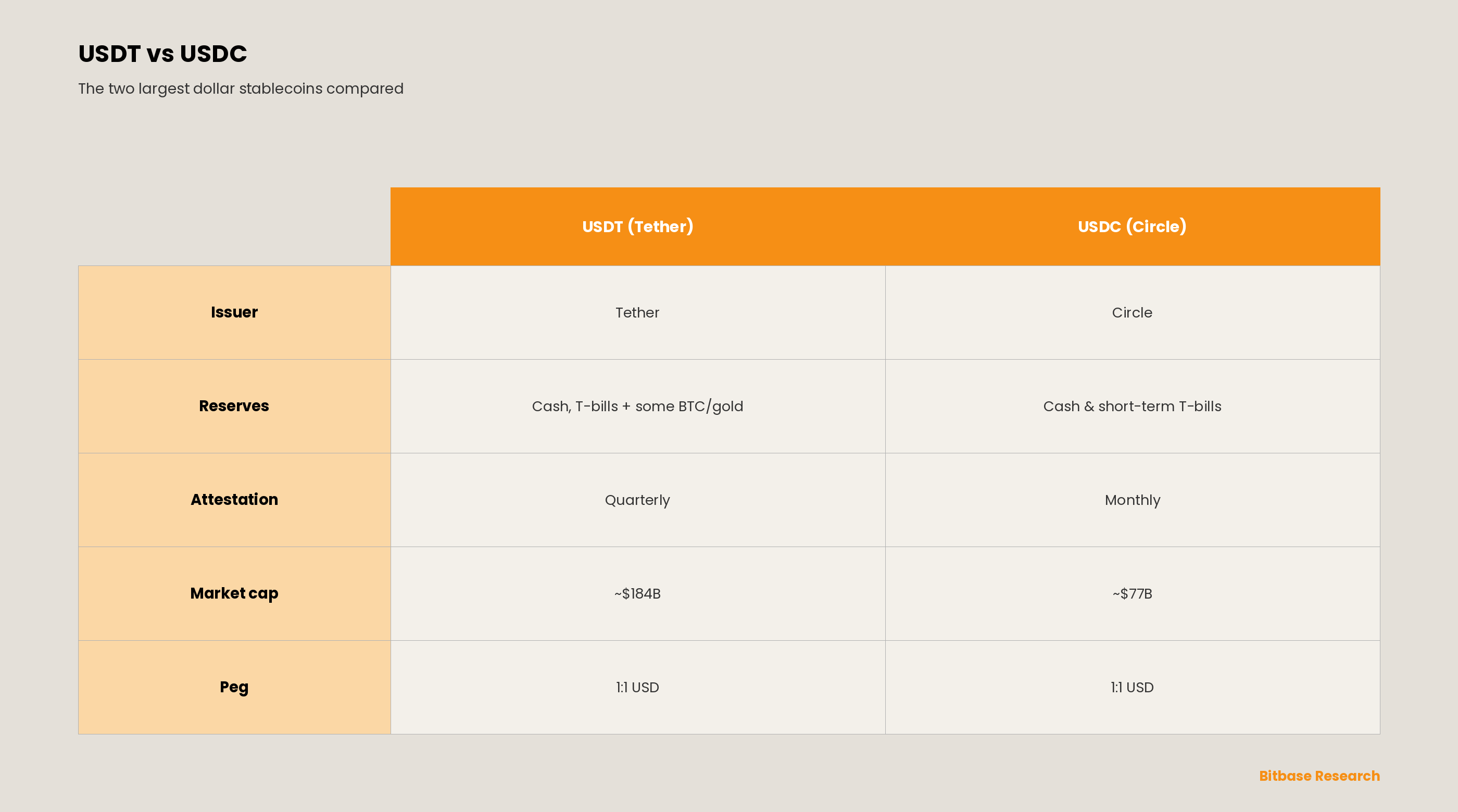
Issued by Tether, USDT is the largest stablecoin, with a market cap of about $184 billion (as of April 1, 2026) [1]. About three-quarters of its reserves are cash and short-term US Treasuries, with the rest in other assets such as Bitcoin, precious metals, and secured loans. Tether publishes reserve attestations quarterly.
USDC (Circle)
Issued by Circle, USDC is the second-largest stablecoin, at about $77 billion. Its reserves are held in cash and short-dated US Treasuries at regulated institutions, with attestations published monthly — making USDC's reserves more conservative and more frequently reported [1].
USDT vs USDC at a glance
Which to use
Both hold the same $1 peg. USDT has the deepest liquidity and the widest exchange support; USDC is often preferred where conservative, frequently-attested reserves and US regulatory alignment matter. Many users hold both.
The bottom line
USDT and USDC are both dollar stablecoins; the difference is in reserves and reporting, not the peg itself. Knowing it helps you choose for liquidity or transparency. To keep learning the fundamentals, follow more from Bitbase Academy.
Disclaimer: This article is educational content from Bitbase Academy, provided for information only. It does not constitute investment, trading, tax, or financial advice. Data is current as of June 2026; reserve and disclosure details can change, so refer to the latest disclosures from issuers and authoritative sources.
References
[1] Gemini Cryptopedia, "USDC vs. USDT: Complete Investor Comparison Guide." gemini.com
[2] MoonPay, "USDT vs USDC: A Comparison of Leading Stablecoins." moonpay.com