Who gets a project's tokens, and when, tells you more about its future than almost anything else. Token allocation and vesting decide how supply is split among a team, investors, and the community, and when those tokens hit the market. Reading them well is one of the sharpest edges in crypto.
What allocation means
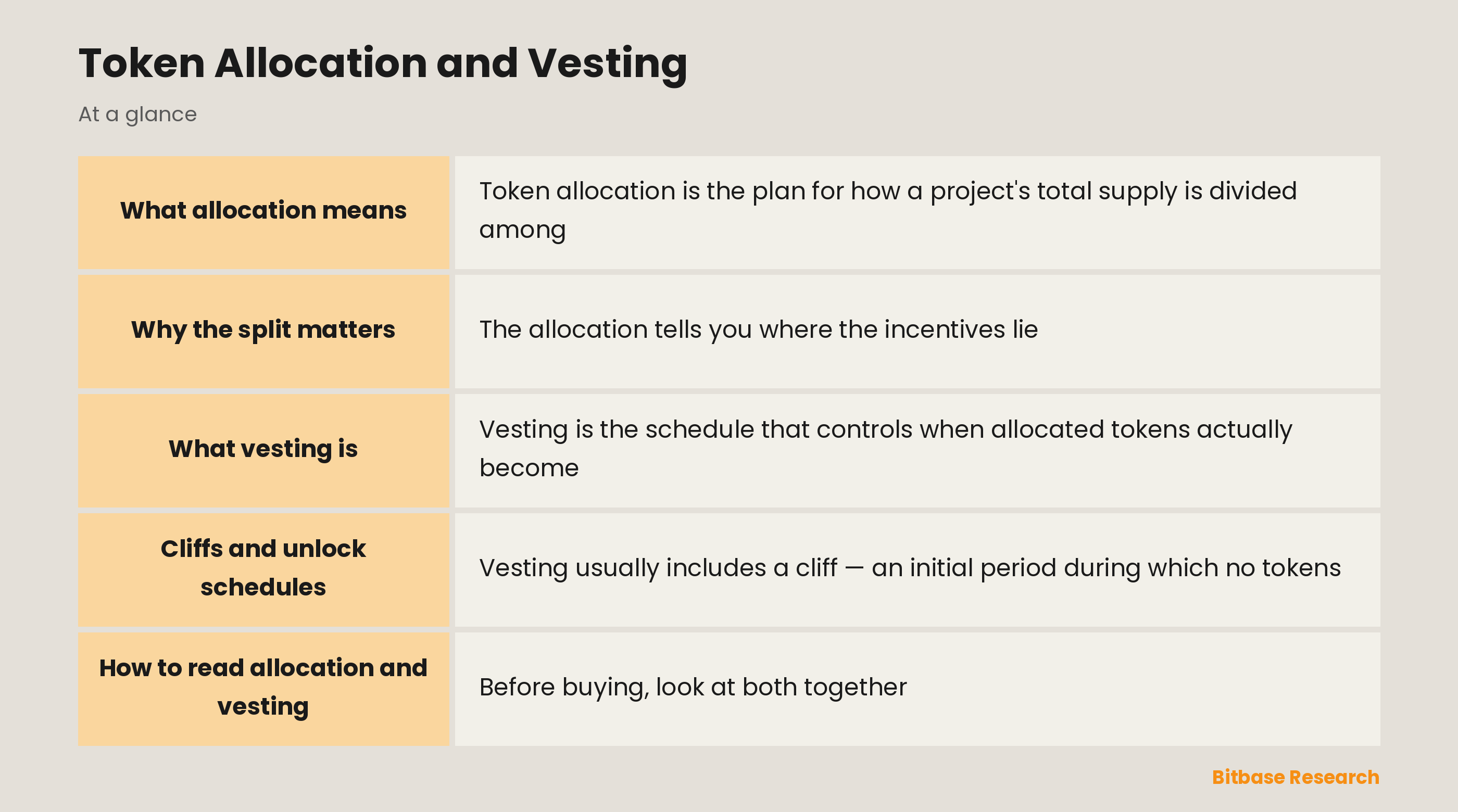
Token allocation is the plan for how a project's total supply is divided among different groups: the team and founders, early investors, the community and users, the treasury or foundation, and reserves for future growth. This split is usually laid out at launch, often as a pie chart in the whitepaper. It reveals who stands to benefit most, and how much of the token is really "the community's."
Why the split matters
The allocation tells you where the incentives lie. A project that reserves a huge share for insiders and investors, and only a sliver for users, is structured to reward the few. A more balanced split, with a meaningful community allocation and a reasonable team share, suggests broader alignment. There is no perfect ratio, but a lopsided one is a warning worth heeding.
What vesting is
Vesting is the schedule that controls when allocated tokens actually become available. Instead of handing insiders all their tokens at once, a project releases them gradually over months or years. This stops the team and early investors from dumping everything on day one, and signals they are committed for the long term rather than looking for a quick exit.
Cliffs and unlock schedules
Vesting usually includes a cliff — an initial period during which no tokens unlock at all — followed by gradual releases. For example, a one-year cliff, then monthly unlocks over three years. These schedules are public, and the moments when large tranches unlock are important: a big unlock adds new sellable supply, which can pressure the price if demand does not rise to meet it.
How to read allocation and vesting
Before buying, look at both together. Check what percentage insiders hold and how quickly it unlocks; a low circulating supply today can hide a flood of tokens coming later. Watch the calendar for major unlock dates, and be skeptical of tokens where insiders can sell far sooner than the community. Well-designed vesting aligns everyone; weak vesting sets up the community to be exit liquidity.
The bottom line
Allocation shows who owns a token and vesting shows when they can sell it — together, they are the blueprint of a project's incentives. A fair split with long, honest vesting aligns builders, investors, and users; a skewed one with quick unlocks favors insiders at your expense. Read the pie chart and the unlock calendar before the marketing, because that is where a token's real story is written.
Disclaimer: This article is educational content from Bitbase Academy, provided for informational purposes only. It is not investment, trading, tax, or financial advice. Written as of July 2026; rely on the latest official information.
References
[1] a16z crypto, "Token vesting and lockup best practices" a16zcrypto.com
[2] CryptoRank, "Token unlocks and vesting schedules" cryptorank.io