Before you buy a new token, the smart contract behind it holds the real story — and it often contains traps the marketing never mentions. Learning to spot a few common red flags can save you from honeypots, hidden fees, and rug pulls that a slick website would never reveal.
Why the contract is the source of truth
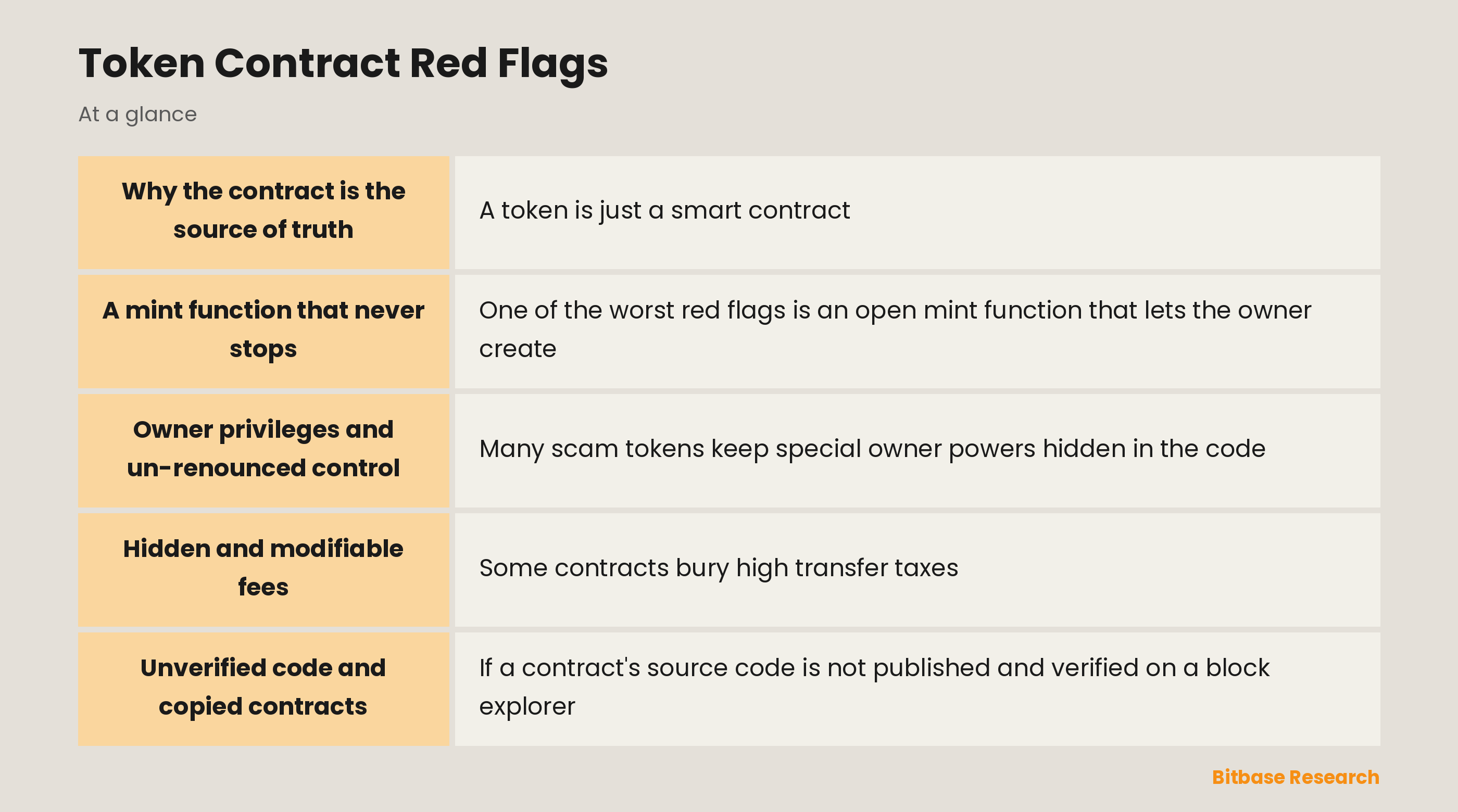
A token is just a smart contract, and its code defines what can actually happen to your money — regardless of what the website promises. Anyone can read that code on a block explorer, and increasingly, automated scanners will flag risky functions for you. The habit of checking the contract, or a trustworthy scan of it, is the single biggest edge a small investor has.
A mint function that never stops
One of the worst red flags is an open mint function that lets the owner create unlimited new tokens at will. If a team can print more supply whenever they like, they can dilute you to nothing or crash the price on command. A fixed, verifiable supply — or minting that is renounced or tightly capped — is far safer than an owner holding an infinite printing press.
Owner privileges and un-renounced control
Many scam tokens keep special owner powers hidden in the code: the ability to pause trading, blacklist wallets so they cannot sell, or change fees at any moment. A contract where the owner can freeze your ability to sell is a honeypot — you can buy but never exit. Check whether ownership has been renounced or is controlled by a timelock, not a single anonymous wallet.
Hidden and modifiable fees
Some contracts bury high transfer taxes, or let the owner raise fees to near-100 percent after people have bought in. A token advertised as low-fee can quietly become impossible to sell profitably. Look for fixed, disclosed fees rather than a fee rate the team can rewrite whenever it chooses.
Unverified code and copied contracts
If a contract's source code is not published and verified on a block explorer, you simply cannot know what it does — treat that as a warning in itself. Be wary too of contracts copy-pasted from known scams, or audited by no one credible. A genuine project wants you to be able to read its code; a scam prefers that you cannot.
The bottom line
The red flags are consistent: an unlimited mint, hidden owner powers, changeable fees, blacklists, and unverifiable code. None of these guarantees a scam on its own, but each is a reason to slow down and dig deeper. A few minutes reading the contract, or a reputable scanner's report on it, is the cheapest insurance in crypto — and skipping it is how most avoidable losses happen.
Disclaimer: This article is educational content from Bitbase Academy, provided for informational purposes only. It is not investment, trading, tax, or financial advice. Written as of July 2026; rely on the latest official information.
References
[1] CertiK, "Common smart contract red flags" certik.com
[2] De.Fi, "Token contract scanner and rug-pull risks" de.fi