
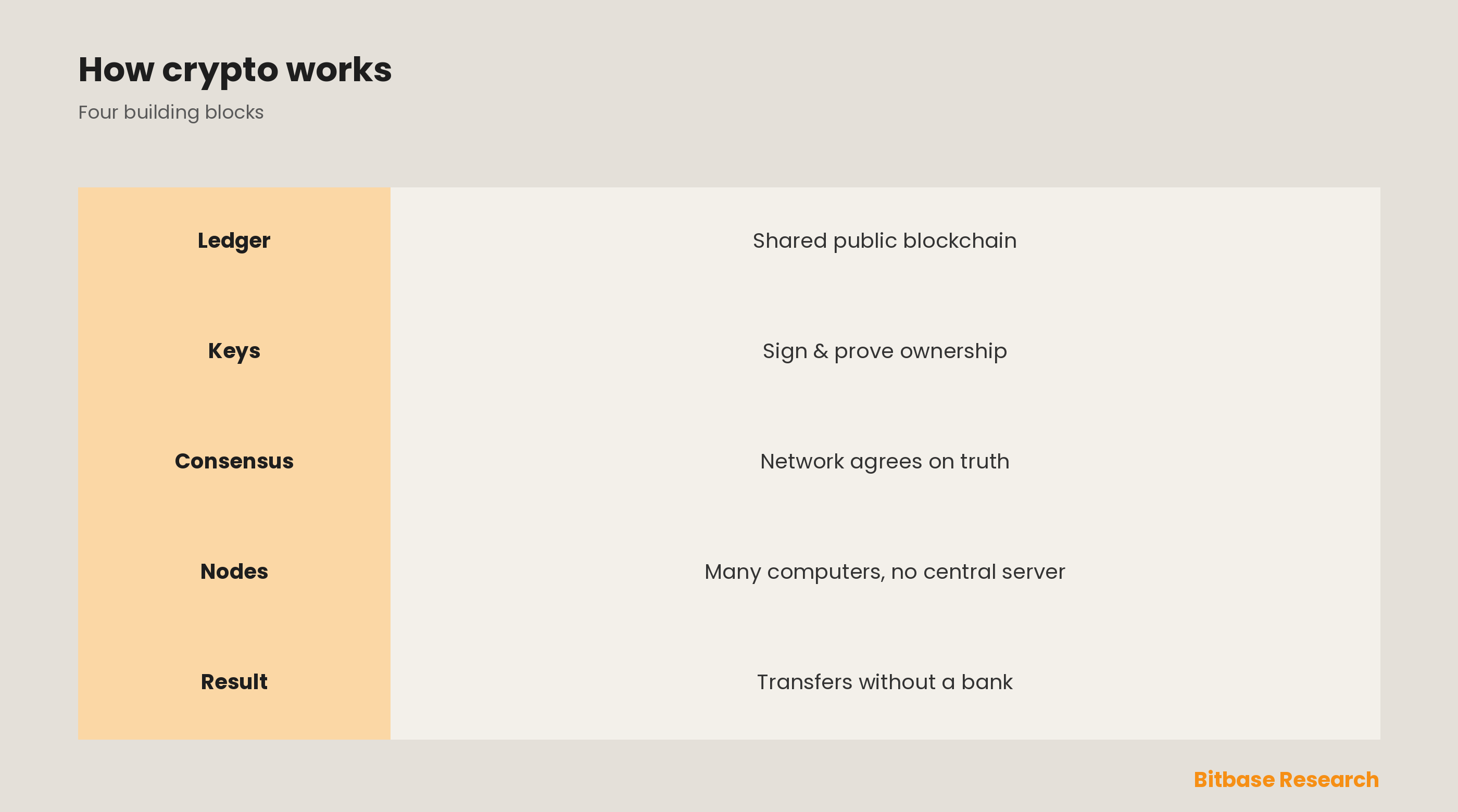
Cryptocurrency works by combining four ideas: a shared public ledger (blockchain), cryptography that proves ownership, a consensus process that keeps everyone in agreement, and a decentralized network of computers. Together they let people transfer value without a bank. This guide breaks it down.
The building blocks
Every cryptocurrency runs on a blockchain — a shared ledger copied across many computers (nodes) [1]. Ownership is secured by cryptography: your private key signs transactions, proving they came from you, while your public address lets others send to you. No single company controls the ledger; the network maintains it together [2].
From "send" to "settled"
When you send crypto, your wallet signs the transaction with your private key and broadcasts it. The network's validators (miners in Proof of Work, or stakers in Proof of Stake) check it, reach consensus that it's valid, and record it in a new block on the chain — where it stays permanently [1].
How it fits together
The bottom line
Cryptocurrency works because a decentralized network — not a bank — keeps the records, cryptography secures ownership, and consensus keeps everyone honest. That is what lets value move directly between people. To keep learning the fundamentals, follow more from Bitbase Academy.
Disclaimer: This article is educational content from Bitbase Academy, provided for information only. It does not constitute investment, trading, tax, or financial advice. Crypto assets are volatile; assess your own risk. Written as of June 2026; refer to the latest official information.
References
[1] Coinbase, "What is a blockchain?" coinbase.com
[2] Investopedia, "How Does Cryptocurrency Work?" investopedia.com