A blockchain works by bundling transactions into blocks and chaining those blocks together with cryptography, across a decentralized network. The result is a shared record that's very hard to tamper with. This guide walks through the process step by step.
Blocks, chained together
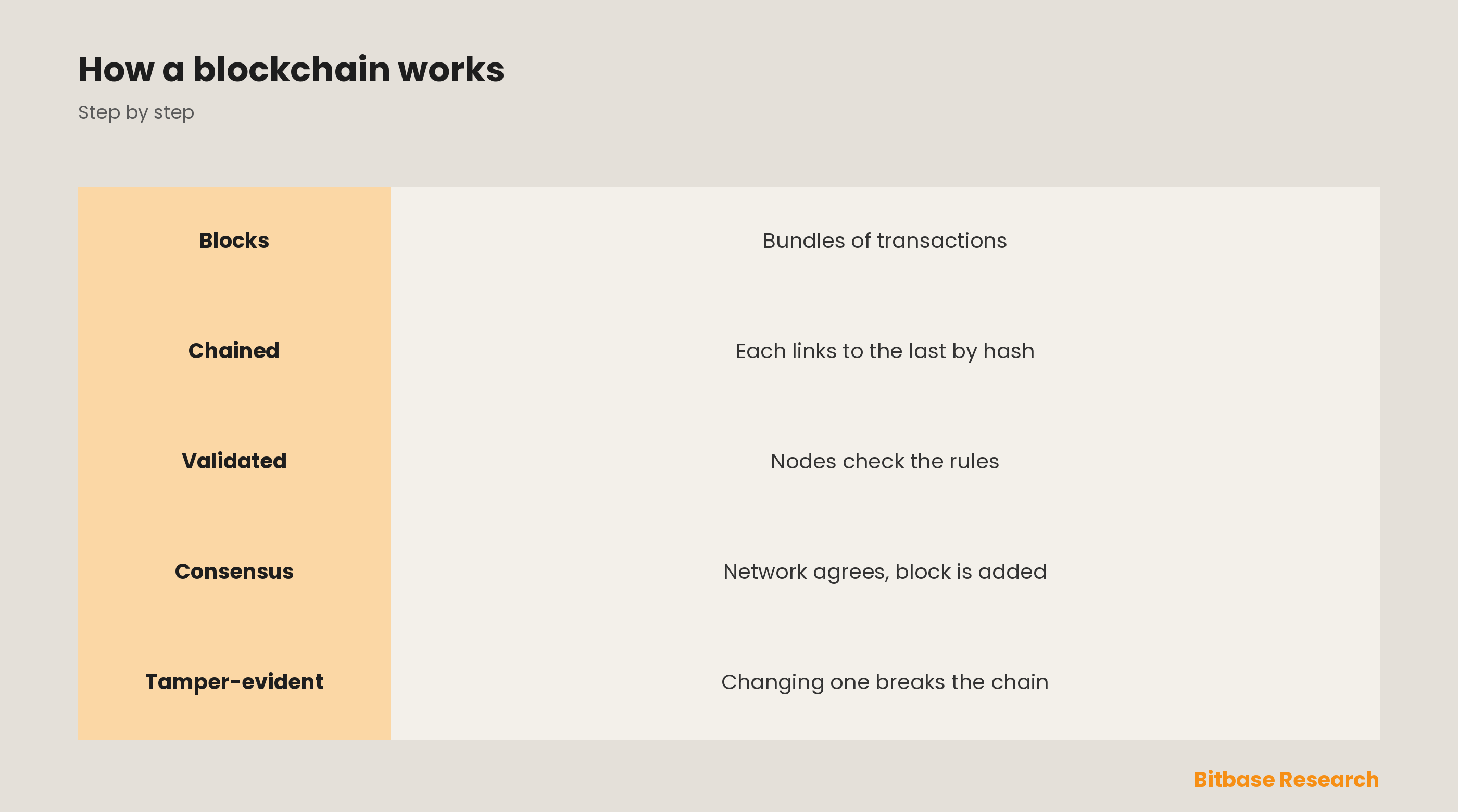
Transactions are grouped into a block. Each block includes a cryptographic fingerprint (a hash) of the block before it, which links them into a chain [1]. Because every block depends on the one before, changing an old transaction would change its hash and break every block after it — making tampering easy to detect [2].
From transaction to confirmed block
When you send a transaction, nodes across the network check it against the rules. Valid transactions are gathered into a candidate block, the network reaches consensus (via Proof of Work or Proof of Stake) on which block is next, and that block is added to every copy of the chain [1].
The process at a glance
The bottom line
A blockchain works because blocks are cryptographically linked, many independent nodes validate and store the same chain, and consensus decides what's added. Together that makes the record transparent, shared, and extremely hard to alter — without any central authority. To keep learning the fundamentals, follow more from Bitbase Academy.
Disclaimer: This article is educational content from Bitbase Academy, provided for information only. It does not constitute investment, trading, tax, or financial advice. Crypto assets are volatile; assess your own risk. Written as of June 2026; refer to the latest official information.
References
[1] Coinbase, "What is a blockchain?" coinbase.com
[2] IBM, "What is blockchain?" ibm.com