DeFi runs on open code that anyone can inspect — and anyone can attack. Billions have been lost to hacks, and understanding how they happen is the difference between using DeFi with eyes open and becoming the next cautionary tale. Here are the main ways DeFi gets exploited, and what it means for your funds.
Why DeFi is a target
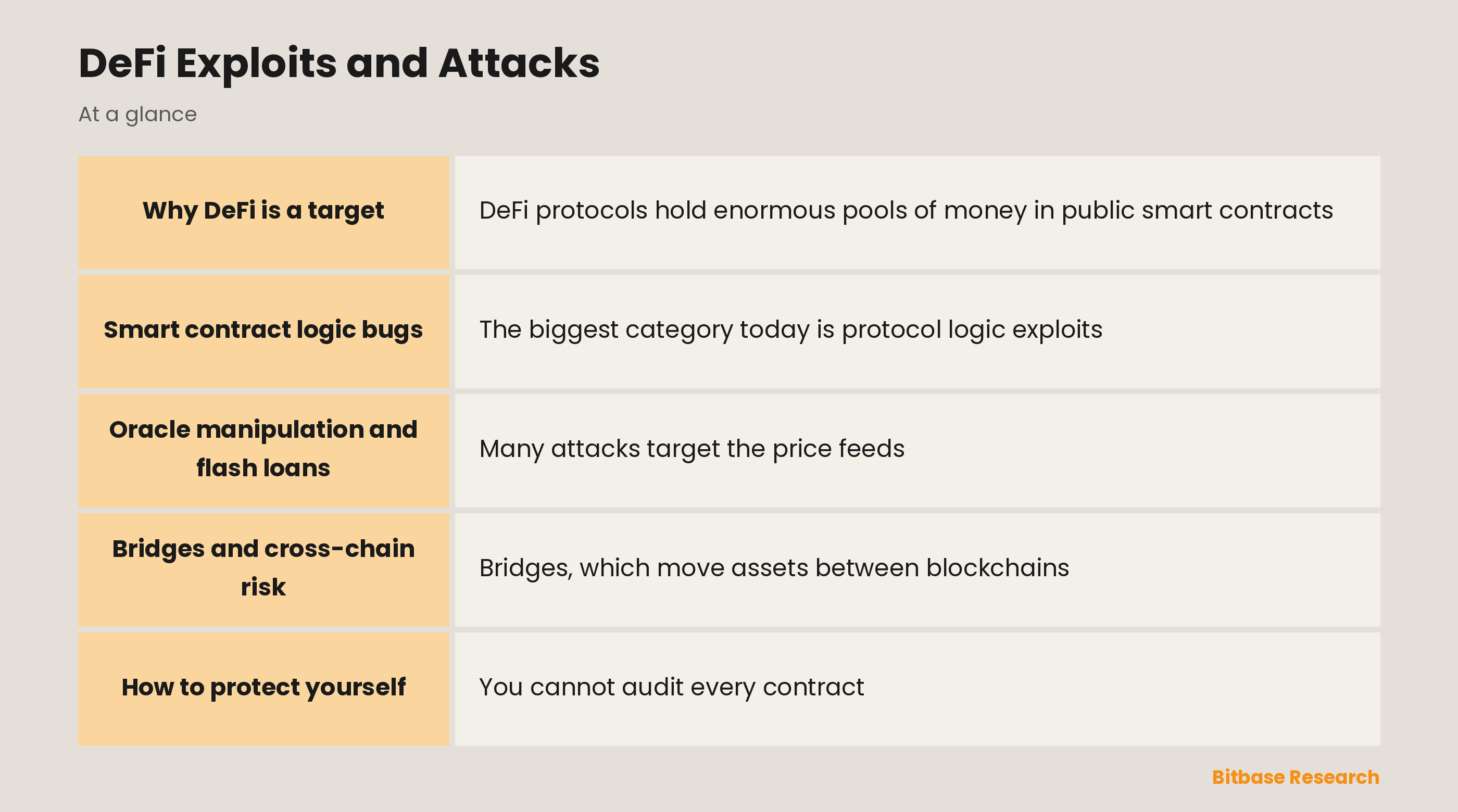
DeFi protocols hold enormous pools of money in public smart contracts, and their code is visible to everyone — including attackers probing for flaws. Unlike a bank, there is no one to reverse a theft and no insurance by default; when an exploit succeeds, the money is usually gone. This combination of large honeypots and irreversible transactions makes DeFi one of the most attacked areas in all of software.
Smart contract logic bugs
The biggest category today is protocol logic exploits: flaws in how a specific application's code is written. A single mistake in the rules — a miscalculation, a missing check, a flawed assumption — can let an attacker drain funds in a way the code treats as perfectly legitimate. In 2025 the large majority of DeFi losses came from these code-level bugs rather than flashy external tricks, a reminder that in DeFi, the code is the contract.
Oracle manipulation and flash loans
Many attacks target the price feeds, or oracles, that protocols rely on. By temporarily distorting a price — often funded by a flash loan, an uncollateralized loan repaid within a single transaction — an attacker can trick a protocol into mispricing collateral and walking away with more than they should. These "ecosystem" attacks were once dominant but have become rarer as protocols hardened their oracles.
Bridges and cross-chain risk
Bridges, which move assets between blockchains, once accounted for the majority of DeFi losses because they concentrate huge sums in a single complex contract. That share has fallen sharply as bridge security improved, but a newer worry has emerged: attacks that exploit shared code or infrastructure can now hit several chains at once. Wherever value is pooled and logic is complex, risk follows.
How to protect yourself
You cannot audit every contract, but you can manage the risk. Favor established protocols with long track records, multiple audits, and active bug-bounty programs; be cautious with brand-new, unaudited projects offering unusually high yields; and never put in more than you can afford to lose. Remember that "audited" reduces risk but never removes it — even reviewed code gets exploited.
The bottom line
DeFi exploits — logic bugs, oracle manipulation, flash-loan tricks, and bridge attacks — are a permanent feature of an open, adversarial, irreversible system. The attack vectors evolve, but the lesson does not: in DeFi, your safety rests on code written by strangers. Use battle-tested protocols, size your positions for the worst case, and treat every new, high-yield opportunity as a risk until proven otherwise.
Disclaimer: This article is educational content from Bitbase Academy, provided for informational purposes only. It is not investment, trading, tax, or financial advice. Written as of July 2026; rely on the latest official information.
References
[1] Immunefi, "The Ecosystem Vulnerability Scoreboard: DeFi loss data" immunefi.com
[2] Halborn, "Top 100 DeFi Hacks Report" halborn.com